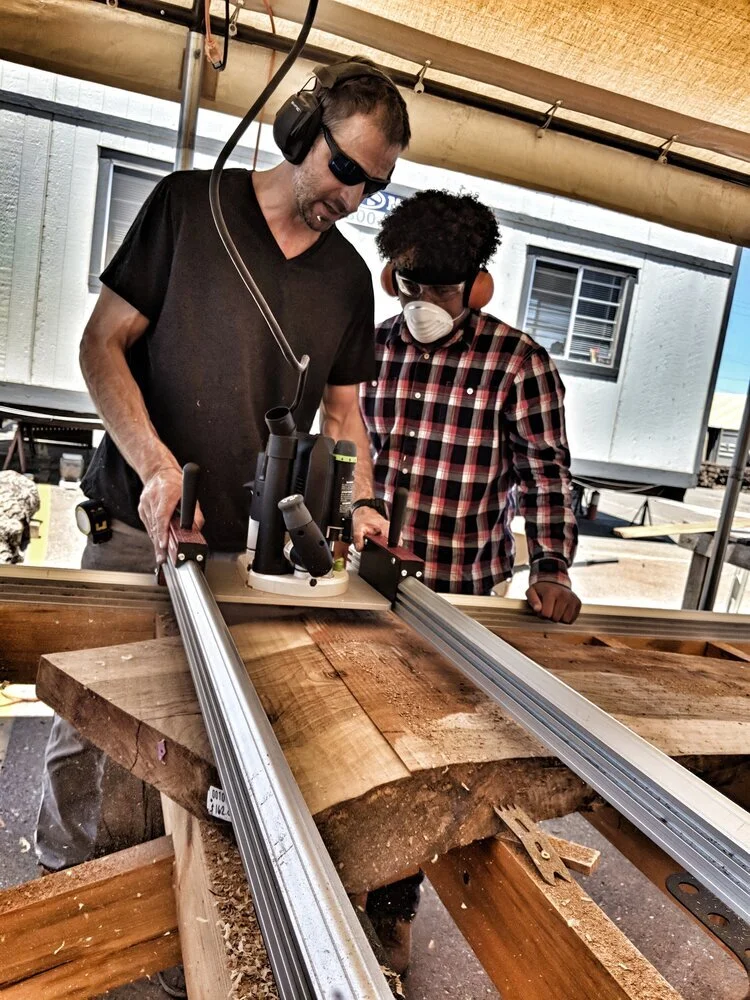
Funded in part by a nearly $1,000,000 grant from California Department of Forestry and Fire Protection’s Urban and Community Forestry Program, the Conservation Corps of Long Beach (CCLB) is implementing an urban wood recovery apprenticeship program that has the potential to be a model for other programs across California. This program is teaching Corpsmembers how to remove hazardous trees throughout the city, control insects and diseases, and divert woody biomass from landfills to help keep greenhouse gases sequestered in the wood. Additionally, trees will be replaced to mitigate poor air quality, a lack of urban green space, and improve storm water retention in disadvantaged communities. Ultimately, this program will provide a foundation for Corpsmembers interested pursuing jobs in urban forestry.
Mountain Meadow Restoration Sequesters Carbon and Builds Resilience
Supporting Ecosystem, Community, and Cultural Resilience at Clover Valley Ranch
With help from a $680,974 grant from California Climate Investments through the Wetlands & Watershed Restoration Program, the Sierra Fund and project partners are carrying out multi‑benefit restoration efforts at the 2,655‑acre Clover Valley Ranch. Initiated in 2017, this project will sequester nearly 188,000 metric tons of carbon dioxide equivalent while halting stream incision; increasing biodiversity; and improving hydrologic function, flood reduction, sediment filtration and water quality. However, the goal of this project extends beyond of ecosystem function and carbon sequestration benefits; these activities will also support community and cultural resilience through the promotion of cultural skills and activities.
Water Energy Grants Provide Direct Benefits to Low-Income Households in Rural Counties
The Association of California Community and Energy Services partner agencies replaced 1,090 washing machines and 855 dishwashers with water- and energy-efficient machines . These energy and water savings will continuously provide cost savings across various communities in Kern, Madera, Contra Costa, Kings, San Francisco, and Merced counties and other low-income homes in San Mateo, Shasta, and Tehama counties.
Madera County Connects Residents with Water Efficiency Devices
“For the community; by the community” is the motto of the South-East Madera County United (SEMCU), a non-profit mutual benefit organization in the heart of the San Joaquin Valley. In May 2015, with a $218,594 grant from the DWR, members set out to provide water efficiency devices for approximately 75 percent of homes and businesses within SEMCU’s boundary, an area encompassing five disadvantaged community census tracts.
Wishing Tree Park Provides New Green Space in West Carson
One of the Los Angeles Neighborhood Land Trust’s most exciting parks currently under construction is the 8.5‑acre, multi‑benefit Wishing Tree Park located in unincorporated West Carson, Los Angeles County. This project has been in the works for decades, and thanks in part to a $2,500,000 grant from California Climate Investments through the Urban Greening Program the park will be opening to the public in late 2021.
Greening the Yellow Brick Road Project Transforms Street into a Symbol of Activity and Hope
With $4.1 million from California Natural Resources Agency’s Urban Greening program, this project is helping bring the community’s vision to fruition and will benefit thousands of community residents. The project will create a safe and green public space where neighbors can come together and a designated route for residents to bike and walk in a safe environment.
Reclaimed Urban Wood Supports Small Businesses and Reduces Landfill Emissions
A $996,600 grant from California Climate Investments through the Urban and Community Forestry program will help Urban Salvaged and Reclaimed Woods, Inc. pilot a shared storefront project. This storefront will allow businesses handling salvaged wood from urban areas to combine resources to better process, market, and sell their products.
Urban Wood Rescue Project Trains Youth and Sequesters Carbon
Reviving Stockton's Urban Tree Canopy
Bringing Electrification and Energy Efficiency to Low-income San Francisco Communities
The Tenderloin Neighborhood Development Corporation’s (TNDC) commitment to help San Francisco’s low‑income communities thrive by building affordable housing was energized by an electrification project at its SOMA Studio and Family Apartments (SOMA Apartments) in 2020. The effort is supported by a $633,000 award from California Climate Investments through the Department of Community Services and Development’s Low Income Weatherization Program’s (LIWP) Multi‑Family component. With that money and contributions from other local energy efficiency programs, TNDC kept utility bills low for residents while electrifying major central building systems and reducing greenhouse gas emissions. Built in 2003, the SOMA Apartments include 162 homes with more than 60 percent of its households classified as extremely low‑income (earning less than 30 percent of the area median income).
Training and Partnerships Bring Community Solar to Low-income Households
Thanks to $2 million from California Climate Investments through the Low‑Income Weatherization Program, GRID Alternatives Inland Empire is implementing the Community Solar Pilot project, the first community solar array in California specifically designed to benefit low‑income households. Situated on Santa Rosa Band of Cahuilla Indian tribal lands in Riverside County, the Community Solar Pilot project will not only lower energy costs for tribal members and other low‑income households but also provided an opportunity for tribal members to gain valuable experience as solar installation trainees.
No-cost Energy Upgrades Serve Low-income Farmworker Households
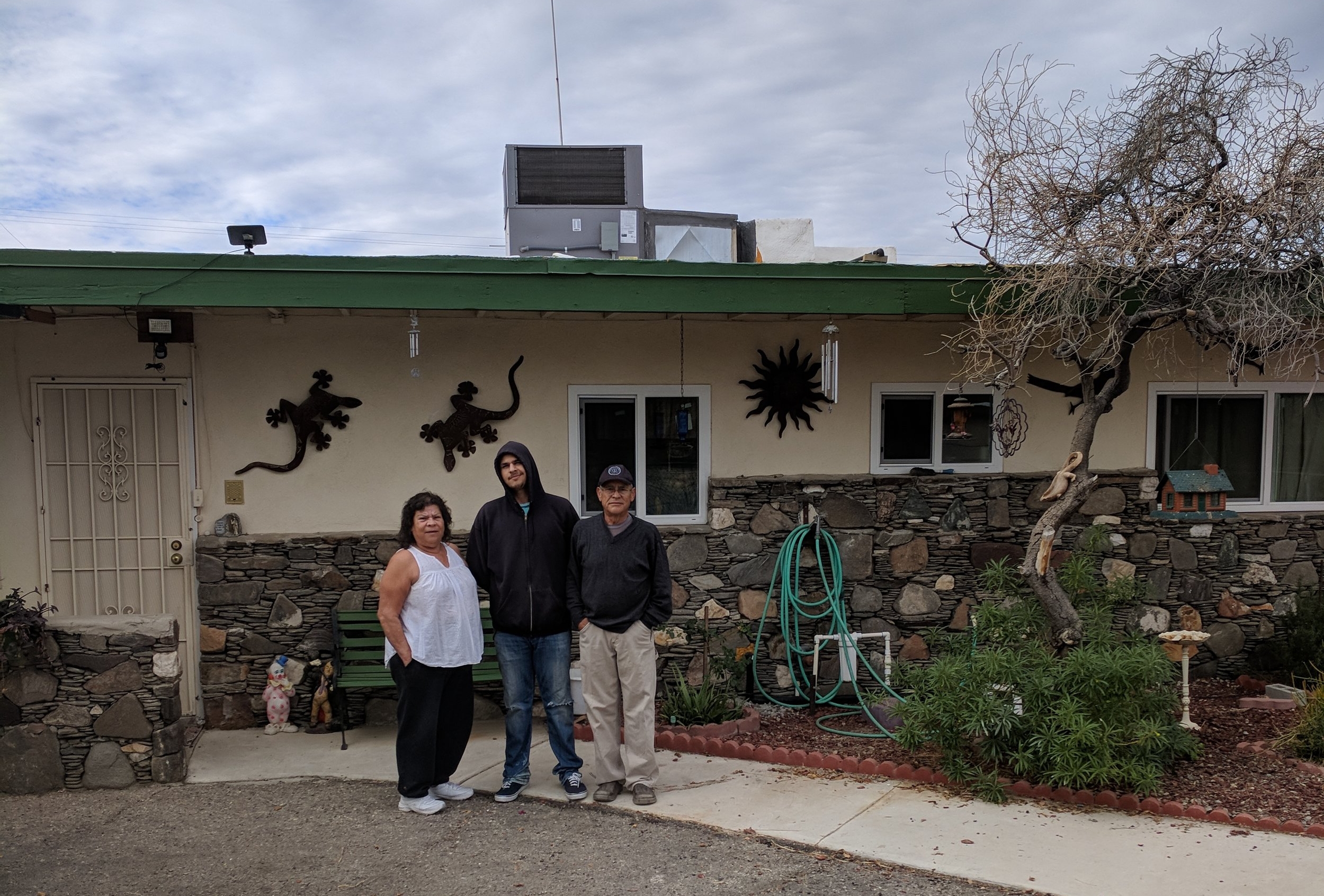
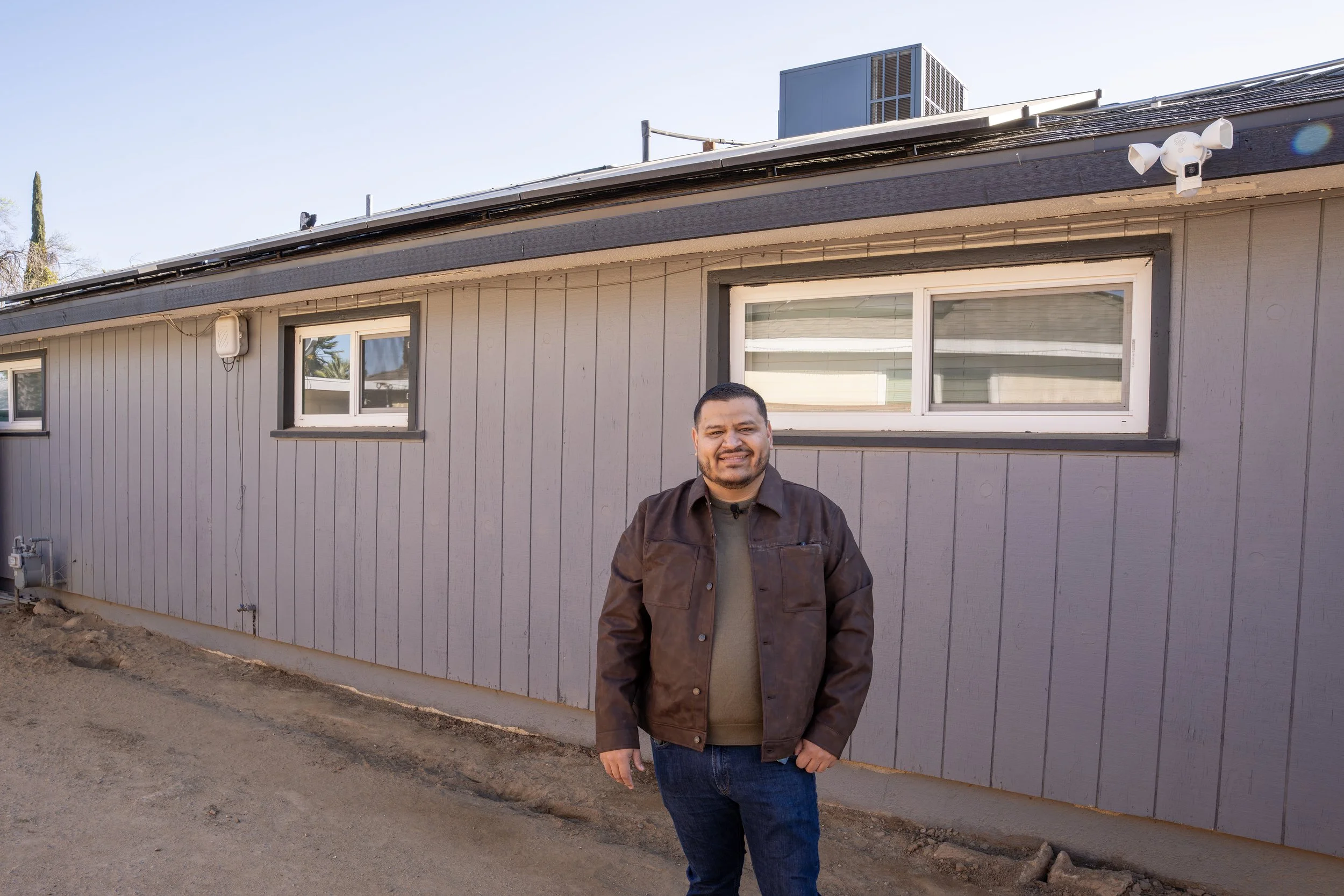
Mrs. Rojas and her family now have a solar photovoltaic system and energy efficiency upgrades in their home, including a high efficient air conditioning system, new windows that minimize heat transfer, a smart thermostat, and other measures that reduce energy costs while improving the comfort and livability of their home and its resiliency to climate change.
Solar PV and Energy Efficiency Upgrades Benefit Low-income Residents in San Diego
The Allison Apartments, located in San Diego, were completely renovated and energy conserving refrigerators, LED lighting, and heat pump water heaters funded by LIWP were installed. Another CSD contracted partner, GRID Alternatives, installed an 87-kilowatt rooftop solar PV system and provided a workforce development opportunity to ten trainees, nine of whom subsequently found employment in the solar industry.
Energy Efficiency and Solar PV System Brings Comfort and Affordability to Mecca Household
For years, Irma Vargas’ family of four struggled to pay the high utility bills that come with living on the north shore of the Salton Sea in Mecca while still maintaining a comfortable and healthy home for their children. The family’s limited income made the $400 per month bill nearly impossible during the summer months when temperatures can exceed 110°F in their Riverside County community.
Replate, Inc. Matches Surplus Food with Communities in Need
Food Waste Prevention and Rescue in Alameda County
Expanding the Wholesale Produce Market Recovery Program in Los Angeles
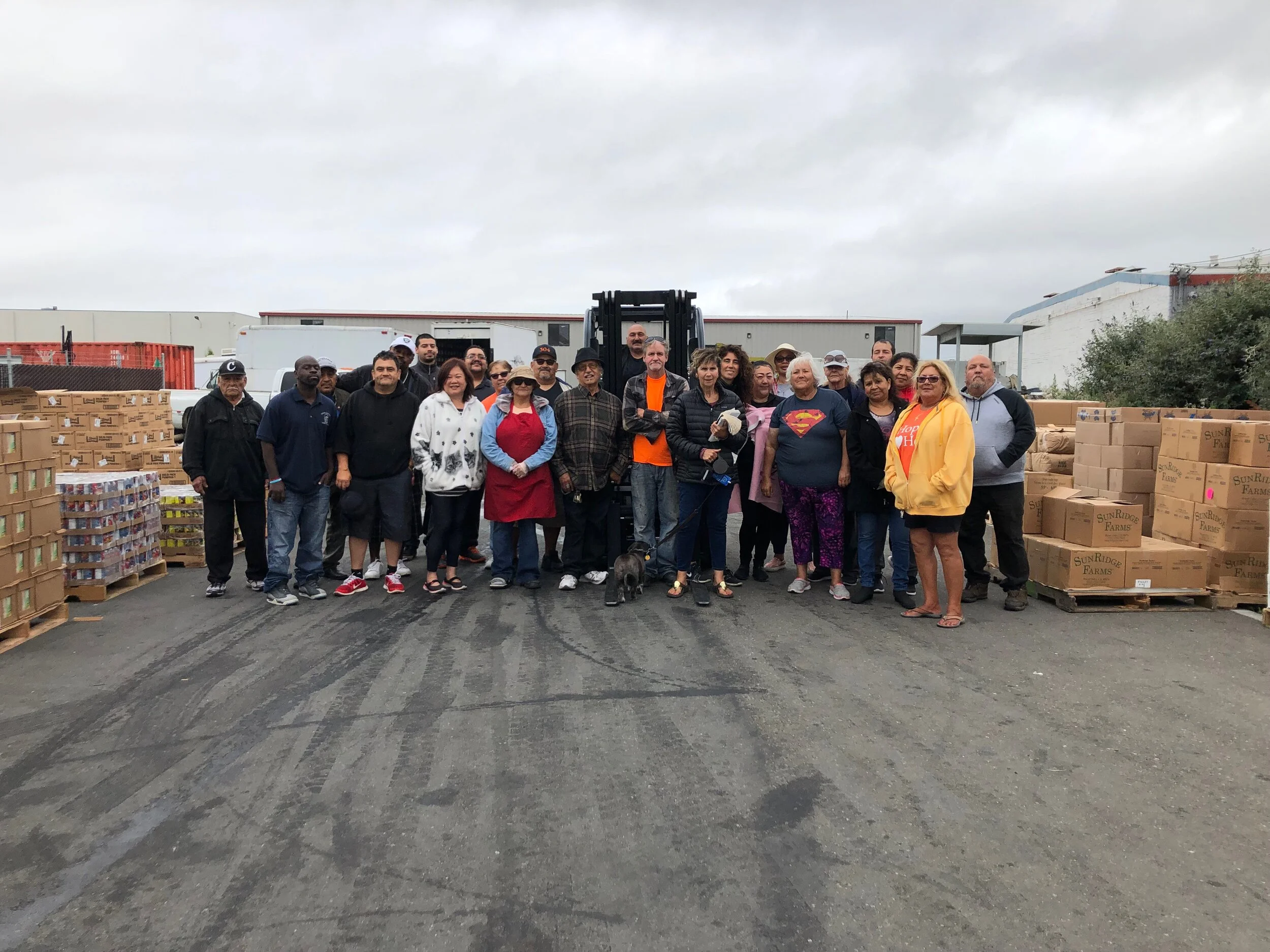
Food Forward, which recovers produce and makes it available to hunger relief agencies in eight southern California counties, is expanding its Wholesale Produce Market Recovery Program. With the help of California Climate Investments, Food Forward will open a new “Produce Depot” near the wholesale produce market in downtown Los Angeles and double its food recovery capacity. In addition to fighting food insecurity in southern California, the project will benefit disadvantaged communities and the environment by supporting jobs and combating climate change.
Driving Clean Financing Assistance Program
The Community Housing Development Corporation, a community‑based organization in Richmond, received over $6.5 million from California Climate Investments for a pilot project to assist with the purchase of newer, cleaner cars in low‑income households in Sacramento and the Bay Area. The pilot project, known as Driving Clean Assistance Program, provides up to $5,000 for hybrid or plug‑in electric vehicle price buy‑down and up to an additional $2,000 for electric vehicle service equipment. The pilot enables low‑income individuals and families, who would otherwise not qualify for a loan due to credit challenges, to obtain a loan at competitive rates. This transformative initiative includes credit counseling, budget counseling, and financial education.
Community Knowledge and Collaborative Research Facilitate Equitable Energy Transitions
In Los Angeles County, transitioning to clean, renewable energy will improve air quality and reduce the overall carbon footprint in California’s most populous region. With a $638,878 award from California Climate Investments through the Climate Change Research Program, a partnership led by the University of California, Los Angeles and Liberty Hill Foundation is helping to make this transition equitable, affordable, and beneficial for people living in the area’s priority populations. That means engaging these communities at all stages of the research.