

California Climate Investments reach diverse communities across the state. Ensuring projects benefit priority populations helps funding reach people most affected by pollution or with fewer resources to respond to climate change.
Some Californians live in areas exposed to multiple sources of pollution, and some communities have fewer resources to invest in low-carbon practices, transportation, or climate resilience. Communities facing these challenges can be hit hardest by climate change. Recognizing this, the Legislature requires that at least 35% of California Climate Investments benefit priority populations. Across the state, California Climate Investments benefit a broad range of communities in many ways, from more transportation options and lower energy costs to new job opportunities and more climate resilient communities.
How Priority Populations are Defined
Per Senate Bill 535 and Assembly Bill 1550, 35% California Climate Investments must be allocated to disadvantaged communities, low-income communities and low-Income households, collectively referred to as priority populations.
These communities are defined as follows:
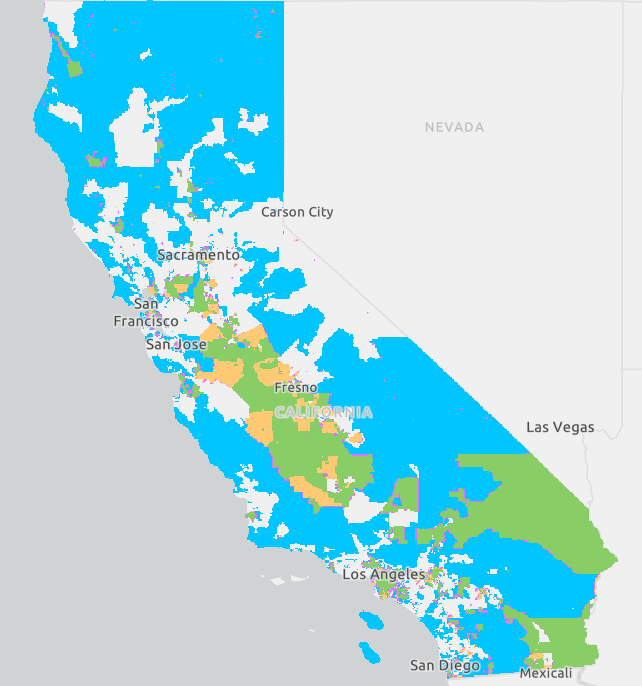
Disadvantaged communities
The California Environmental Protection Agency (CalEPA) is responsible for identifying disadvantaged communities. In 2026, CalEPA released an updated designation and currently defines disadvantaged communities as:
The census tracts with the highest 25% of overall scores in the state based on CalEnviroScreen 5.0;
Census tracts lacking overall scores in CalEnviroScreen 5.0 due to data gaps but receiving the highest 5% of scores on a composite score measuring cumulative pollution burden;
Census tracts that overlap at least 25% with a 2022 disadvantaged community-designated census tract based on CalEnviroScreen 4.0; and
Lands under the control of federally recognized tribes, with updated tribal boundaries data.
Low-Income communities and households
Those with incomes either at or below 80% of the statewide median or below a threshold designated as low-income by the Department of Housing and Community Development. Low-income communities are identified based on the income of an area, while low-income households are priority populations regardless of location. Together, these categories help California Climate Investments reach and benefit low-income Californians across the state.

Priority Populations Map 5.0
Use the Priority Populations Map to view disadvantaged and low-income communities.
Use Priority Populations 5.0 for projects selected on or after Sept 18, 2026.
Use Priority Populations 4.0 for projects selected on or after July 1, 2022.
For earlier versions, contact GGRFprogram@arb.ca.gov
Agencies administering California Climate Investment programs use the map and benefit assessment tools to determine if a project provides a benefit to a priority population. Other requirements for agencies that administer California Climate Investments are outlined in the Funding Guidelines.
How California Climate Investments Benefit Priority Populations
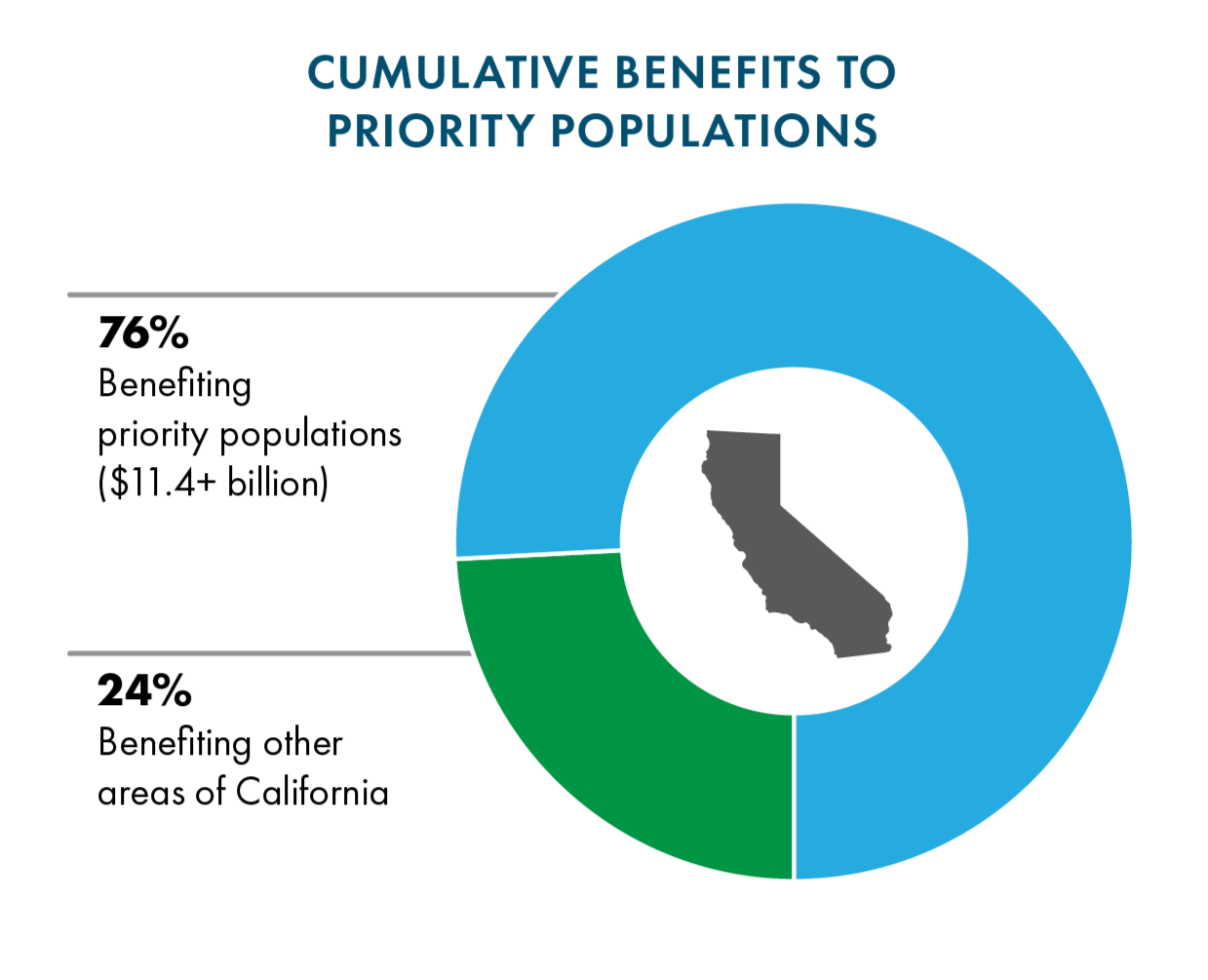
As of October 2025, 76%, or $11.4 billion+, of implemented California Climate Investments project funding is benefiting priority populations, greatly exceeding statutory requirements. These investments are providing a variety of benefits including cleaner air, increased mobility options, greener communities, expanded access to clean energy, and new employment opportunities.
For detailed information about the share of funds benefiting priority populations under Senate Bill 535 and Assembly Bill 1550, view the Annual Report.
High‑Speed Rail expenditures are not included in these calculations. The Economic Investment - California High-Speed Rail highlights how cumulative funds implemented by the California High-Speed Rail Authority occurred in designated disadvantaged communities throughout California, spurring economic activity in these areas.
Learn more about investment targets for priority populations.
Investments in Action: Projects Providing Benefits to Priority Populations
Equity and environmental justice issues are core to California Climate Investments. There are many examples of projects funded by California Climate Investments that elevate community priorities and leadership to identify needs and develop solutions. Select from the featured project profiles below to see a few of the many examples of the benefits California Climate Investments provide to priority populations.

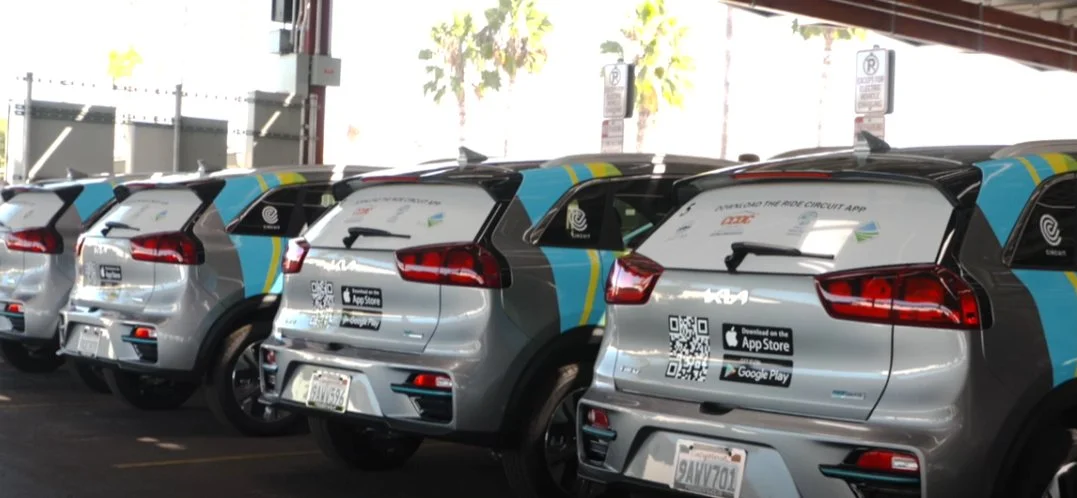
Since 2015, the City of Los Angeles (LA), in partnership with the LA Department of Transportation and the Mayor’s Office, has received a total of $4.7 million from CARB’s Clean Mobility Options program for a zero‑emission car share pilot project. This project, known as BlueLA, is operating in 13 underserved communities that face significant air quality burdens and have historically been excluded from environmental benefits. BlueLA provides a clean and affordable mobility option in these communities, which include Downtown, Pico Union, West Lake, and Koreatown.

California Strategic Growth Council
With funding from the Climate Change Research Program, PSE Healthy Energy is working with the Asian Pacific Environmental Network and Communities for a Better Environment to identify opportunities to build solar+storage resilience hubs at schools and community centers across California.

California Air Resources Board
With funding from the Community Air Grants Program, community-led project SJVAir is providing accurate air quality data and real time alerts to residents in disadvantaged communities located up to 30 miles away from the nearest regulatory PM 2.5 monitor.

California Natural Resources Agency
The Cesar Chavez Living Schoolyard project transformed an unshaded asphalt-covered schoolyard into a vibrant, tree-covered, park-like setting in a critically an underserved neighborhood in East Oakland. The site hosts two elementary schools, and their more than 600 students now enjoy a real grass play field, an expanded learning garden featuring an outdoor classroom and fruit orchard, a dry creek, a nature-play zone, as well as pollinator-attracting landscape areas, expanded seating and gathering options, and 65 new trees

California Department of Transportation
In 2022, the California Department of Transportation issued its 1,000th award through LCTOP to Stanislaus Regional Transit Authority (StanRTA) for their Free Fares Project. Through the Free Fares Project, StanRTA provides free, safe, and reliable transportation services for residents to travel to educational institutions, employment centers, medical offices, grocery stores, and shopping malls. Transit fares are often a barrier to residents in disadvantaged communities but with the support from LCTOP, the Free Fares Project has made it possible for riders to use public transportation without any financial hardship.
California Air Resources Board
Through California Climate Investments the City of Chula Vista received close to $1 million through the Clean Mobility Voucher Pilot Program to launch an on-demand community shuttle service in the northwest region of the city.

State Coastal Conservancy
Thanks to $488,760 from the Climate Ready Program, the Big Sur Land Trust has taken a big step towards transforming Carr Lake into a new park and greenspace for residents in the heart of the City of Salinas. The community has long imagined transforming Carr Lake into a multi-benefit green space, serving as a “central park” in the heart of Salinas.
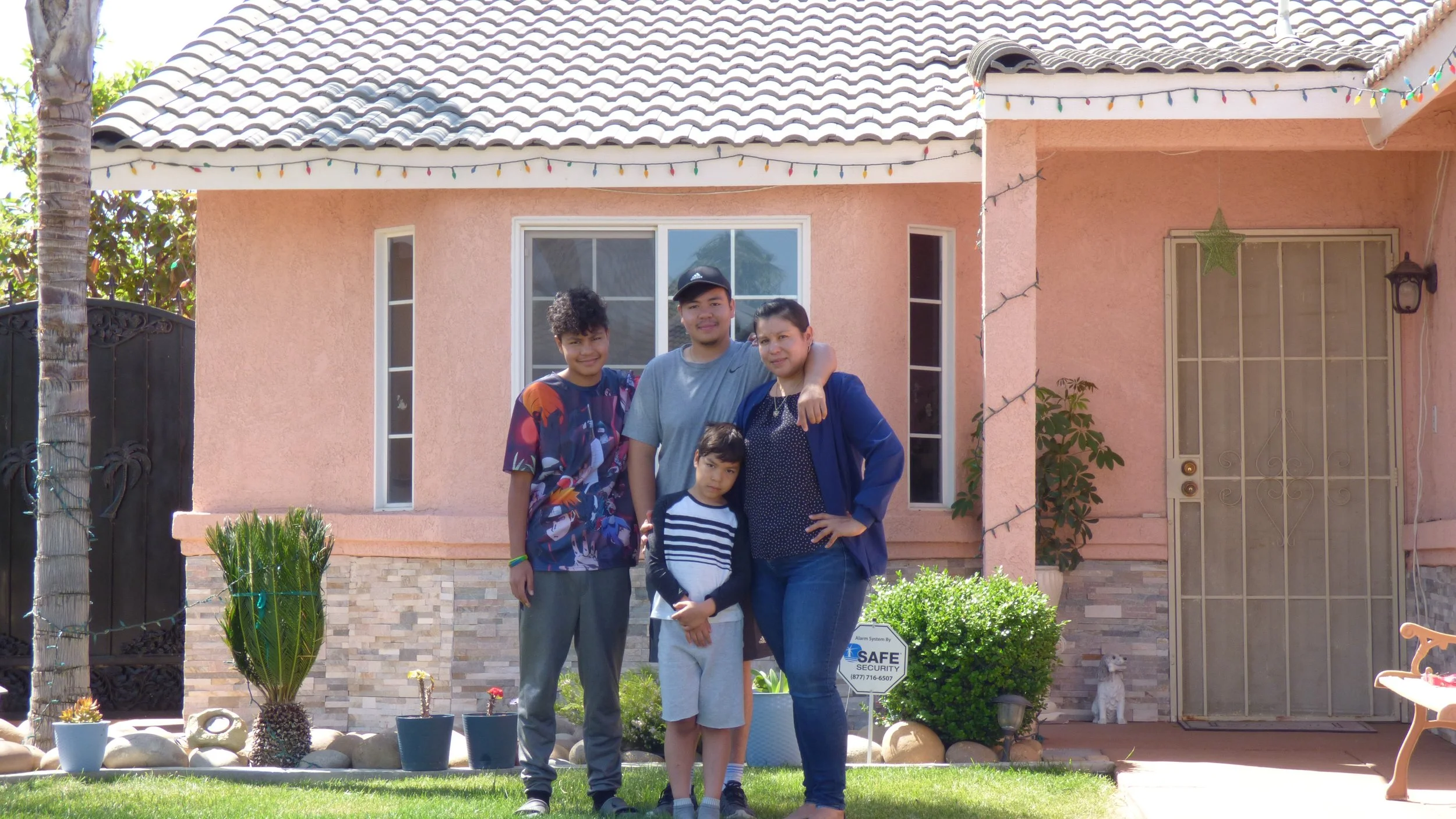
Thanks to funding from California Climate Investments through the Low-Income Weatherization Program (LIWP), Rocio Hernandez and her family reduced their home energy costs by installing a new rooftop solar system and energy efficiency upgrades. At first, Mrs. Hernandez thought the referral flyer her husband brought home after work as a seasonal farmworker during the grape harvest in Delano was too good to be true. A local farmworker agency provided information about the LIWP Farmworker Housing Component, a California Climate Investment program focusing exclusively on the installation of energy efficiency measures and solar photovoltaics (PV) to reduce greenhouse gas emissions for farmworker households at no cost.

Kompogas SLO Inc. received $3 million through the Organics Grants program to build a high-solids anaerobic digester, to be known as the Lancaster Organic Waste Facility, at the existing Lancaster Landfill and Recycling Center in Antelope Valley. With this new anaerobic digester, Kompogas SLO Inc. will be able to process residential food and green waste collected by Waste Management Inc. throughout Antelope Valley, including in the cities of Lancaster and Palmdale, and turn it into renewable natural gas and high-grade compost.

Supported by $2.4 million from a $23 million Transformative Climate Communities implementation grant, a coalition of community members, non-profits, and public-sector agencies called Green Together, is working to build a new generation of air quality ambassadors in the Pacoima and Sun Valley communities of the San Fernando Valley. The Clean Air Ambassadors Program, established as part of the Green Together Community Engagement Plan, trains community youth organizers through workshops covering air quality monitoring, health, climate change and air pollution. Through the program, ambassadors learn how to collect and interpret data using scientific tools to measure local particulate matter pollution. Ambassadors also learn how to communicate air pollution principles and advocate for data-informed clean air solutions. In 2021, the Clean Air Ambassadors Program hosted its inaugural class of youth leaders.
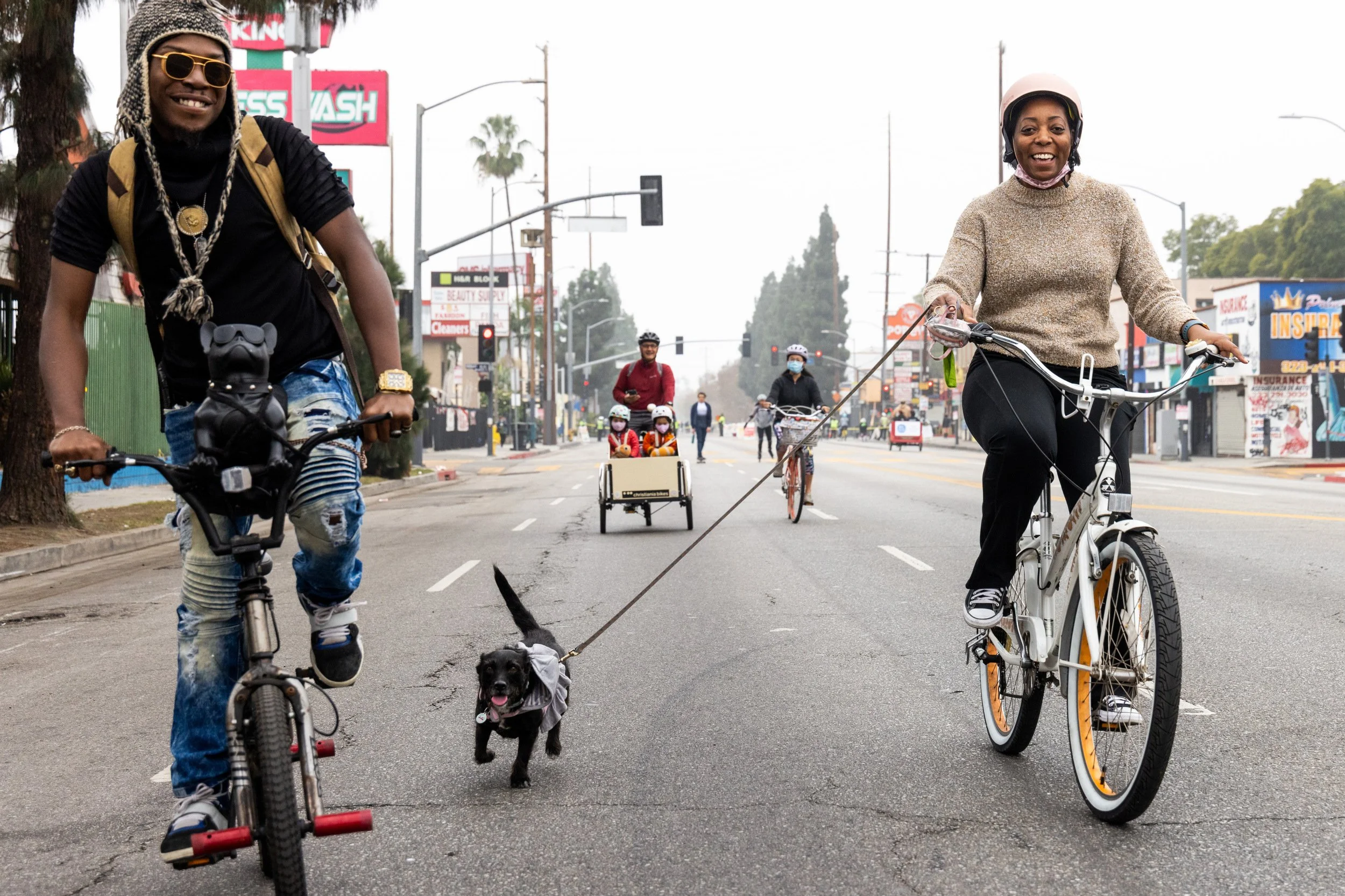
The Sustainable Transportation Equity Project (STEP) is designed to increase transportation equity in disadvantaged and low-income communities by funding planning and clean transportation projects and directly engaging community residents in clean transportation solutions. STEP achieves this via two grant types: Implementation Grants and Planning and Capacity Building Grants. Paid for by Cap-and-Trade dollars, the grants ultimately will help people get where they need to go — be it the doctor’s office or daycare — without using a personal vehicle.

People’s Self-Help Housing was awarded over $630,000 from the Low-Income Weatherization Program’s Multi‑Family Energy Efficiency and Renewables program to invest in the health and well-being of its low-income farmworker community in Santa Maria, known as Los Adobes de Maria. The homes of the 65 farmworker families living in Los Adobes de Maria will receive energy efficiency upgrades that will reduce energy consumption and lower their bills.

In 2019, the Capitol Corridor Joint Powers Authority, in partnership with California Department of Transportation’s Division of Mass Transit, was selected by the Bay Area Air Quality Management District to receive $7.4 million from the Community Air Protection program to help replace two diesel-powered locomotives with two new Siemens Charger Tier 4 locomotives. These locomotives are now operating on the Capitol Corridor line from Auburn-Sacramento to Silicon Valley and run through disadvantaged and low-income communities in San Francisco, Oakland, Berkeley, and more. The new locomotives achieve a 90 percent reduction in particulate matter emissions and an 80 percent reduction in oxides of nitrogen emissions compared to the old, higher-polluting locomotives.
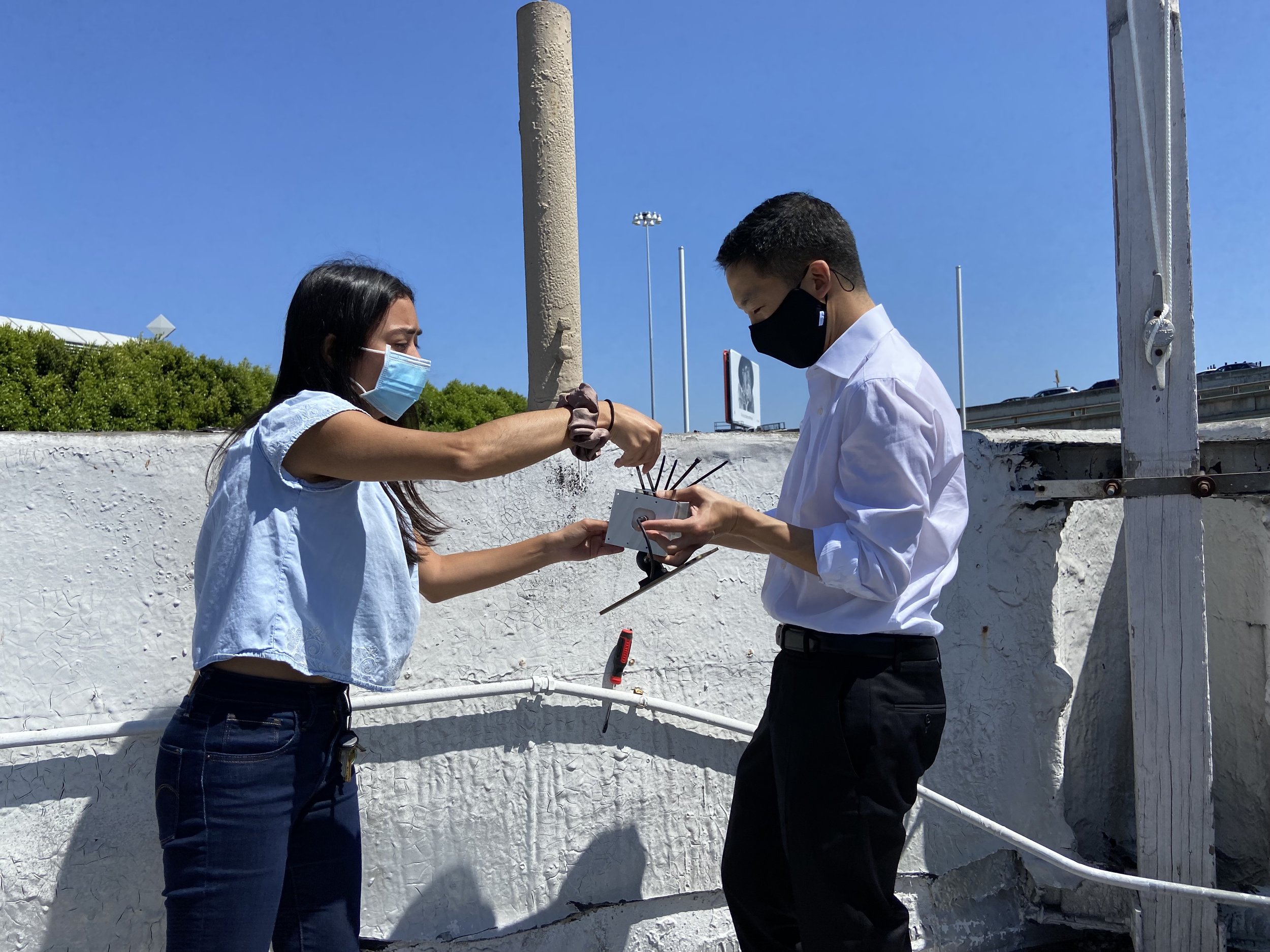
Brightline Defense, an environmental justice nonprofit organization, was awarded $300,000 from the Community Air Grants program to support the Brightline Air Quality Monitoring Program. This community-driven program that will install, collect, and analyze data from 15 stationary air quality sensors in heavily populated, low-income communities throughout Eastern San Francisco. The data these sensors collect are publicly available and can be used to help shape programs and policies to create cleaner air in these communities.

The Partners Advancing Climate Equity (PACE) pilot program is a capacity-building program administered by the California Strategic Growth Council and funded by the Greenhouse Gas Reduction Fund. The year-long pilot program began in 2021 and supported 22 participants – all local leaders deeply rooted in their communities across the state – and sought to increase their ability to advance equitable and community-driven climate solutions.

SSA Marine received $4.82 million from the Clean Off-Road Equipment Voucher Incentive Project, also known as CORE, to purchase 20 zero-emission forklifts and charging infrastructure for their locations in Stockton and West Sacramento. This equipment will help reduce greenhouse gases and air pollutants in census tracts that are heavily burdened by diesel particulate matter and other air pollutants.

Using funds awarded by the Clean Mobility Options program, the Big Pine Paiute Tribe of the Owens Valley, a federally recognized California Native American Tribe, conducted a community-driven transportation needs assessment to determine the transportation needs and preferences of Big Pine Paiute’s residents. After the needs assessment is completed and approved by their Tribal Council, the Big Pine Paiute Tribe can use it to apply for additional funding from Clean Mobility Options or other transportation grant programs to implement clean mobility projects.

Supported in part by nearly $23 million award from the Affordable Housing and Sustainable Communities Program, Resources for Community Development (RCD) will provide 87 affordable rental homes in the city of Berkeley through the Maudelle Miller Shirek Community project. In addition to large, family-sized apartments and permanent supportive housing for formerly homeless residents, the ground floor of the building will become the headquarters of Healthy Black Families, Inc., a South Berkeley-based nonprofit dedicated to the health of Black families in the community. This project will help Black families and formerly homeless individuals live healthier lives and receive health services through on-site programs and services offered by Healthy Black Families, Inc.,, RCD’s resident services, and the City of Berkeley Mental Health department and third-party service providers.

The California Alliance for Community Composting (Alliance)is helping community groups develop or expand 50 community composting sites in disadvantaged and low-income communities across California using funds from the Community Composting for Green Spaces Grant Program. Altogether, these sites are expected to prevent nearly 11,000 tons of organic waste from going to landfills by creating compost, which prevents the release of greenhouse gases during its decomposition. The Alliance’s work will also provide communities with additional benefits, including free compost, job training, and more.

Funded in part by a nearly $1,000,000 grant from California Department of Forestry and Fire Protection’s Urban and Community Forestry Program, the Conservation Corps of Long Beach (CCLB) is implementing an urban wood recovery apprenticeship program that has the potential to be a model for other programs across California. This program is teaching Corpsmembers how to remove hazardous trees throughout the city, control insects and diseases, and divert woody biomass from landfills to help keep greenhouse gases sequestered in the wood. Additionally, trees will be replaced to mitigate poor air quality, a lack of urban green space, and improve storm water retention in disadvantaged communities. Ultimately, this program will provide a foundation for Corpsmembers interested pursuing jobs in urban forestry.

Thanks to $50,000 from the California Air Resources Board’s Fluorinated Gas Reduction Incentive Program, Stater Bros. Markets installed a climate-friendly refrigeration system at a new supermarket in Whittier that will result in a reduction of greenhouse gas emissions that is the equivalent to taking more than 1,000 vehicles off the road for one year. Since refrigerants are among the fastest growing climate pollutants worldwide it is important to have projects like this one to demonstrate that transitioning the grocery sector toward cleaner refrigerants is an effective strategy for mitigating climate change.
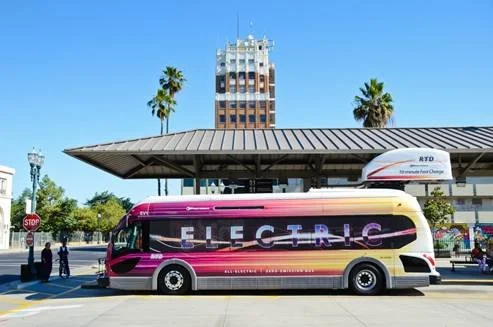
The San Joaquin Valley Transit Electrification Project has deployed 15 zero-emission battery electric transit buses, and 15 charging stations, in disadvantaged communities throughout the San Joaquin Valley.

In May 2017, the Sacramento Metropolitan Air Quality Management District (AQMD) and its partners unveiled the first six of 29 electric school buses — what will be the largest electric school bus deployment in the U.S. — at a press event in north Sacramento.

The adjacent ports of Long Beach and Los Angeles combined are the largest fixed sources of air pollution in the South Coast Air Basin, one of the most polluted air basins in the United States, in large part because the trucks and equipment used at the ports burn diesel fuel. Recognizing this, the Sustainable Terminals Accelerating Regional Transformation demonstration project was awarded $50 million to replace trucks and equipment with zero‑emission technology. The funding, which comes from California Climate Investments, supports the deployment of 102 pieces of zero‑emission terminal equipment and trucks at seaports across California, including at the ports of Los Angeles and Long Beach. These funds are also supporting the development of new, cleaner tugboats; the deployment of two container vessels with cleaner‑burning engines; and advanced workforce development programs to support sustainable goods movement across California.

This program will deploy 38 electric yard trucks, 9 electric gantry cranes, 18 electric heavy lift forklifts, and 15 zero-emission Class 8 trucks. The program is also including a workforce development component with curriculum being developed to support the deployment of this technology with local school districts near the three port locations, community colleges and Long Beach State University.

Jolene was approved for a voucher covering the entire cost of a new wood stove and its installation.

The Association of California Community and Energy Services partner agencies replaced 1,090 washing machines and 855 dishwashers with water- and energy-efficient machines . These energy and water savings will continuously provide cost savings across various communities in Kern, Madera, Contra Costa, Kings, San Francisco, and Merced counties and other low-income homes in San Mateo, Shasta, and Tehama counties.

More than 1,900 households in the San Gabriel Valley are saving money, water and energy through a new rebate program supported by Cap-and-Trade dollars.

“For the community; by the community” is the motto of the South-East Madera County United (SEMCU), a non-profit mutual benefit organization in the heart of the San Joaquin Valley. In May 2015, with a $218,594 grant from the DWR, members set out to provide water efficiency devices for approximately 75 percent of homes and businesses within SEMCU’s boundary, an area encompassing five disadvantaged community census tracts.

One of the Los Angeles Neighborhood Land Trust’s most exciting parks currently under construction is the 8.5‑acre, multi‑benefit Wishing Tree Park located in unincorporated West Carson, Los Angeles County. This project has been in the works for decades, and thanks in part to a $2,500,000 grant from California Climate Investments through the Urban Greening Program the park will be opening to the public in late 2021.