In 2019, the Capitol Corridor Joint Powers Authority, in partnership with California Department of Transportation’s Division of Mass Transit, was selected by the Bay Area Air Quality Management District to receive $7.4 million from the Community Air Protection program to help replace two diesel-powered locomotives with two new Siemens Charger Tier 4 locomotives. These locomotives are now operating on the Capitol Corridor line from Auburn-Sacramento to Silicon Valley and run through disadvantaged and low-income communities in San Francisco, Oakland, Berkeley, and more. The new locomotives achieve a 90 percent reduction in particulate matter emissions and an 80 percent reduction in oxides of nitrogen emissions compared to the old, higher-polluting locomotives.
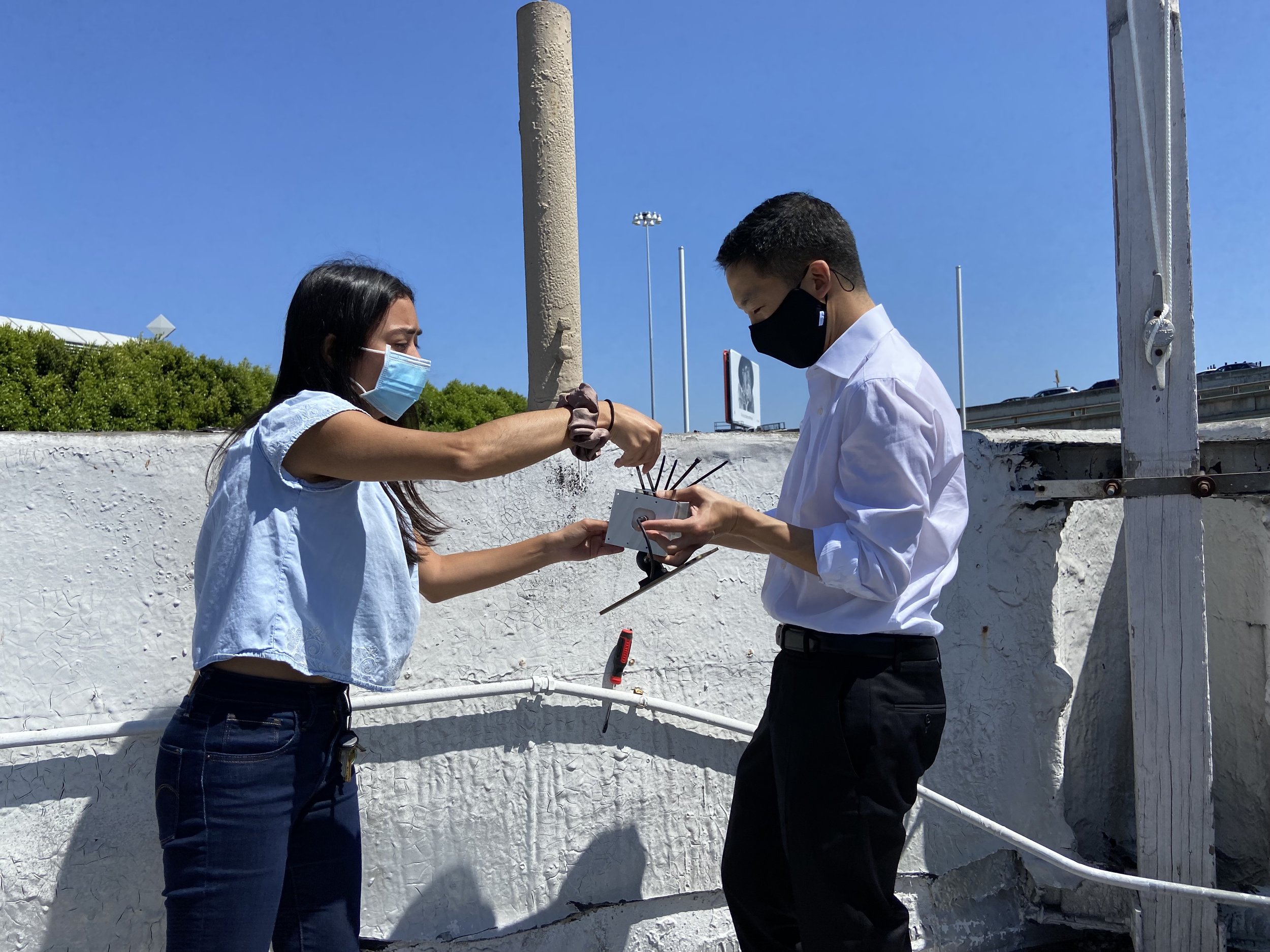
Collecting Air Quality Data to Improve Community Health in Eastern San Francisco
Brightline Defense, an environmental justice nonprofit organization, was awarded $300,000 from the Community Air Grants program to support the Brightline Air Quality Monitoring Program. This community-driven program that will install, collect, and analyze data from 15 stationary air quality sensors in heavily populated, low-income communities throughout Eastern San Francisco. The data these sensors collect are publicly available and can be used to help shape programs and policies to create cleaner air in these communities.
Launching a New Capacity Building and Community Empowerment Project
The Partners Advancing Climate Equity (PACE) pilot program is a capacity-building program administered by the California Strategic Growth Council and funded by the Greenhouse Gas Reduction Fund. The year-long pilot program began in 2021 and supported 22 participants – all local leaders deeply rooted in their communities across the state – and sought to increase their ability to advance equitable and community-driven climate solutions.
Advancing Ecological, Cultural, and Community Resilience with Tribal Nations in Southern California
With a $990,350 award from the Climate Change Research Program, the Resilient Restoration project – led by the Climate Science Alliance Tribal Working Group, University of California Riverside, and San Diego State University – is promoting Tribal resilience by developing knowledge and supporting actions that enhance persistence of cultural practices with a focus on preserving the ecosystems and species that are integral to Tribal communities.
Climate Resilience Planning for Key Sacramento River Watersheds
Supported by $400,000 from the Climate Adaptation and Resiliency Program, a coalition of federal, academic, non-profit and private organizations has developed a modeling tool to enhance climate adaptation and resilience planning in five Sacramento River watersheds. These watersheds provide the vast majority of California’s utilized water and over 80 percent of the freshwater to San Francisco Bay. By estimating the ecological returns of conservation and restoration efforts, the modeling tool will help determine what future actions and investments would best restore and protect the health of this important region.
Zero-Emission Forklifts Bring Air Pollution Reductions to Portside Communities
SSA Marine received $4.82 million from the Clean Off-Road Equipment Voucher Incentive Project, also known as CORE, to purchase 20 zero-emission forklifts and charging infrastructure for their locations in Stockton and West Sacramento. This equipment will help reduce greenhouse gases and air pollutants in census tracts that are heavily burdened by diesel particulate matter and other air pollutants.
Big Pine Paiute Tribe of the Owens Valley Community Transportation Needs Assessment
Using funds awarded by the Clean Mobility Options program, the Big Pine Paiute Tribe of the Owens Valley, a federally recognized California Native American Tribe, conducted a community-driven transportation needs assessment to determine the transportation needs and preferences of Big Pine Paiute’s residents. After the needs assessment is completed and approved by their Tribal Council, the Big Pine Paiute Tribe can use it to apply for additional funding from Clean Mobility Options or other transportation grant programs to implement clean mobility projects.
Supporting Families with Affordable Housing
Supported in part by nearly $23 million award from the Affordable Housing and Sustainable Communities Program, Resources for Community Development (RCD) will provide 87 affordable rental homes in the city of Berkeley through the Maudelle Miller Shirek Community project. In addition to large, family-sized apartments and permanent supportive housing for formerly homeless residents, the ground floor of the building will become the headquarters of Healthy Black Families, Inc., a South Berkeley-based nonprofit dedicated to the health of Black families in the community. This project will help Black families and formerly homeless individuals live healthier lives and receive health services through on-site programs and services offered by Healthy Black Families, Inc.,, RCD’s resident services, and the City of Berkeley Mental Health department and third-party service providers.
Promoting Transit Accessibility through the Solano Regional Transit Initiative
Thanks in part to over $4 million in funds from the Transit and Intercity Rail Capital Program, the Solano Transportation Authority has linked underserved parts of the cities of Vallejo and Fairfield to regional public transit services. This funding is supporting the $10.8 million Solano Regional Transit Initiative (SRTI), which is providing residents in Solano county with increased access to faster, more efficient transit options that reduce greenhouse gas emissions while connecting them to employment, health, educational, and other facilities that can improve their quality of life.
Turtle Rock Biomass Collection Site Helps Reduce Wildfire Severity
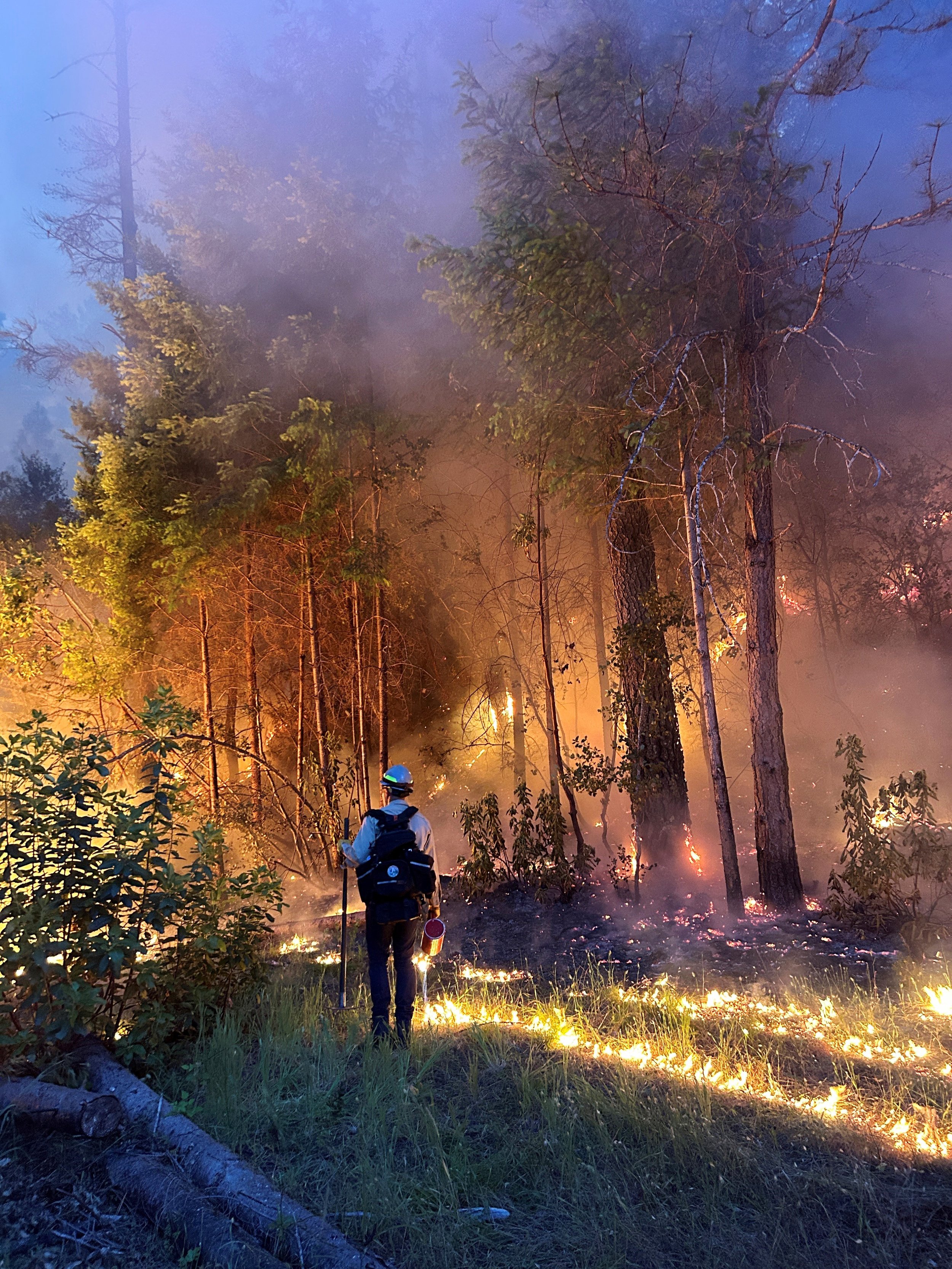
Alpine County was awarded $120,810 from the Fire Prevention Grants program to support the operation of The Turtle Rock Park Biomass Collection site. The facility provides communities in eastern Alpine County with a place to send green waste and biomass removed while creating defensible space around their properties to reduce the risk of future wildfire damage. By reducing the intensity of future wildfires, defensible space practices also reduce the emission of air pollutants and greenhouse gases.
New Community Composting Program Sequesters Carbon While Providing Local-Level Benefits
The California Alliance for Community Composting (Alliance)is helping community groups develop or expand 50 community composting sites in disadvantaged and low-income communities across California using funds from the Community Composting for Green Spaces Grant Program. Altogether, these sites are expected to prevent nearly 11,000 tons of organic waste from going to landfills by creating compost, which prevents the release of greenhouse gases during its decomposition. The Alliance’s work will also provide communities with additional benefits, including free compost, job training, and more.
Long Beach Urban Wood Recovery Apprenticeship Program Prepares Youth for the Future Workforce
Funded in part by a nearly $1,000,000 grant from California Department of Forestry and Fire Protection’s Urban and Community Forestry Program, the Conservation Corps of Long Beach (CCLB) is implementing an urban wood recovery apprenticeship program that has the potential to be a model for other programs across California. This program is teaching Corpsmembers how to remove hazardous trees throughout the city, control insects and diseases, and divert woody biomass from landfills to help keep greenhouse gases sequestered in the wood. Additionally, trees will be replaced to mitigate poor air quality, a lack of urban green space, and improve storm water retention in disadvantaged communities. Ultimately, this program will provide a foundation for Corpsmembers interested pursuing jobs in urban forestry.
Next-generation Refrigeration in New Stater Bros. Markets Grocery Store
Thanks to $50,000 from the California Air Resources Board’s Fluorinated Gas Reduction Incentive Program, Stater Bros. Markets installed a climate-friendly refrigeration system at a new supermarket in Whittier that will result in a reduction of greenhouse gas emissions that is the equivalent to taking more than 1,000 vehicles off the road for one year. Since refrigerants are among the fastest growing climate pollutants worldwide it is important to have projects like this one to demonstrate that transitioning the grocery sector toward cleaner refrigerants is an effective strategy for mitigating climate change.
Coyote Valley Prime Farmland Preserved in Perpetuity
Thanks to a $780,000 grant provided by the Sustainable Agricultural Lands Conservation (SALC) program, the Santa Clara Valley Open Space Authority (the Authority), in partnership with the Santa Clara Valley Transportation Authority and the Santa Clara County Planning Department, were able to purchase a 60-acre farm located in the Coyote Valley of Santa Clara County. This purchase adds to Coyote Valley’s growing network of protected lands and helps combat climate change by protecting prime farmland from being converted to more carbon-intensive land uses. This purchase also furthers the implementation of the comprehensive Santa Clara Valley Agricultural Plan finalized in January 2018, which Andrea Mackenzie, General Manager of the Authority defined as “a roadmap to protecting the multiple benefits that our region’s remaining farmlands and working lands provide.” This plan was also made possible by an award from the SALC program.
Expanding Capacity at the Turtle Rock Park Biomass Collection Site
The project is a continuation of the Turtle Rock Park Biomass Collection site which serves communities in eastern Alpine County. The facility provides a location to collect green waste and biomass that is cleared from private property to create defensible space and thereby reduce wildland fire risk.
Zero-Emission Truck and Bus Project Delivers Cleaner Air in San Joaquin Valley
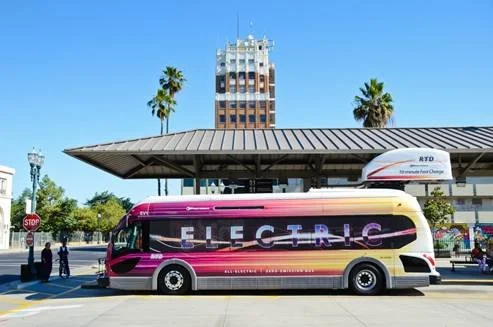
Electric School Buses Benefit Students and Air Quality in Sacramento County
Zero-Emission Technology at Ports Provide Cleaner Air for Vulnerable Residents
The adjacent ports of Long Beach and Los Angeles combined are the largest fixed sources of air pollution in the South Coast Air Basin, one of the most polluted air basins in the United States, in large part because the trucks and equipment used at the ports burn diesel fuel. Recognizing this, the Sustainable Terminals Accelerating Regional Transformation demonstration project was awarded $50 million to replace trucks and equipment with zero‑emission technology. The funding, which comes from California Climate Investments, supports the deployment of 102 pieces of zero‑emission terminal equipment and trucks at seaports across California, including at the ports of Los Angeles and Long Beach. These funds are also supporting the development of new, cleaner tugboats; the deployment of two container vessels with cleaner‑burning engines; and advanced workforce development programs to support sustainable goods movement across California.
Moving Goods with Zero-Emission Technology in the Inland Empire
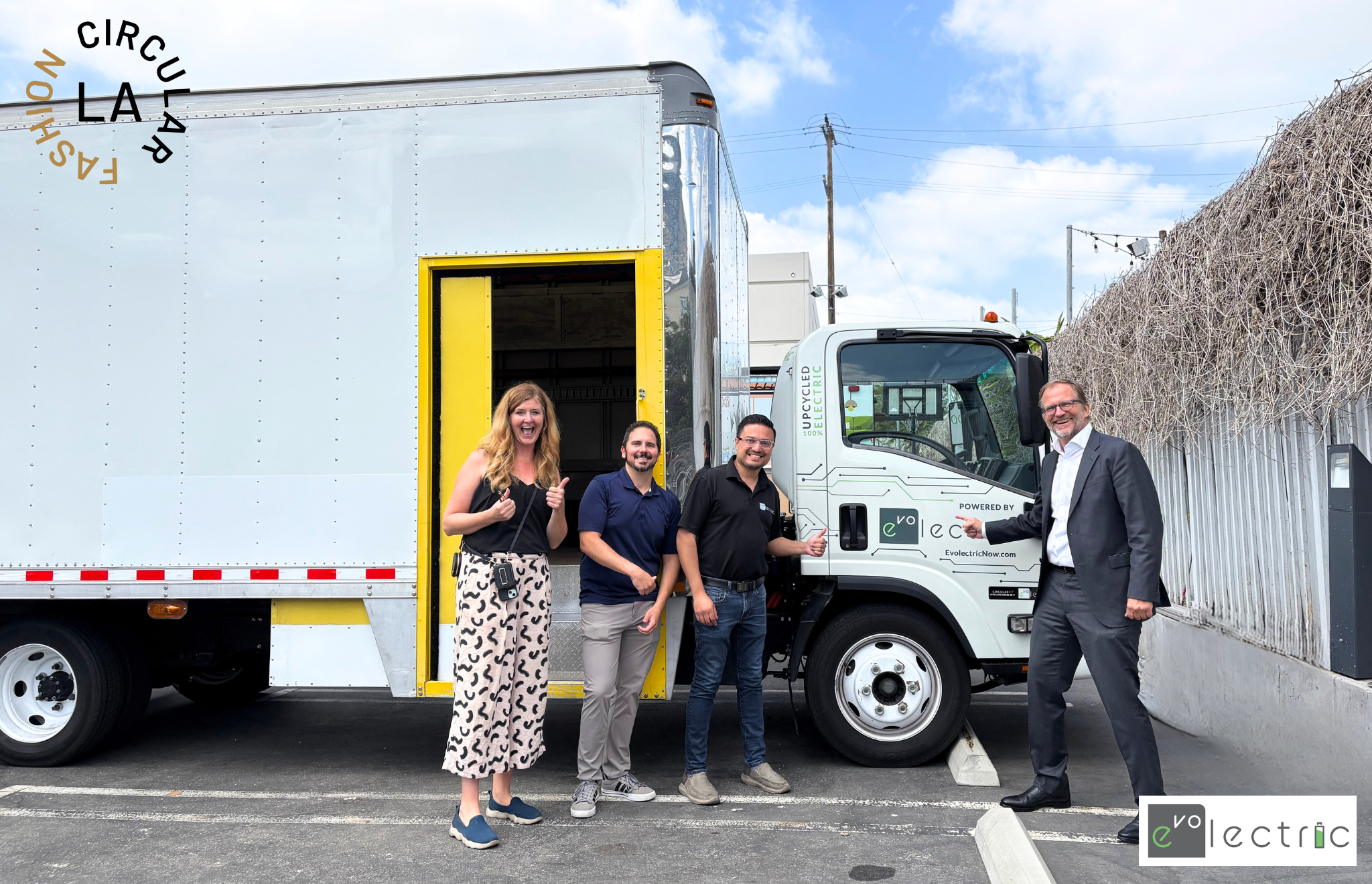
The Volvo Low Impact Green Heavy Transport Solutions (Volvo LIGHTS) project aims to get cleaner trucks on the road to transport goods from ports to the Inland Empire. This project includes 23 zero‑emission battery electric trucks, 29 off‑road battery electric tractors, and 58 Level 2 and direct current fast chargers.
Paving the Way for Zero-Emission Freight Facilities in Long Beach
This program will deploy 38 electric yard trucks, 9 electric gantry cranes, 18 electric heavy lift forklifts, and 15 zero-emission Class 8 trucks. The program is also including a workforce development component with curriculum being developed to support the deployment of this technology with local school districts near the three port locations, community colleges and Long Beach State University.