
Driving north on U.S. Route 101 in Humboldt County, the earthy smell of fertile pastures reveal that you’ve arrived at the Eel River Delta, the heart of Humboldt County’s agricultural area. Continuing north over Table Bluff, down into the Humboldt Bay Area and Elk River Valley, you are met with the added scent of the mudflats and saltmarsh that surround Humboldt Bay.
The Elk River is a symbol of the abundant resources that have supported the region’s economy for generations. Its pastures grew beef, the river produced large amounts of salmon, and its forests held the largest grove of old-growth redwood trees in California. Though the ecosystem suffered for decades as a result of rapid logging, funding from California Climate Investments and the efforts of conservation nonprofits, the City of Eureka, and state and federal partners are helping bring the Elk River back to life again.
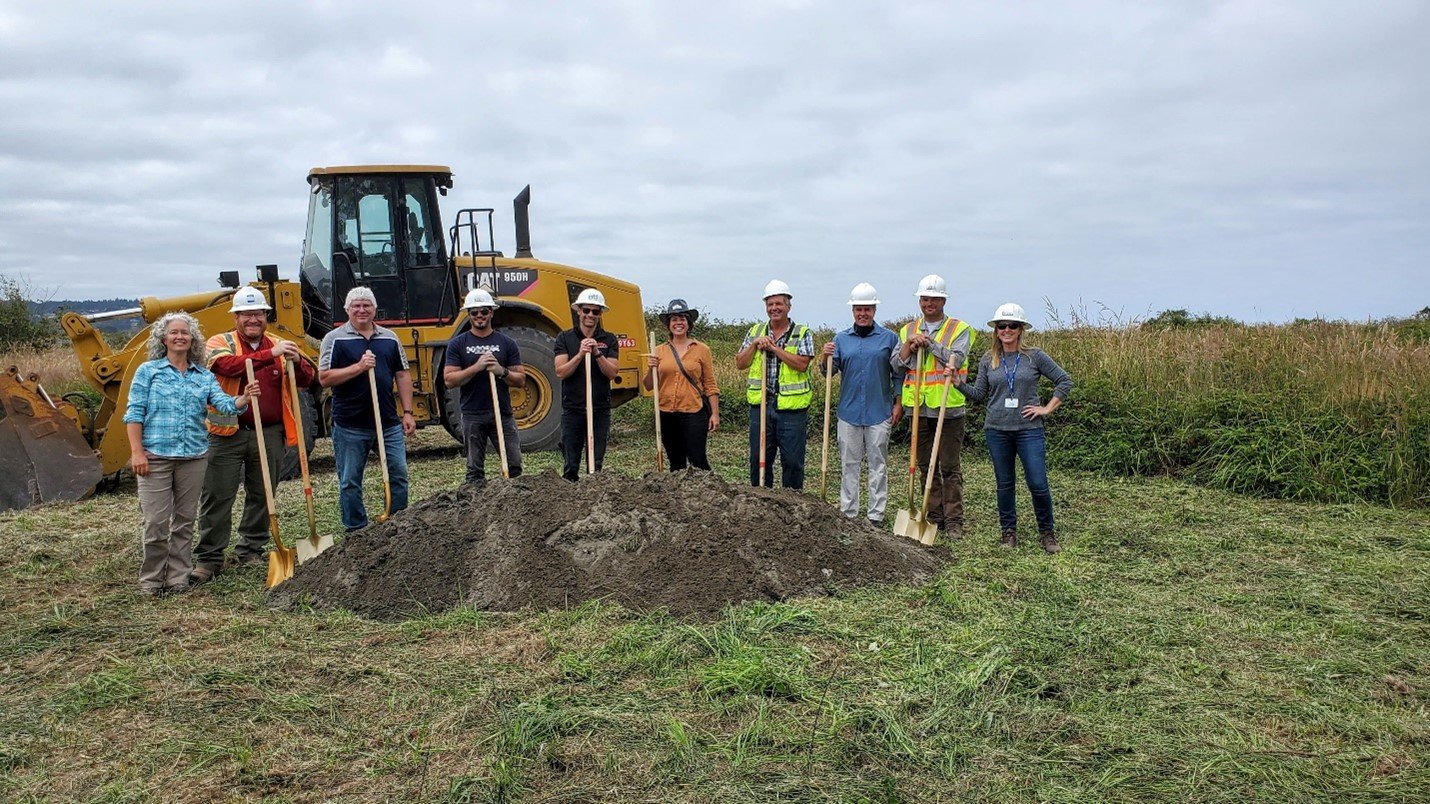
Elk River Estuary Restoration Project: Groundbreaking . Photo courtesy of Katy Marsolan, City of Eureka.
The huge timber industry dominated the regional economy from the mid-19th century to the 1980s, when it began to crumble. Logging of the Elk River Valley’s redwood forests doubled in the mid-1980s, and many old-growth redwood groves were clearcut.
As a result of the rapid clearcutting, the Elk River began filling with sediment. The hillsides, empty of trees, slid into rivers and creeks as winter storms set in. Water spread out across the valley, flooding roads, apple orchards, and homes. The populations of salmon and steelhead, which once filled the Elk River, crashed. Fishing and agriculture, industries that once thrived in the area, were suffering greatly.
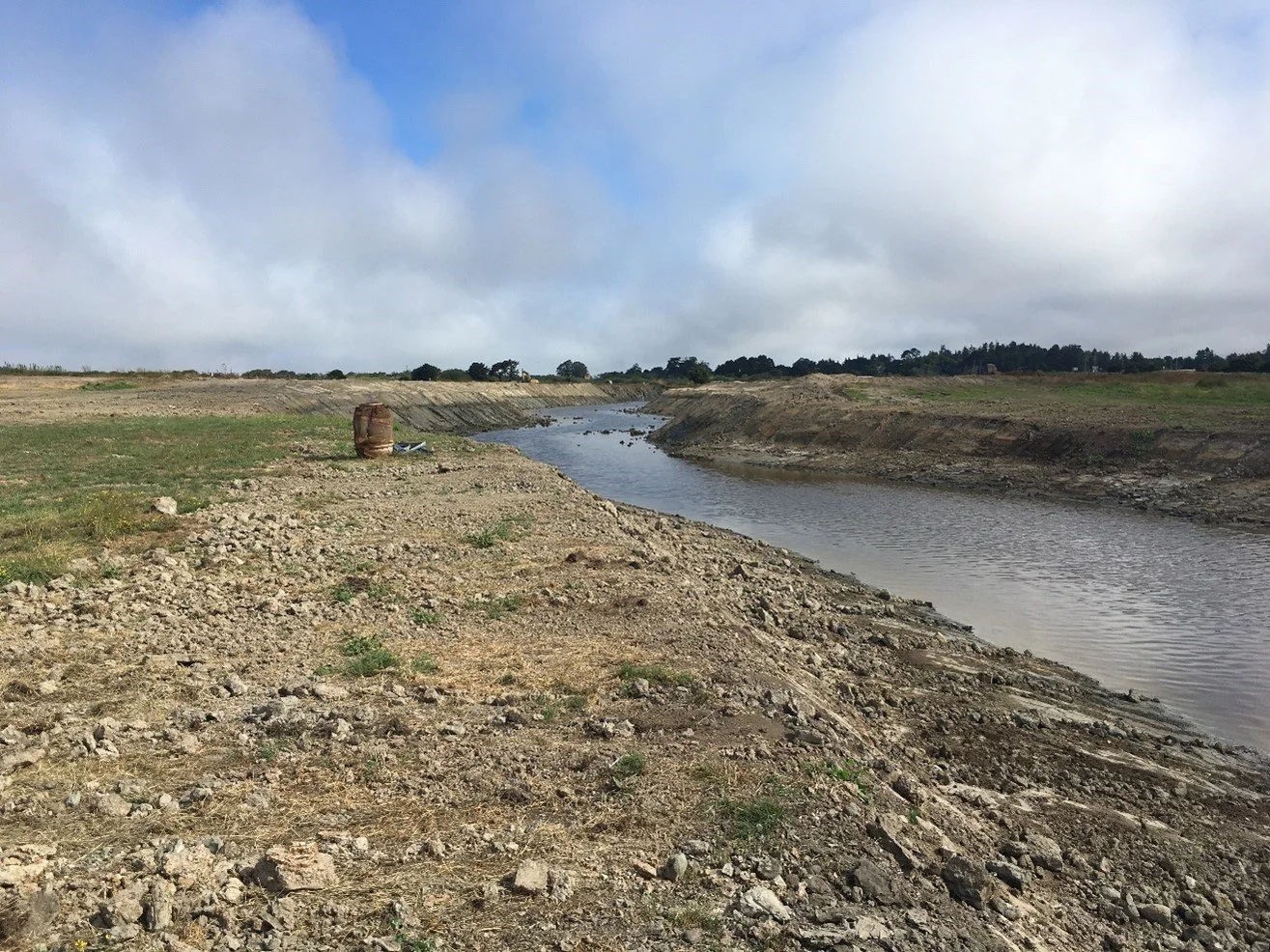
Elk River Estuary Restoration Project: Newly excavated tidal channel. Photo courtesy of Katy Marsolan, City of Eureka.
About ten years ago, Darren Mierau of CalTrout, a nonprofit that helps restore fisheries across California, reached out to the Elk River Valley community to see how they could help. As he learned more about the ongoing challenges that the community faced, CalTrout and community leaders put together a plan to restore the Elk River.
“The Elk River watershed is the largest freshwater tributary to Humboldt Bay,” Mierau explained. “Restoration of the Elk River watershed is extremely important to salmon recovery. If we can help restore the river while also improving the lives of people who live here, that’s a win.”
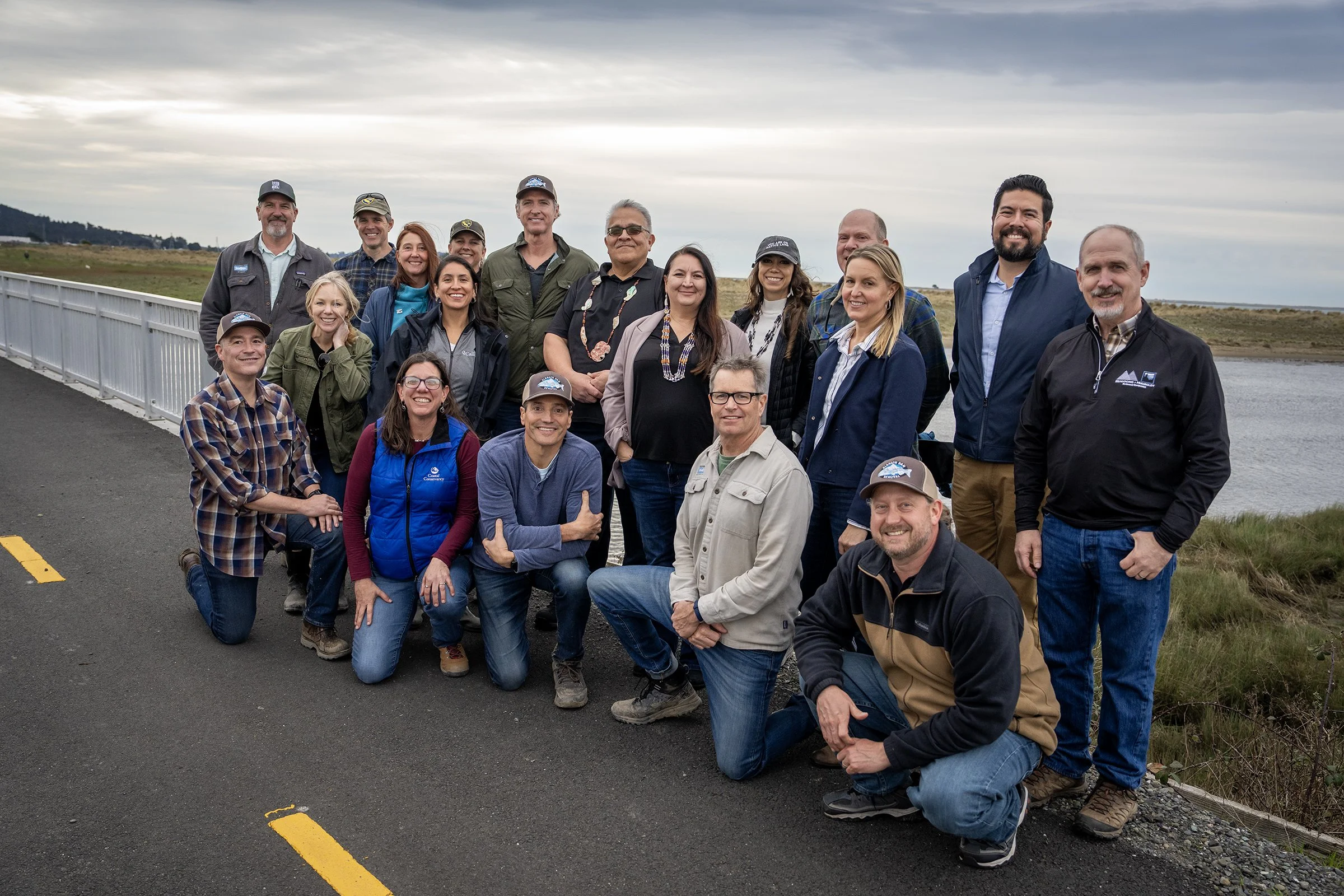
Governor Newsom, Wiyot Tribal Chairman Hernandez and others tour the recently completed Elk River Estuary Restoration Project site in anticipation of the release of the California Salmon Strategy. Photo courtesy of the City of Eureka.
The concept was contagious. While CalTrout was working upriver to gather support for restoring the Elk River, the City of Eureka, funded by the California State Coastal Conservancy, the U.S. Department of Fish and Wildlife, and others began a restoration project at the mouth of the Elk River. By 2023, the City had restored 114 acres of property in the Elk River Estuary. The project provides critical habitat for salmon and other fish and wildlife while roads and transmission lines from flooding. It also captures carbon and provides additional recreational opportunities.
According to Ted Hernandez, Tribal Historic Preservation Officer for the Wiyot Tribe and frequent advisor to the City for the project, “the Elk River is the lungs for Wigi [Humboldt Bay]… We’re helping the land and water to breathe again.”
In 2024, CalTrout and the community secured a huge win when a landowner near the City’s restoration project agreed to sell 175 acres of valley floor for habitat restoration. 40 acres, including a historic Wiyot Tribe village site, were immediately transferred to the Wiyot Tribe. The remaining acreage will be restored and added to the Elk River Wildlife Area, which is managed by the California Department of Fish and Wildlife (CDFW). California Climate Investments funding will support restoration of this property, set to begin in 2026.
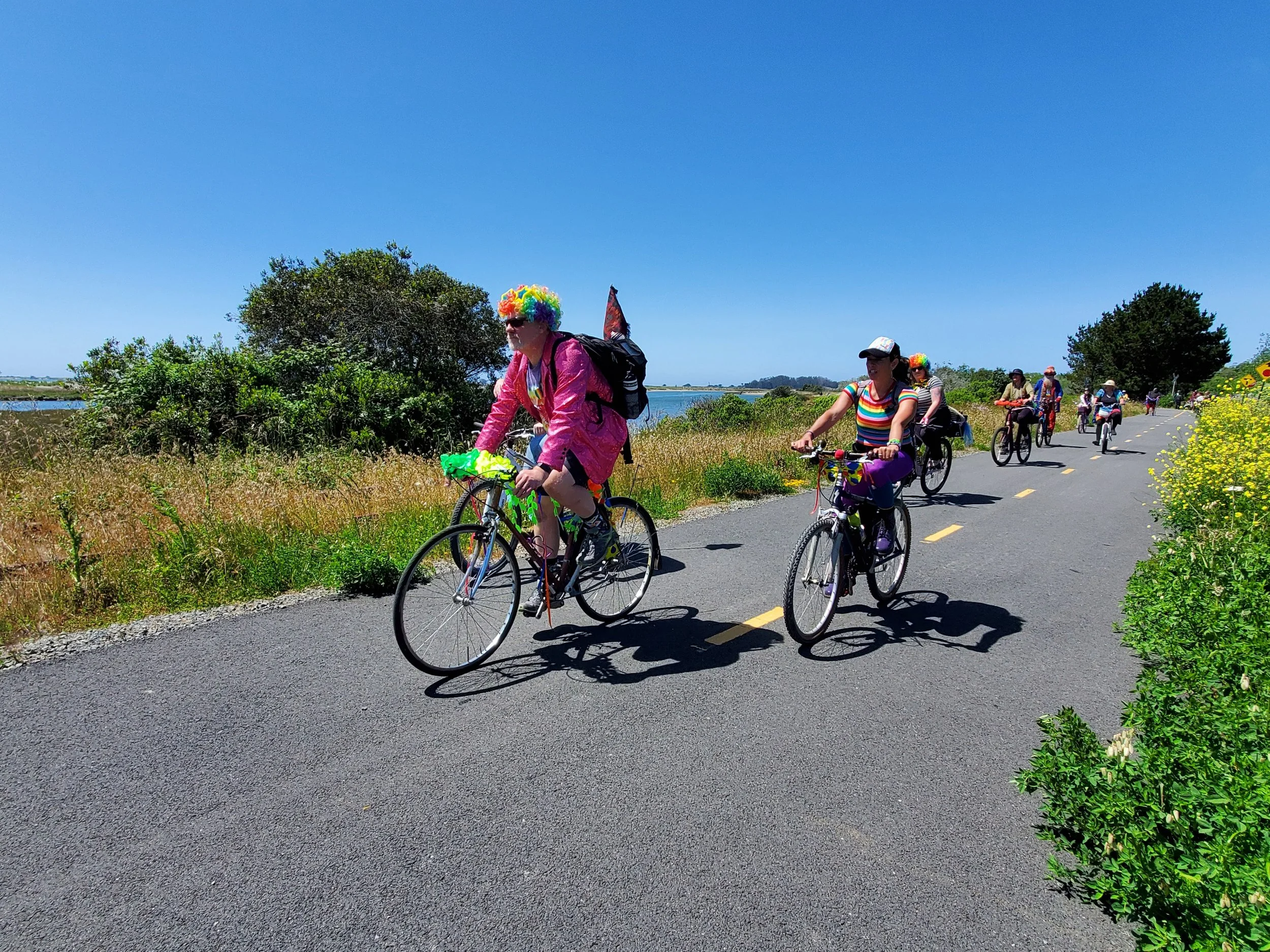
Kinetic Sculpture Race participants enjoy the newly completed Coastal Trail segment along the City of Eureka’s Elk River Estuary Restoration Project. Photo courtesy of Katy Marsolan, City of Eureka.
Though logging and fishing continue, both industries now operate alongside a new restoration workforce, which is committed to the recovery and protection of the region’s important ecosystems. Millions of dollars have poured into the restoration efforts along the North Coast, helping undo some of the damage of the past. All local species of salmon now use the Elk River and many of its tributaries for adult and juvenile migration, rearing, and spawning. Restored and enhanced wetlands also provide habitat for the endangered tidewater goby fish and many other species of commercial importance or concern, including Dungeness crab, eelgrass, waterfowl, and shorebirds. Days after completion of the City’s Elk River Project, more than sixty bird species not previously seen there arrived to enjoy their new home. The Elk River Valley restoration project shows how much a landscape can transform, for the betterment of all living things, when humans pay respect to the land and the plants and wildlife that inhabit it.