
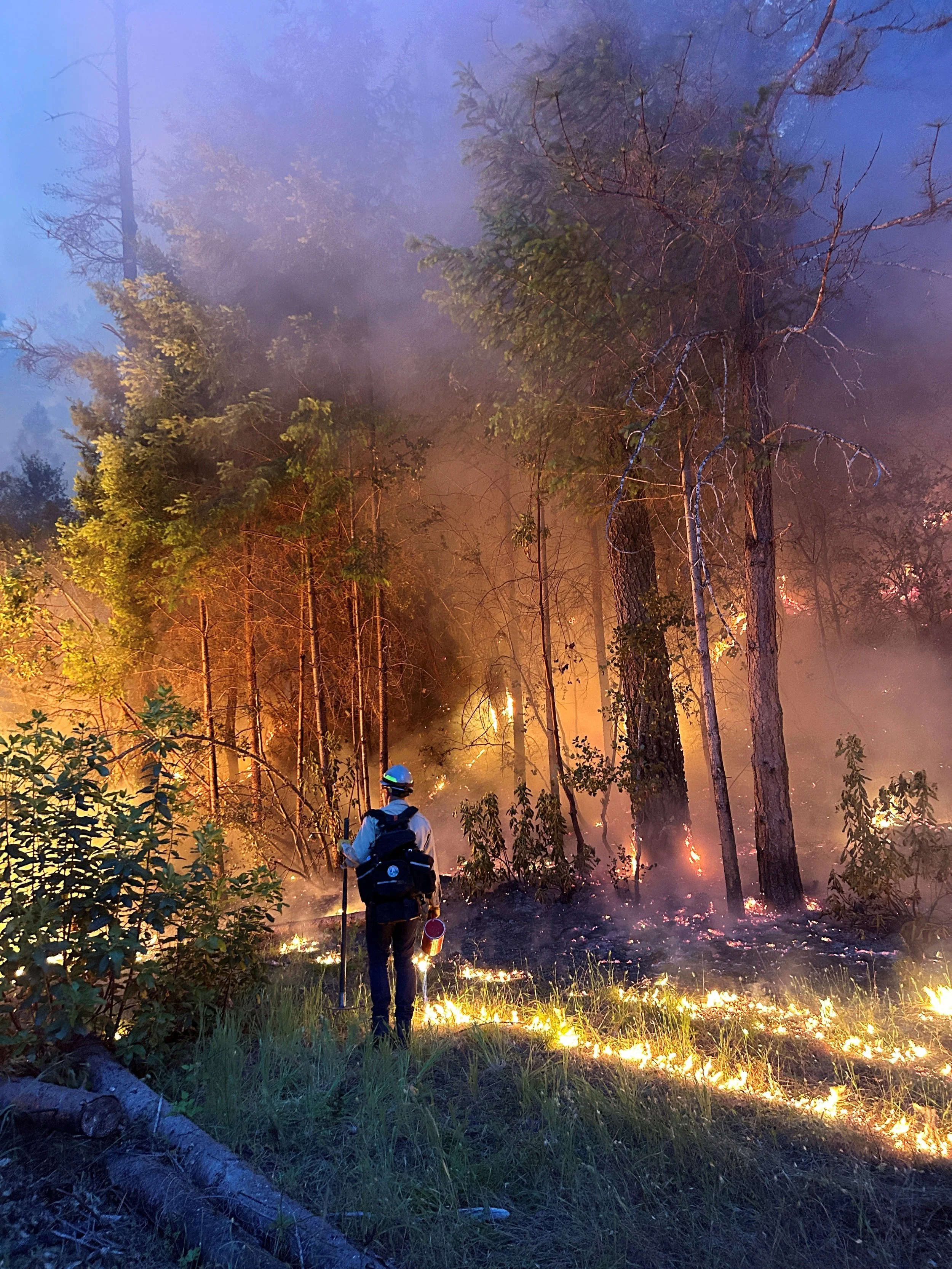
A Black- and Indigenous-led non-profit group is using a $4.9 million Forest Health grant from the California Department of Forestry and Fire Protection (CAL FIRE) to restore a Sonoma County forest and connect people to the land.
Niko Alexandre and Layal Camargo created Shelterwood Collective in 2020 with the goal of centering Black and Indigenous communities in forest management. In the summer of 2021, they began caring for a 900-acre forest and former church camp in Sonoma County. The forest is home to old growth redwoods, oak woodlands, and creeks that run into the Russian River. However, decades of mismanagement had left the forest overgrown and vulnerable to wildfire. The Collective developed a restoration plan and, in 2022, received California Climate Investments funding to carry out the Shelterwood Forest Restoration Project.
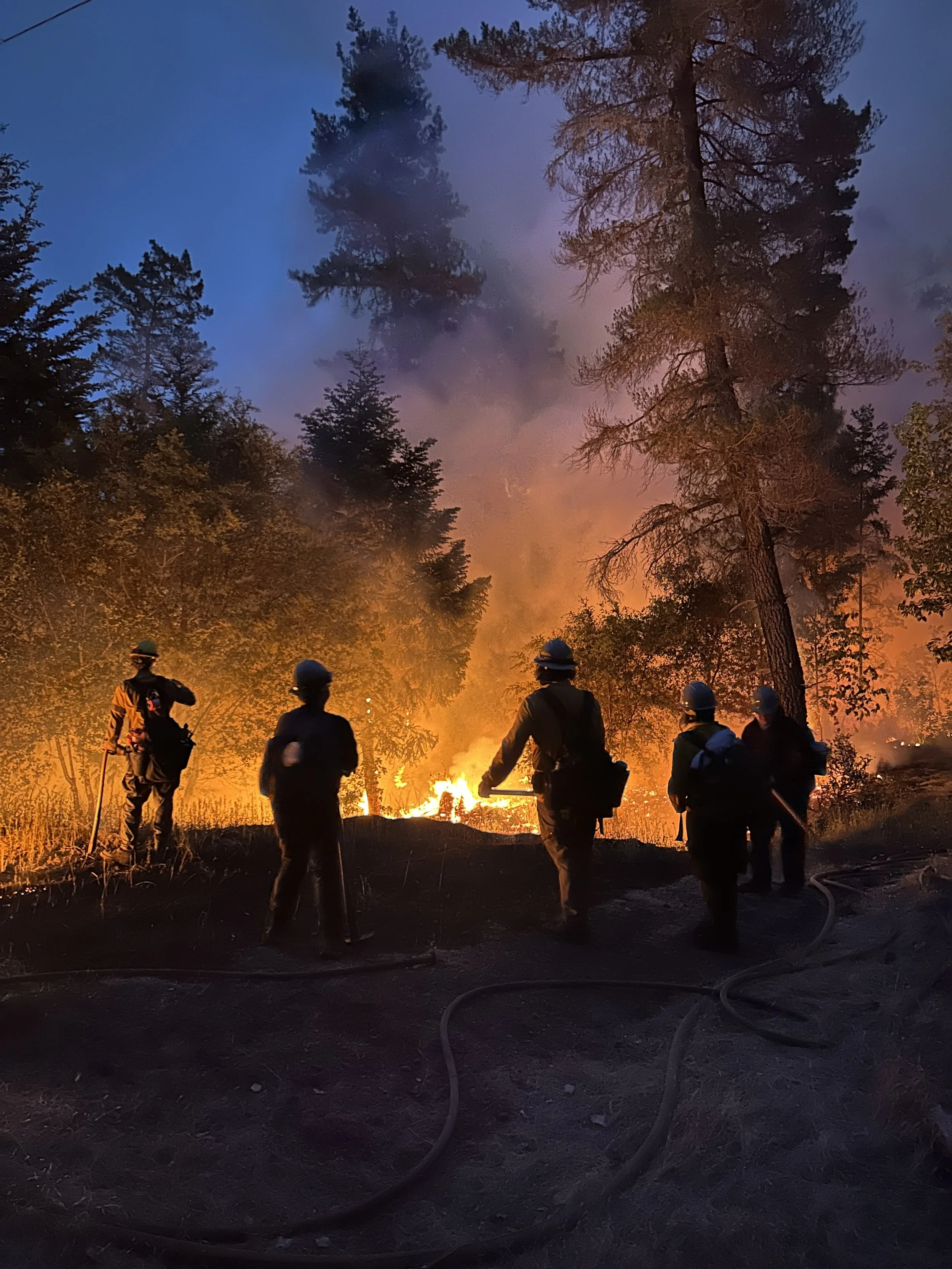
Crew members monitor a prescribed burn at Shelterwood Forest. Photo credit: Shelterwood Collective.
With the grant funds, the Collective has been able to thin overly dense vegetation, remove invasive plants and replace them with native trees, and use fire to support native species and reduce the chance of catastrophic wildfire. These treatments support a healthy forest ecosystem and will sequester the equivalent of 50,000 metric tons of carbon dioxide over the lifetime of the project. The Collective is expected to complete work on the project in spring of 2026.
“CAL FIRE’s grant has helped us implement restoration practices on over 650 acres of land so far,” said Shelterwood Executive Director Brandon Jones. “We’ve reduced wildfire risk along a critical ridgeline that stopped a fire in 1978, which will help keep the greater Western Sonoma County safe during the dry months while also locking carbon away for the long term.”
Just as importantly, the Shelterwood Collective is also helping people connect with the land and supporting broader forest restoration work. As part of the project, they are leading educational tours for the local Cazadero/Fort Ross communities, hosting training outreach events focused on supporting Black, Indigenous, Disabled, and People of Color communities across the state, and providing guidance to new forest restoration project leaders hoping to replicate their efforts elsewhere.
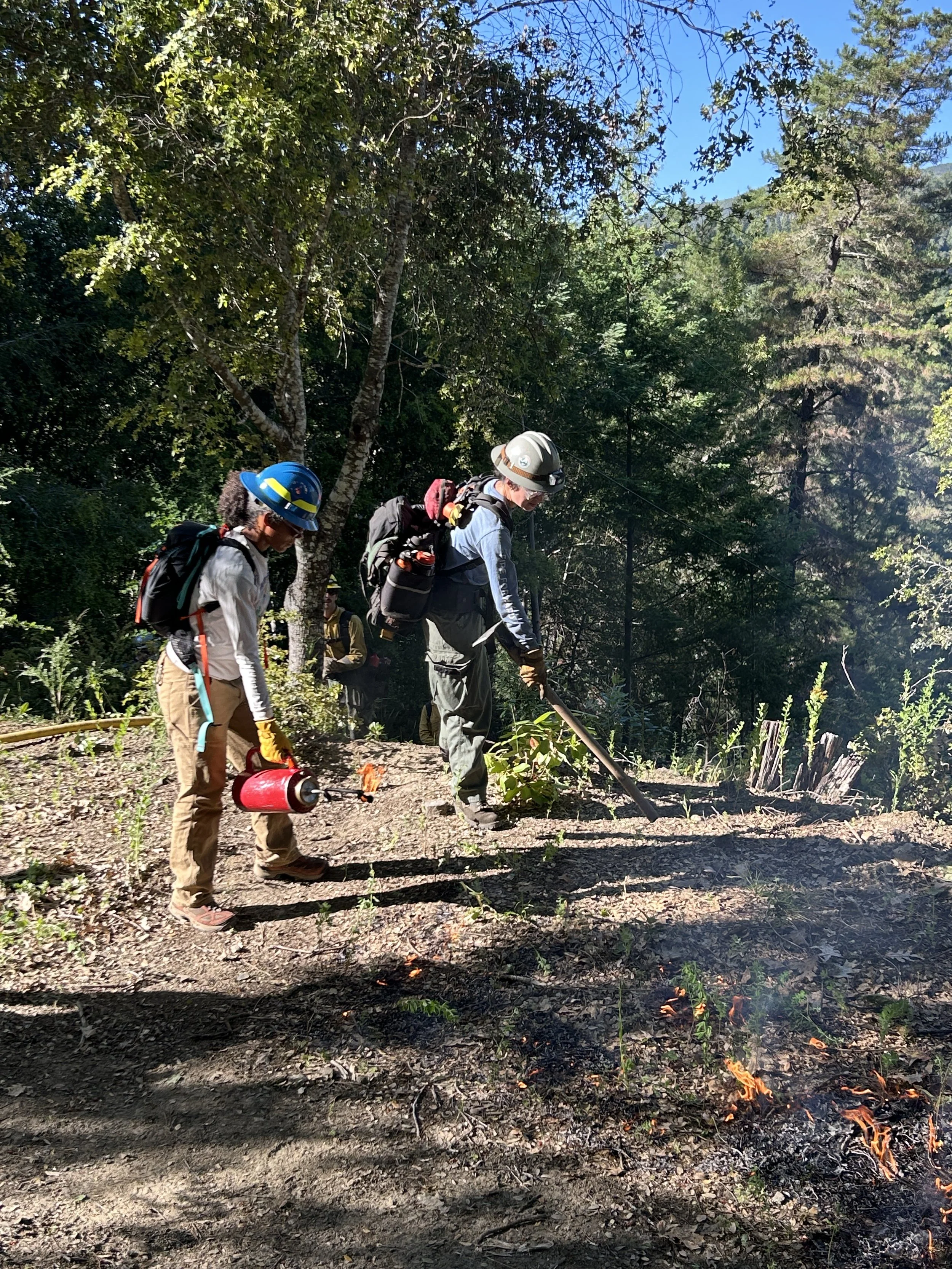
Crew members use a drip torch as part of a prescribed burn at Shelterwood Forest. Photo credit: Shelterwood Collective
The Shelterwood forest has become a sanctuary for many queer, trans, Black, Indigenous, and disabled people who come from all around to connect with nature in a supportive and inclusive environment.
Alexandre, Shelterwood’s founder and Stewardship Lead, is excited to help nurture the next generation of land stewards.
“We’ve seen an incredible amount of enthusiasm from a diverse group of people who have always felt a calling to work in the outdoors but never found an appropriate place to do so,” Alexandre said. “Beyond learning about the different kinds of restoration practices our state needs to scale up to overcome the climate change challenge, this grant is directly contributing to the establishment of new enterprises. The funding helped train over 30 full time new sawyers and fire professionals who are now working across the North Bay to reduce wildfire risk and restore degraded ecosystems.”