
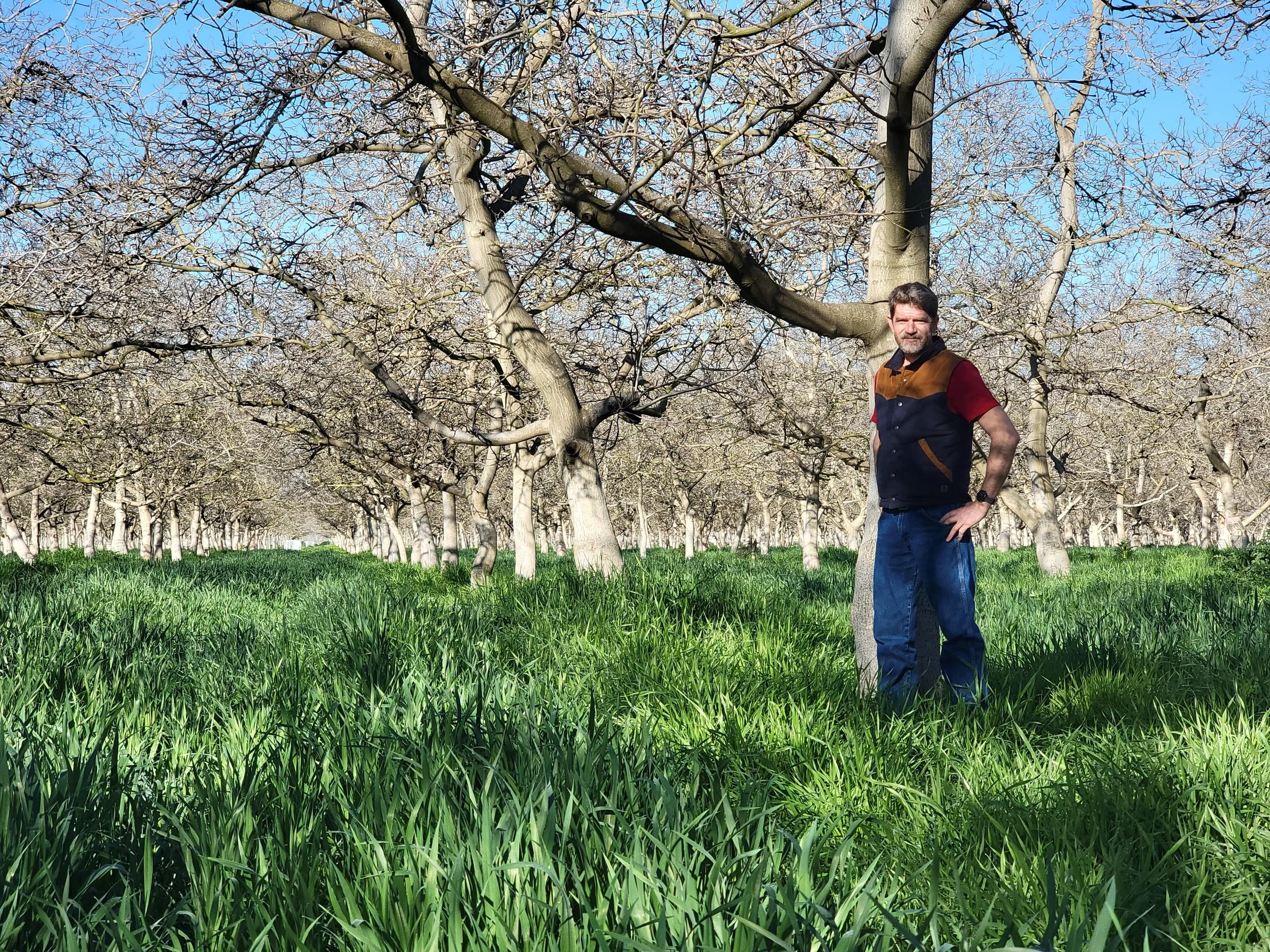
A walnut grower in Glenn County has transformed his farming practices after discovering that environmentally friendly practices also improved the health of his orchard. Back in 2018, Leonard Loewen had concerns about how conventional fertilizer and pest management practices would be negatively impacting the environment. After he learned that conservation-focused practices could help build healthier soils while reducing the use of pesticides, he started to plant a mix of cover crops on all of his fields. Loewen’s goal in planting cover crops, which cover the bare soil between his walnut trees, was mainly to improve the soil’s resistance to pests and disease, which had damaged his fields before. Loewen also added compost to the soil in two sections of his orchard. Over time, Loewen noticed that where he had added compost and planted cover crops, his trees produced more walnuts. He also noticed that the cover crops brought in more beneficial insects and helped the soil absorb water after heavy rains. After the success of these changes, Loewen decided to convert his whole orchard from conventional to organic.
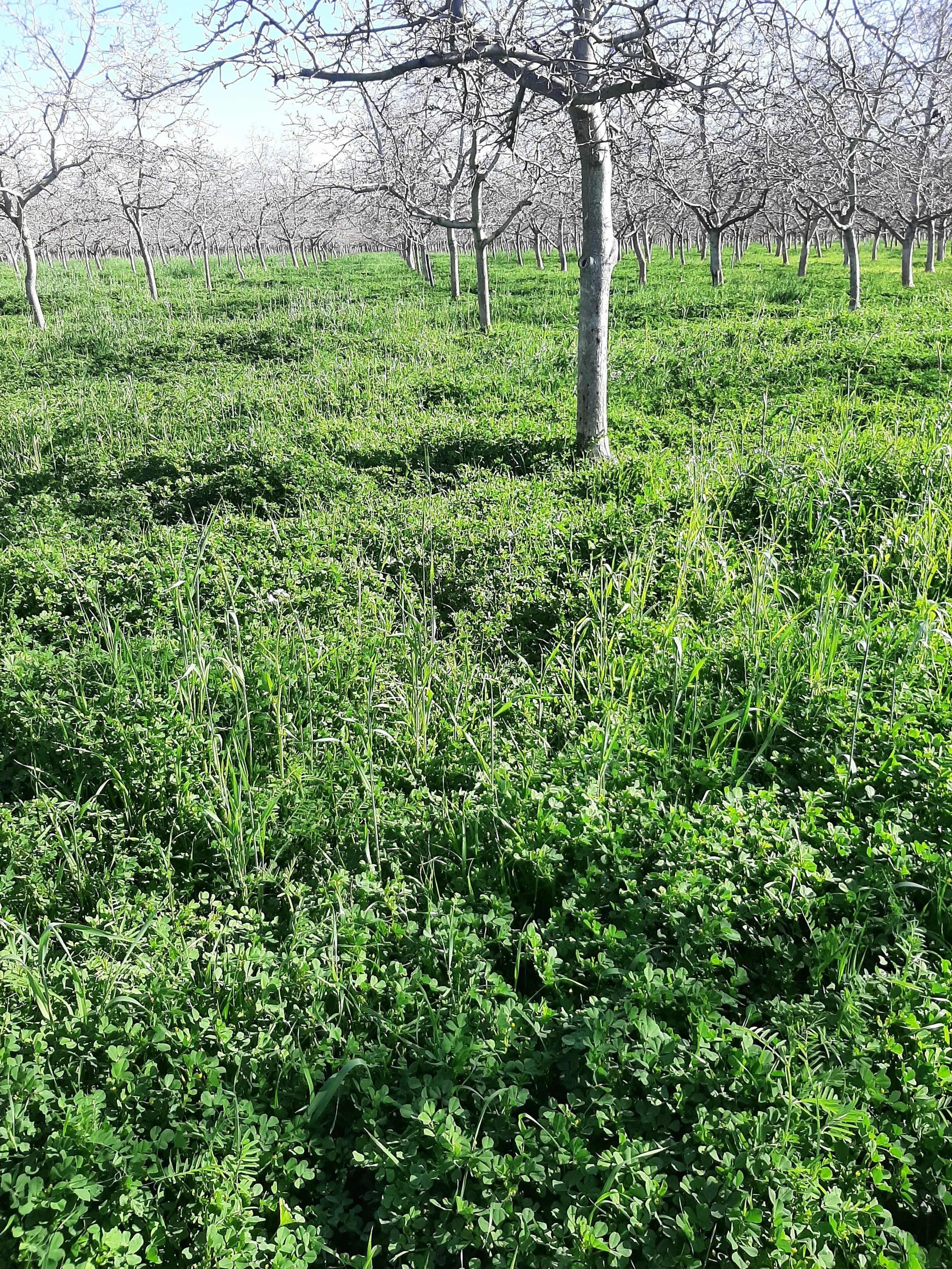
Multi-species cover crop in Loewen’s another orchard field
While looking into financial assistance to help him transition his farm to an organic system, Loewen discovered the Healthy Soils Program, funded by California Climate Investments and administered by the California Department of Food and Agriculture. Loewen applied, and in October of 2020, received a grant of over $98,000 to apply compost to one field and mulch materials to two other fields for three years. Cover crops increase above- and below-ground biodiversity, convert atmospheric carbon dioxide to plant biomass through photosynthesis and store it as soil organic matter. Mulch materials conserve soil moisture while compost adds nutrients to the soil and improves soil structure. All these practices increase crop growth and resilience against environmental stressors like pests, disease, and extreme weather. The estimated greenhouse gas reduction benefits of these changes amounted to 63 metric tons of carbon dioxide equivalent during that three-year period.
Loewen expressed excitement and gratitude about the results of the project, stating that “organic farming is not easy, but participation in the Healthy Soils Program greatly supported my farm transitioning to an organic system and I am very thankful for the program funding.”
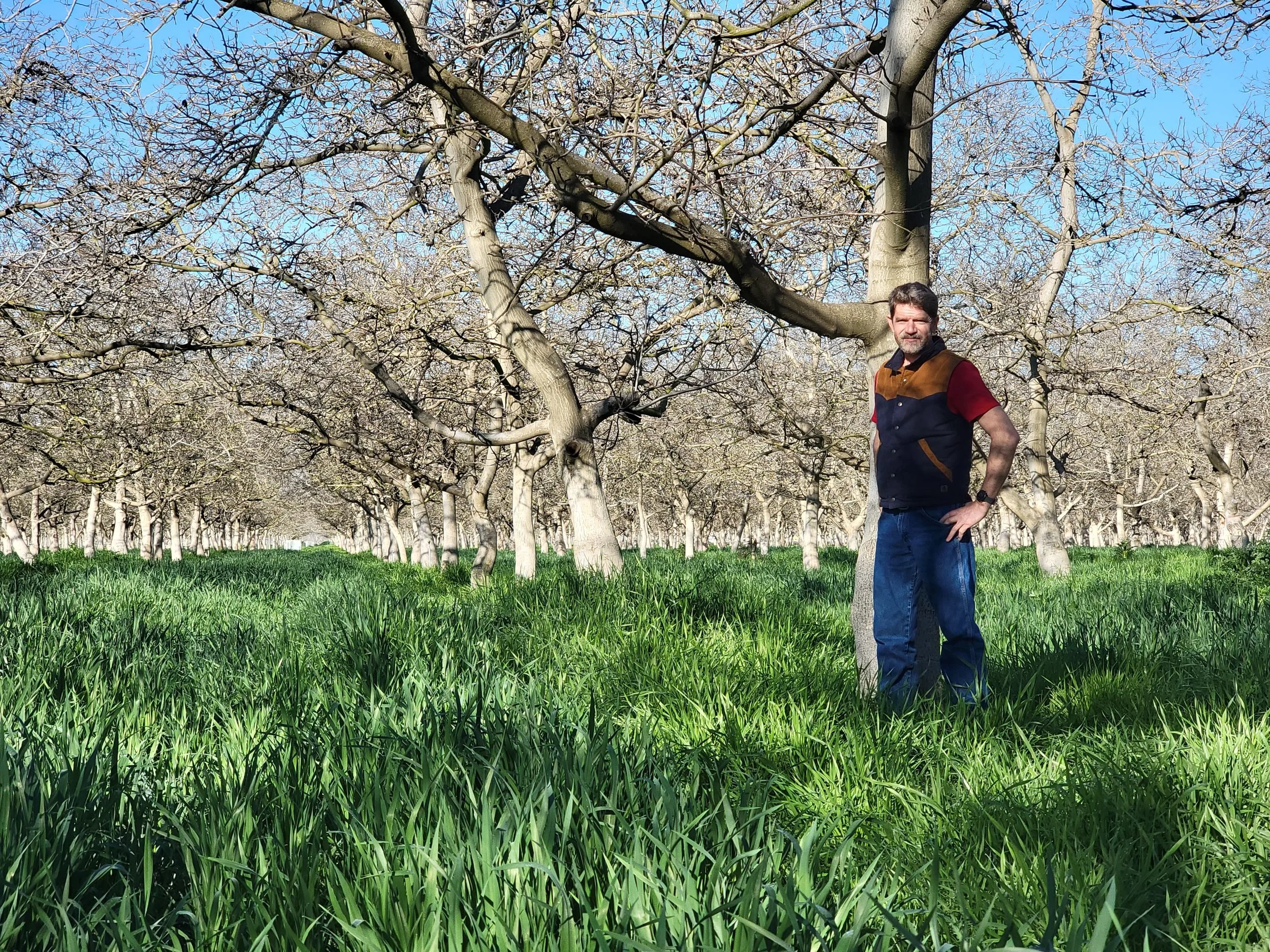
Leonard Loewen is happy with well-established cover crop.
Over the course of the three-year grant period, Loewen found that mulching with almond shells not only helped the soil stay moist but also improved cover crop growth, which helped funnel more nutrients to the walnut trees. Applying compost, along with planting cover crops, helped reduce pest and disease problems in the orchard. These positive results have convinced him to carry on with these healthy soil practices, even though the three-year grant period has ended.
Loewen’s farm is now organic certified and listed on the California Certified Organic Farmers website. His story is just one example of how the Healthy Soils Program and California Climate Investments open doors to change that can both reduce greenhouse gas emissions and provide meaningful benefits to grantees that last long after the grant period comes to an end.