
Children across Southern California are enjoying healthier, more vibrant, places to learn and play, thanks to two ambitious initiatives funded by California Climate Investments. Both projects, funded through the California Department of Forestry and Fire Protection’s Urban and Community Forestry Program, are combatting extreme heat, reducing environmental inequities, and giving students daily access to nature.
TreePeople, a nonprofit focused on conservation and restoration in Southern California, led an urban greening project that benefited 17 schools across three school districts. Urban greening is the process of adding plants, shade trees, and other green and natural spaces into city spaces to improve the quality of life for the people living, working, and going to school there. TreePeople planted nearly 1,000 trees and replaced over 728,000 square feet of asphalt with playfields, outdoor classrooms, and recreational spaces. Each campus features a learning garden of California native plants, designed not only for durability but also for educational value. Students are now able to witness monarch butterfly life cycles or explore cultural history through native species. “I would like to see a lot of butterflies. I would like to see a lot of birds. I would like to see trees,” one student shared, capturing the excitement these spaces inspire.
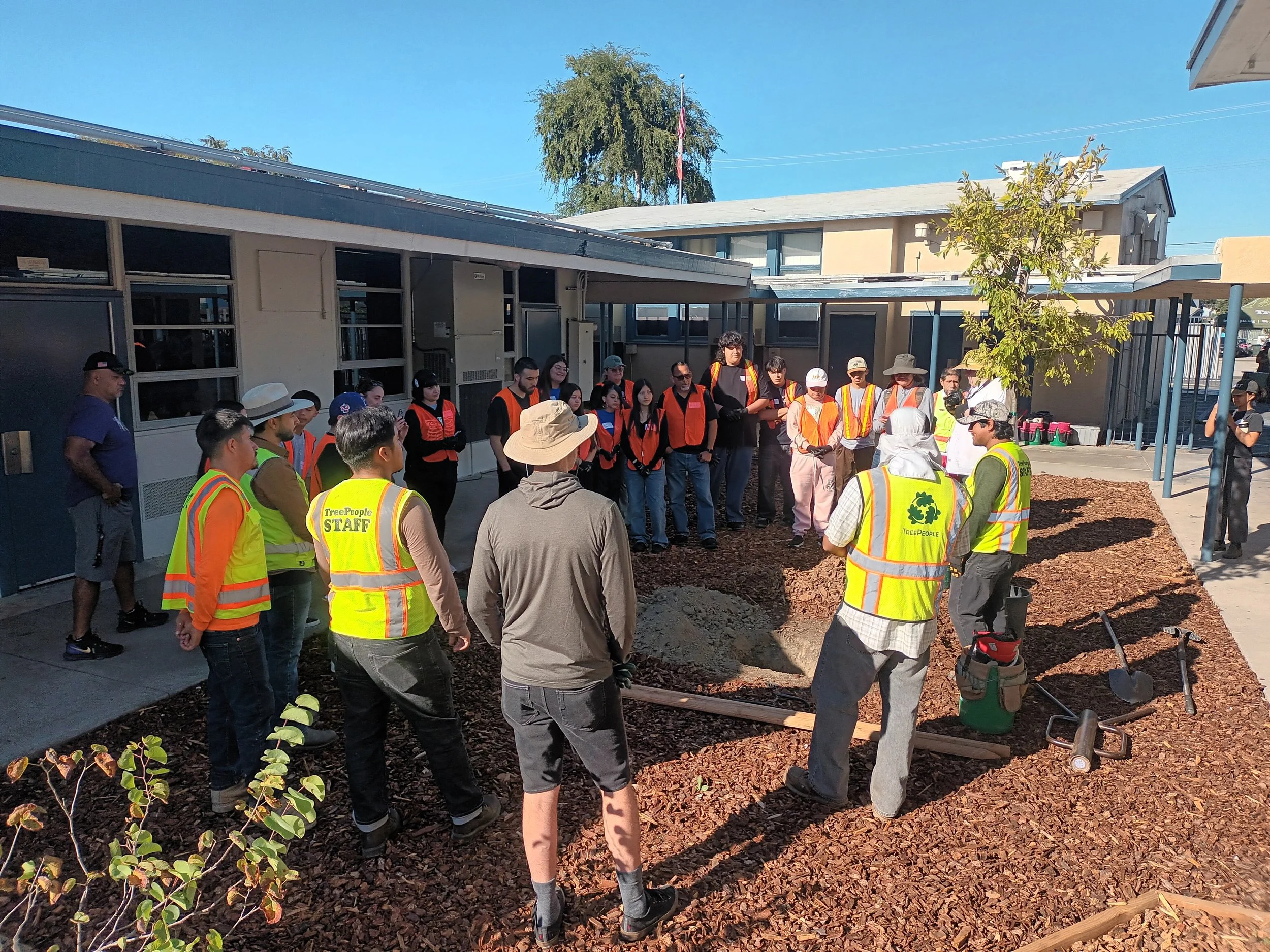
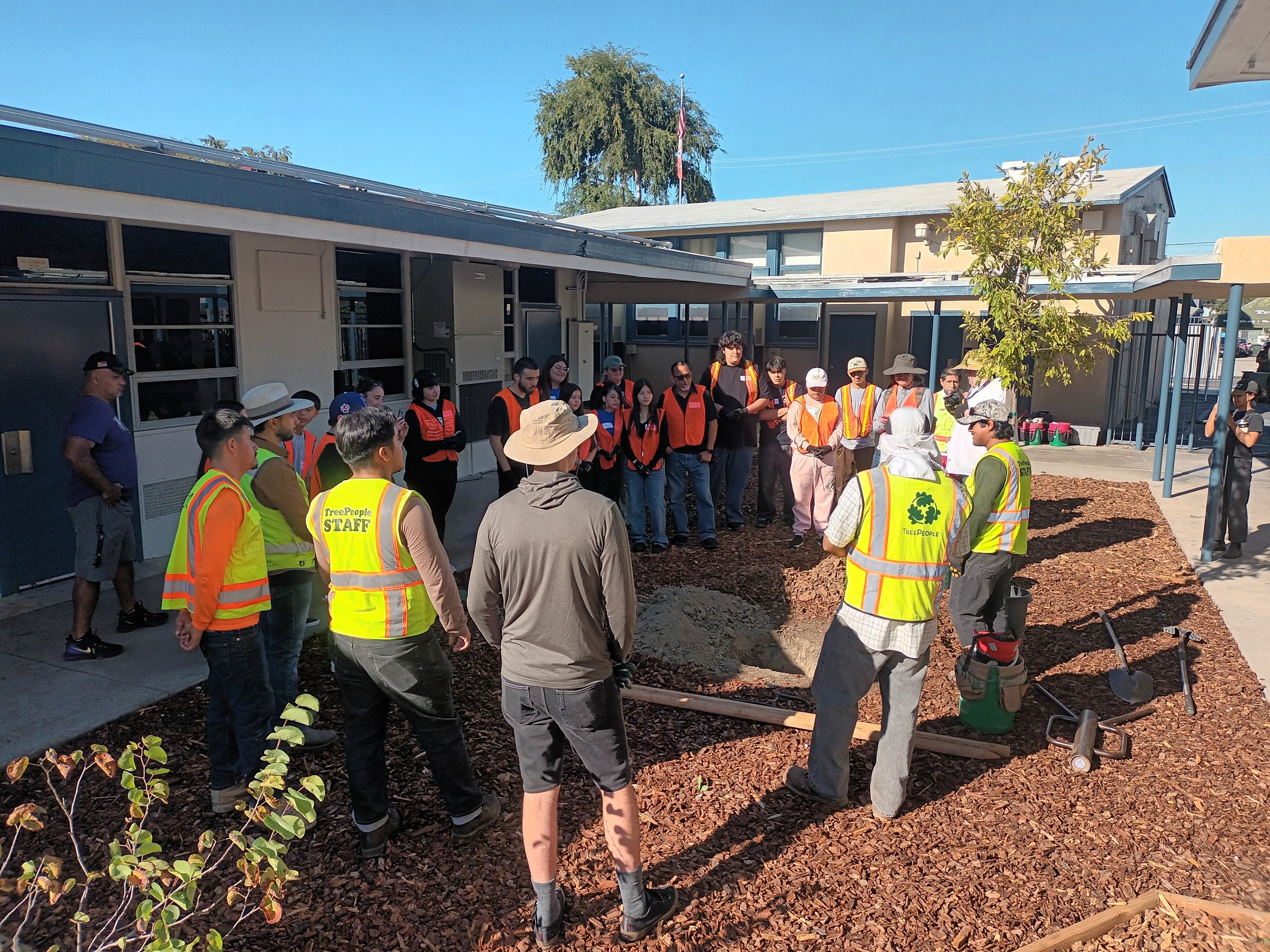
Volunteers gather at the planting demonstration for the first tree at Vista High School.
Los Angeles Neighborhood Land Trust (LANLT) is also bringing green spaces to five school campuses located in low-income communities of color. All five schools are in Los Angeles and disproportionately impacted by environmental injustices. LANLT committed to meaningful engagement with the communities around these schools, bringing them into the planning and design process. Based on the feedback and priorities of the community, LANLT is replacing 180,000 square feet of hard surfaces on the school campuses into green spaces and surfaces that can help filter water into the soil. They are also planting 60,000 square feet of native plants and adding more than 120 shade trees, which will help these school play areas stay cool during the hot summer months. These updates, which were decided upon in consultation with teachers, students, and families, were designed to reflect the cultural identity of each campus and meet the needs of its community.
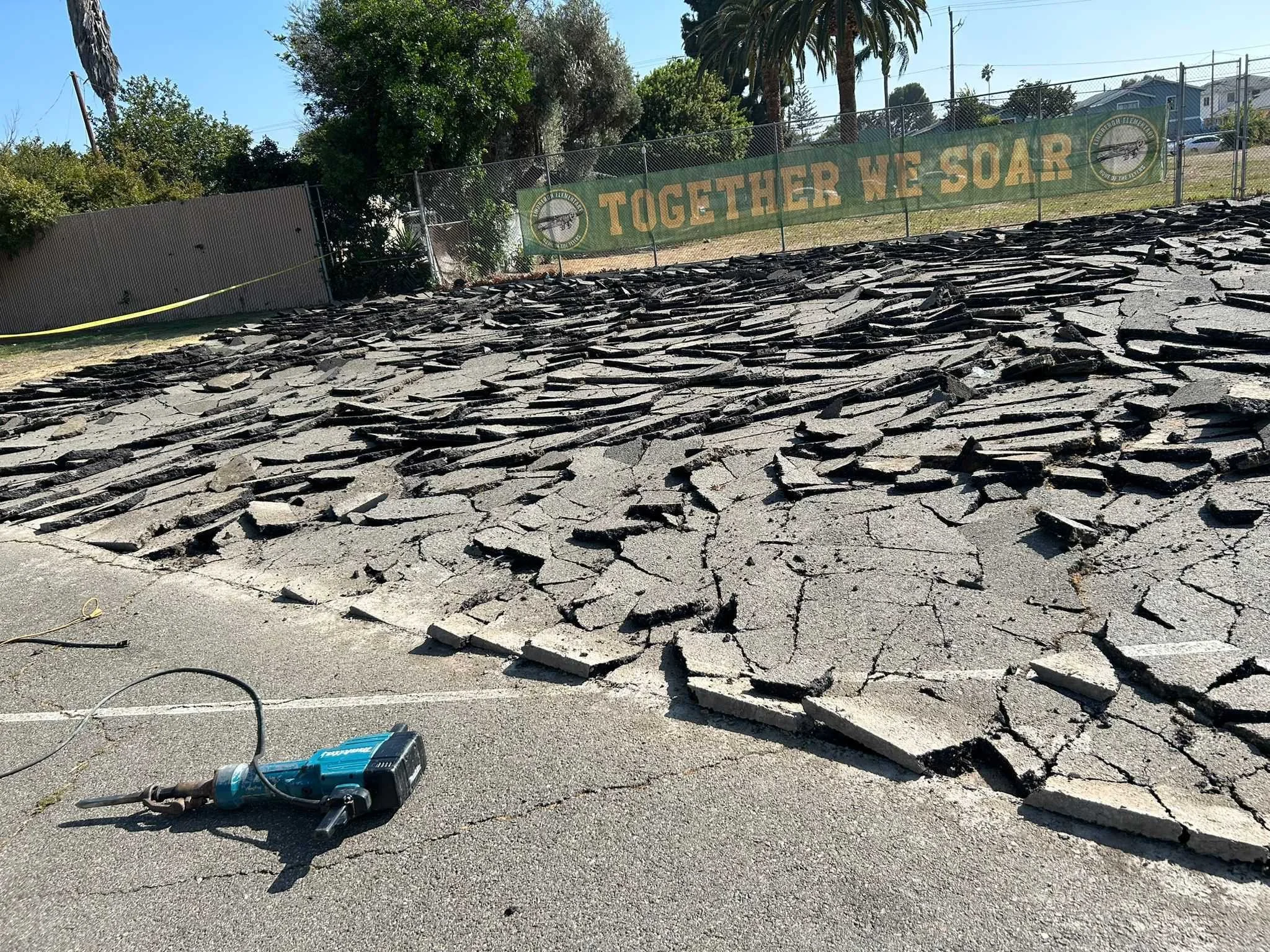
Asphalt removal at Lindbergh Elementary School.
Both projects faced challenges navigating large school district systems, from permitting delays to shifting priorities. Success has come through persistence, consistent communication, and strong partnerships. TreePeople worked closely with district departments to align activities, while LANLT partnered with trusted local organizations to build on existing community relationships.
The lessons are clear: early and inclusive engagement builds trust, patience is essential, and collecting data strengthens the long-term impact. Together, these projects demonstrate how nature-based climate solutions can improve public health, enhance learning, and inspire other communities to follow suit. By prioritizing student health and well-being, Los Angeles is showing how schoolyards can become powerful symbols of resilience, education, and joy.