
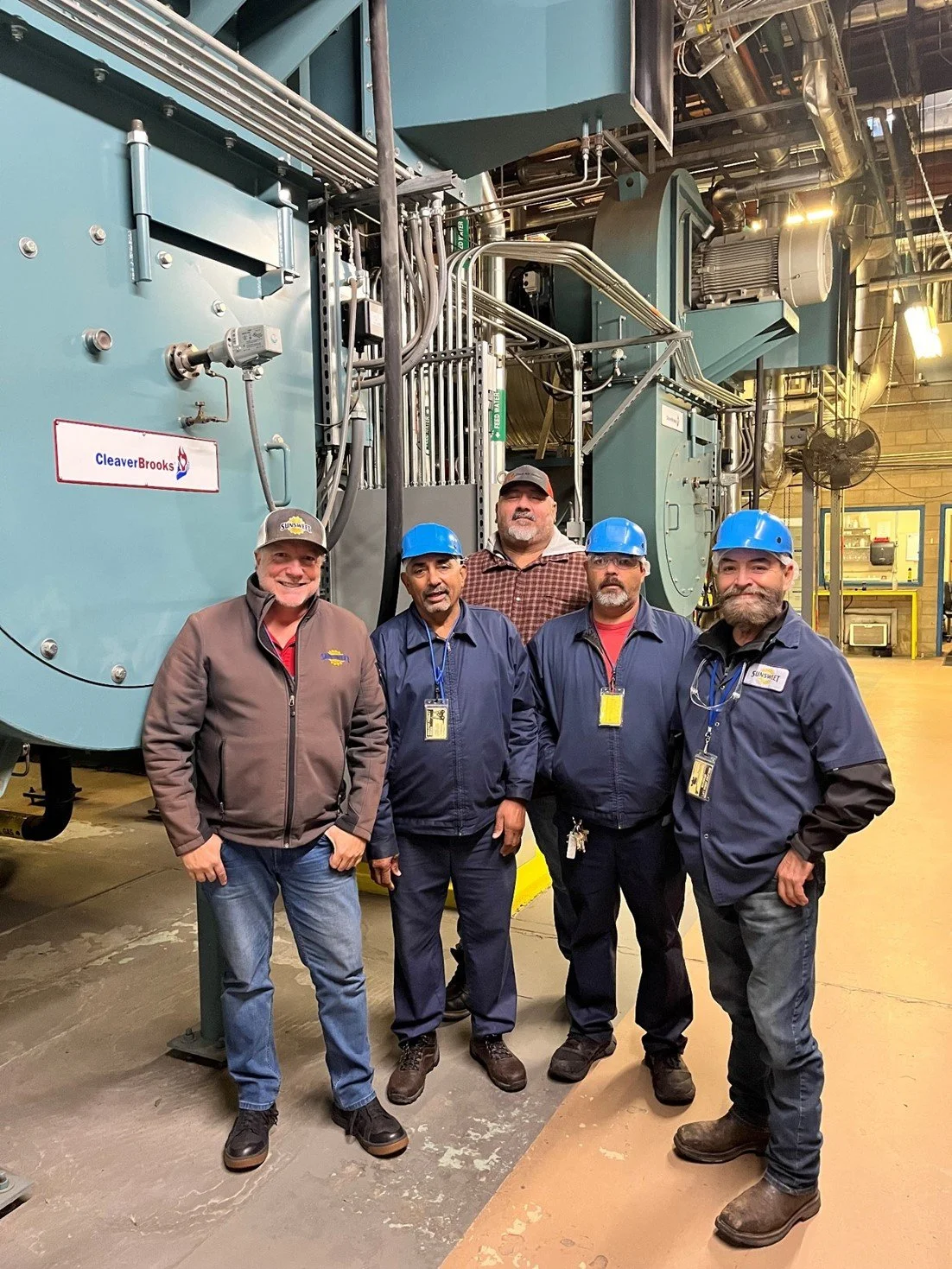
At over 100 years old, Sunsweet Growers, Inc. (Sunsweet) is stepping into the future with energy efficient upgrades at its headquarters in Yuba City. The updates will reduce the facility’s greenhouse gas emissions by thousands of tons per year, improving local air quality and shrinking the facility’s carbon footprint.
Founded in 1917 by a group of California farmers, Sunsweet is a grower-owned cooperative and the world’s largest producer of prunes and other dried fruit. Sunsweet represents nearly 200 California prune growers and the company’s headquarters is one of the largest employers in Yuba City, CA.
In 2020, the California Energy Commission’s (CEC) Food Production Investment Program (FPIP) awarded Sunsweet a $1.6 million grant to modernize its headquarters facility by replacing outdated equipment with energy-efficient upgrades. The project included two high-efficiency boilers with economizers, a 200-horsepower variable speed air compressor, and 175 steam traps. These technologies work together to improve energy efficiency and reduce waste. Boilers with economizers reuse heat that would otherwise be lost, the variable speed air compressor adjusts power use based on demand, and steam traps help keep the steam system running smoothly by removing excess moisture.
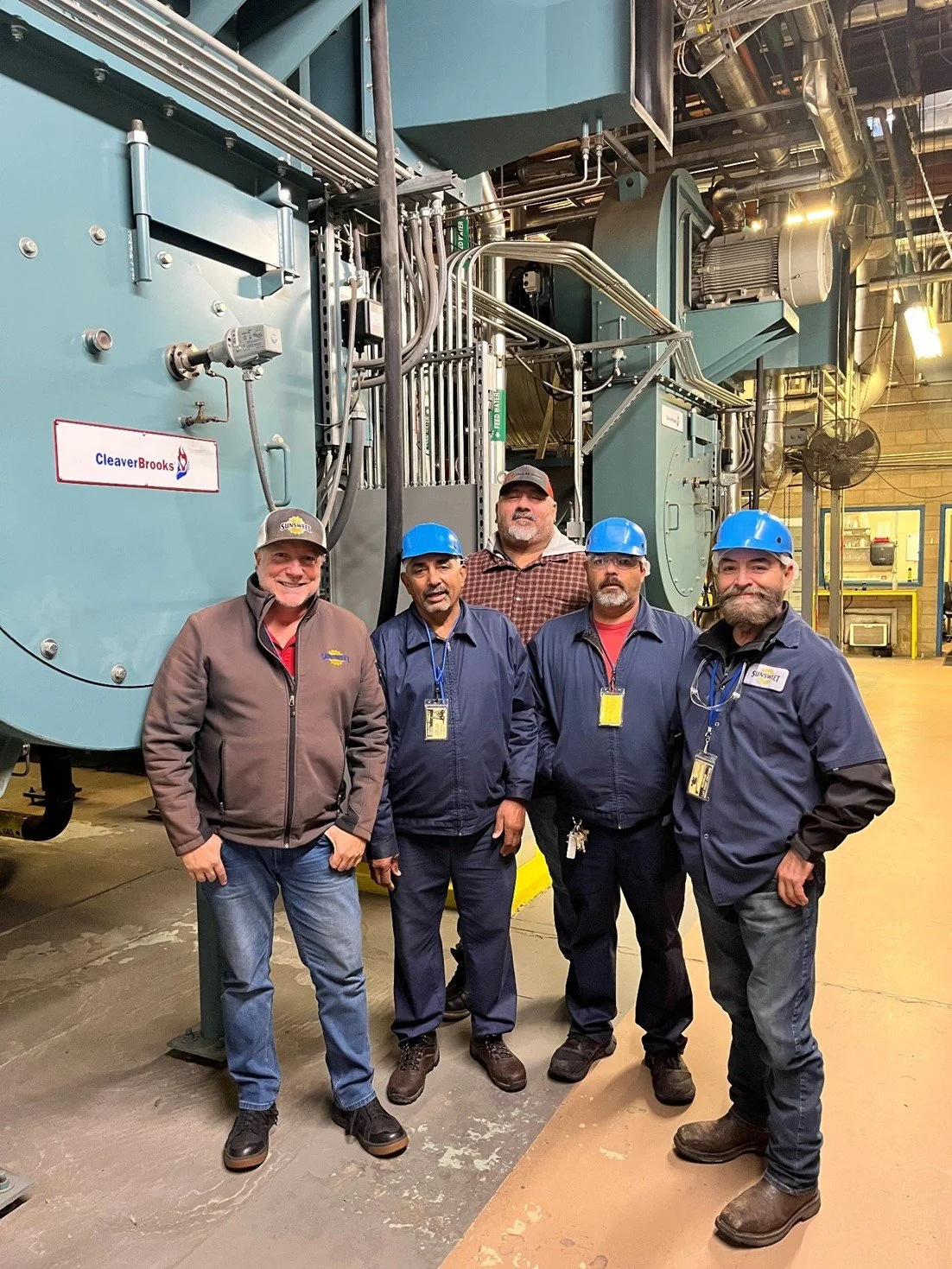
Sunsweet Project Manager, Mike Miguel stands on the left with his team, which includes Jose Casteneda, Boiler Operator and Team Member, and Team Members Edgar Yanez, Jesse Yanez, and Sukhdev Momi.
The food production industry operates on thin margins, making it difficult for facilities to justify high-cost equipment upgrades unless they are absolutely necessary or will provide a fast and reliable return on investment. Before installing the efficiency upgrades, Sunsweet relied on 45-year-old boilers, inefficient air compressors, and an obsolete steam system. These shortcomings forced the facility to use excessive amounts of electricity and fossil fuels, resulting in higher greenhouse gas emissions, increased operating costs, and more frequent equipment maintenance.
Since Sunsweet completed installation of the new technologies at the end of 2022, the upgrades have achieved a 19 percent reduction in greenhouse gas emissions, totaling nearly 5,000 metric tons of carbon dioxide equivalent per year. The facility reduced its fossil fuel consumption by about 650,000 kilowatt-hours annually. That amount of energy is enough to power about 60 homes in the U.S. for a full year. All the while, Sunsweet was able to maintain its production of 60,000 tons of prunes and nearly 13 million cases of bottled beverages.
Sunsweet’s Yuba City facility now operates more efficiently and reliably, strengthening its ability to support local jobs and grower livelihoods. Mike Miguel, a project manager at Sunsweet, shared his enthusiasm for the project. “Beyond the measurable environmental improvements, this investment supports the surrounding community in several meaningful ways. By reducing our energy consumption and emissions, we’re helping improve local air quality and lowering our overall operational footprint in the region. The efficiency upgrades also support long-term cost stability, which strengthens our ability to sustain local jobs and maintain consistent operations within the community. These improvements demonstrate how climate-focused innovation can create real, tangible benefits not only for the facility but also for the people who live and work nearby.”