
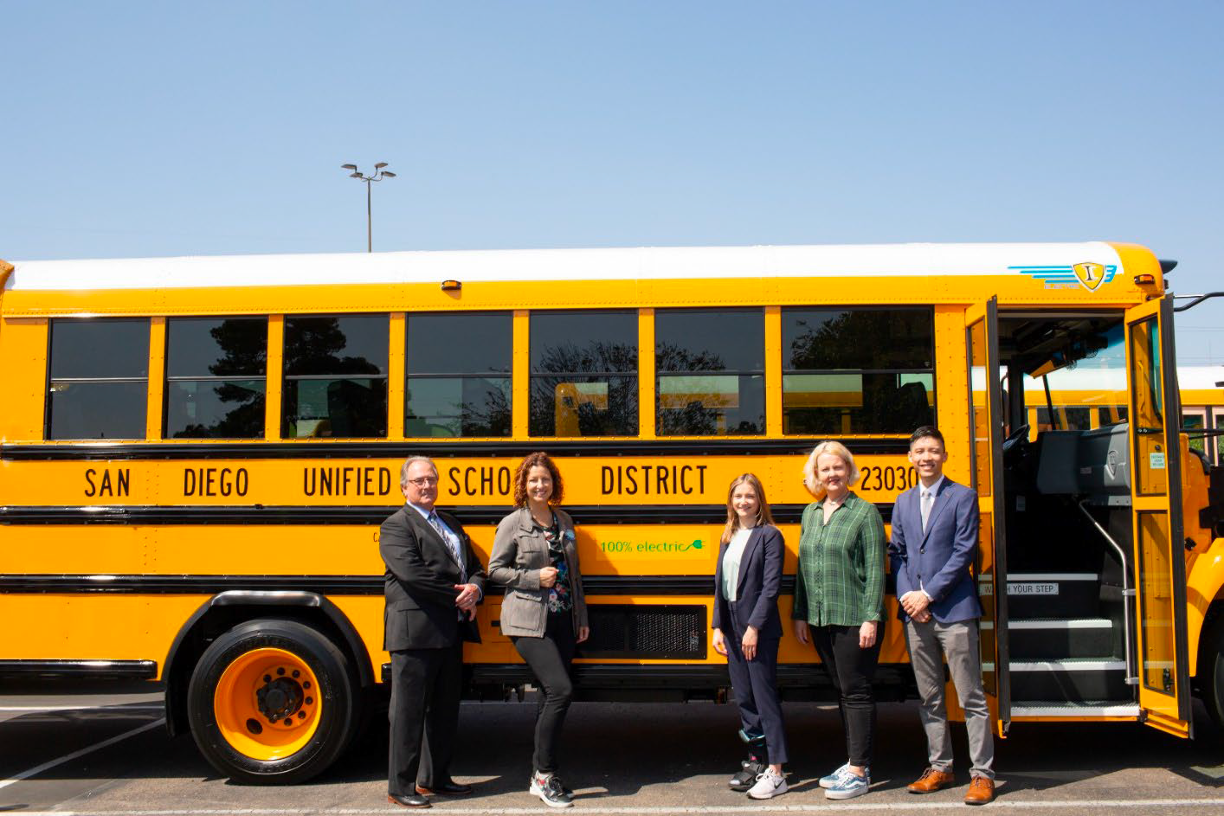
Students in San Diego are now riding to school on electric buses and learning about how to support the environment in their personal lives and future careers thanks to nearly $10 million in California Climate Investments funding.
The San Diego Unified School District (SDUSD) received a $9.7 million grant through the California Air Resources Board’s Clean Mobility in Schools program to install a suite of sustainable upgrades at a number of schools in the Lincoln Cluster, including Lincoln Senior High School and thirteen surrounding elementary and middle schools. The project launched in May of 2020 and involved nine other project partners, including CALSTART, S Curve Strategies, and Circulate San Diego. The schools now have a variety of new electric technologies, including school buses, landscape and custodial vehicles, food delivery vans, vanpool and carshare vehicles, and a bike-sharing program for the students and staff.
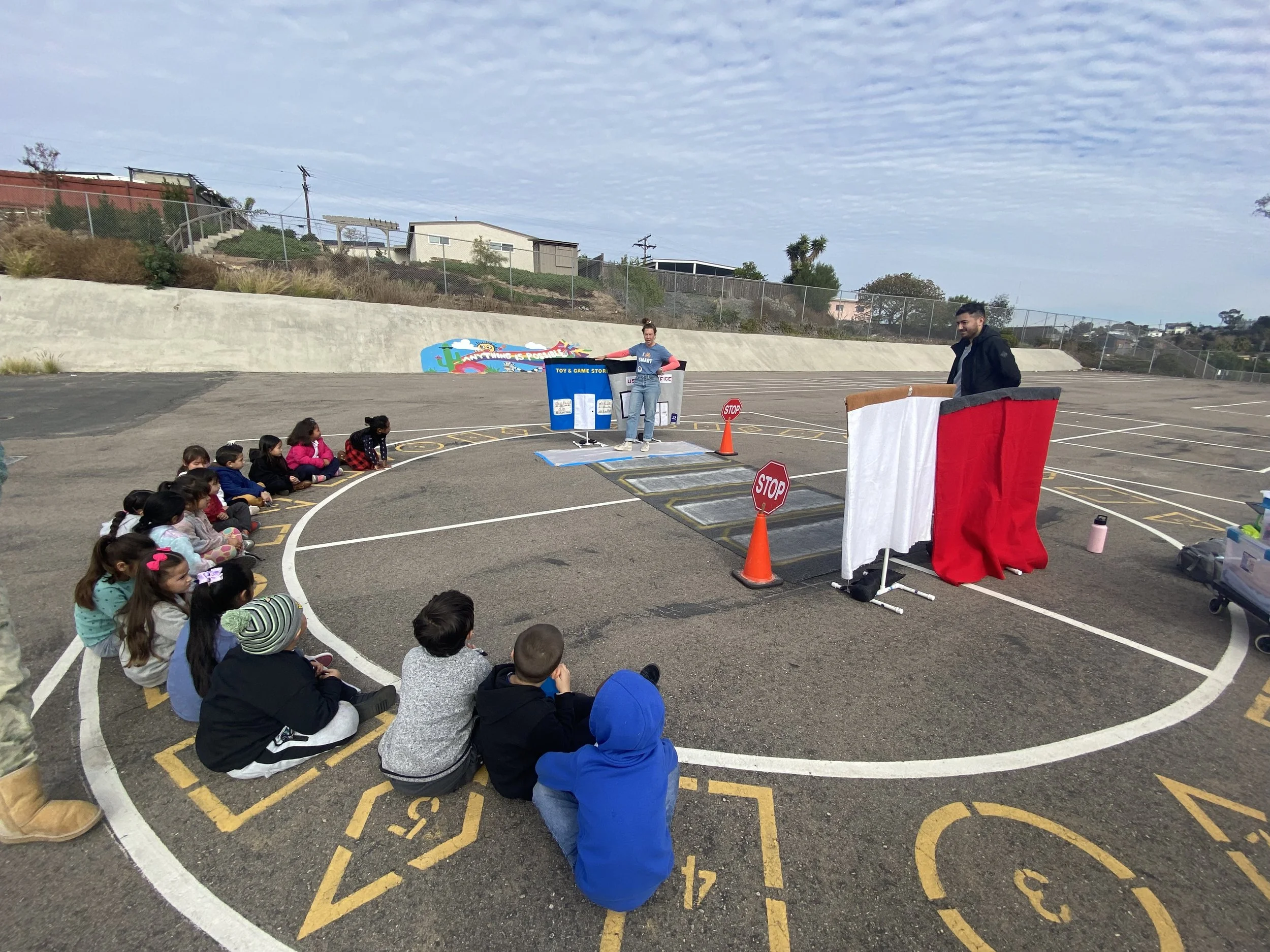
Circulate San Diego provided interactive pedestrian safety “Walk this Way” assemblies.
The project also included educational outreach efforts across the district to encourage a wider sustainability movement. These efforts included school bus technician training, e-bike demonstrations, and green career events. With SDUSD being the second largest school district in California, this really sets the standard and provides a model for other districts to follow. As a result of the improvements at the Lincoln Cluster schools, students, staff, and families are enjoying improved local air quality. The school district is located near the Port of San Diego, an area with San Diego County’s worst air quality, so the district’s reduced use of fossil fuels is a huge step in the right direction for the health of its community.
“Every community deserves clean air and this Clean Mobility in Schools Program is one of the most comprehensive electric mobility programs of its kind for a school district,” said San Diego Unified Board President Dr. Sharon Whitehurst-Payne. “This program not only benefits our students but the communities these vehicles serve.”
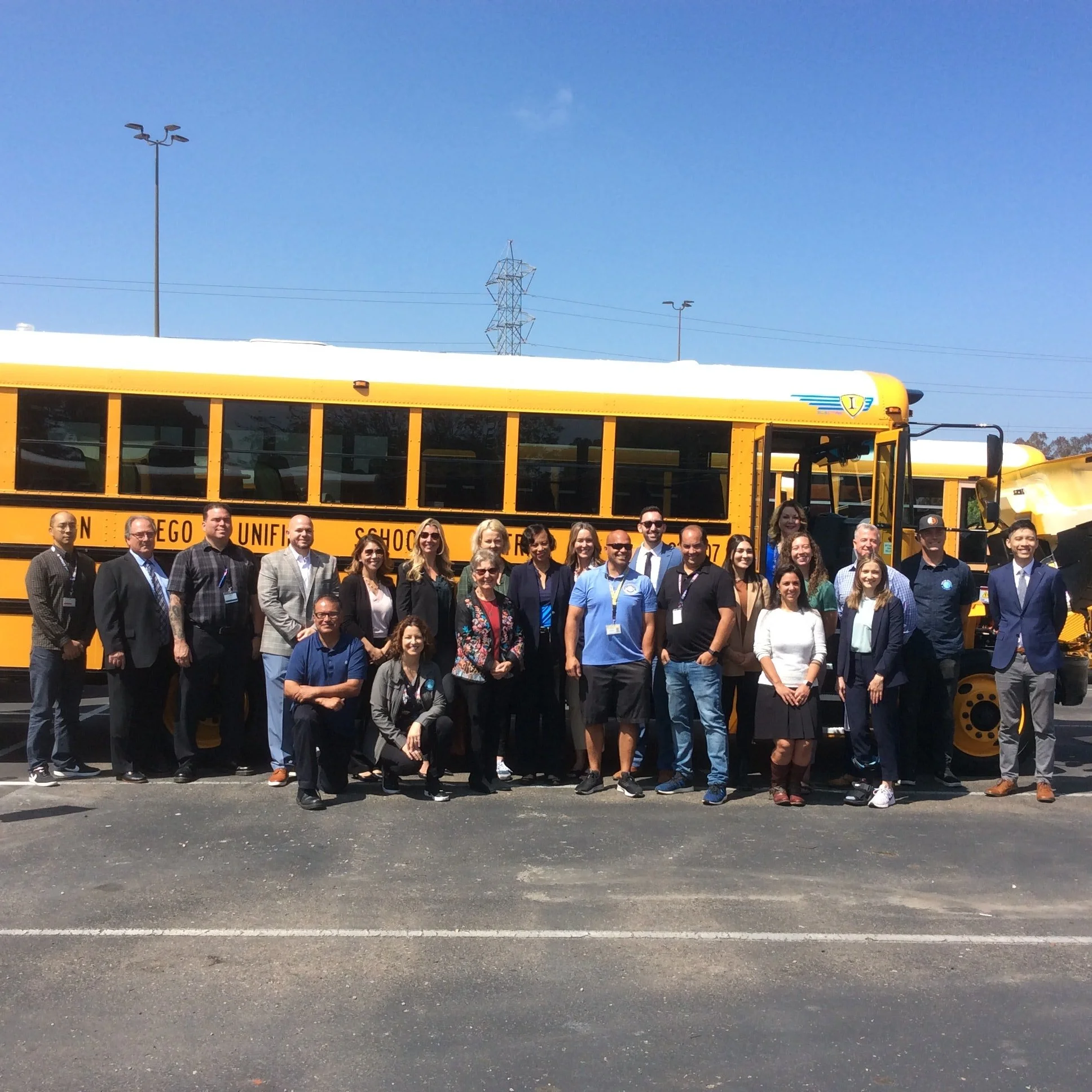
Photo taken at the April 4, 2022 Media Event. Standing in front of a Battery Electric IC School Bus are staff and representatives from San Diego Unified School District, City of San Diego, County of San Diego, CALSTART, Center for Sustainable Energy, Circulate San Diego, S Curve Strategies, San Diego Gas & Electric, Nuvve, San Diego Pedego, Black & Veatch, Cleantech San Diego, the Environmental Health Coalition, and CARB.
SDUSD planned the project based on feedback from district staff and parents, who were surveyed on their environmental and transportation goals for the district. In the survey, parents and staff showed strong support for clean transportation options like vanpools, bicycling, and transit incentives.
The district also reached out to students, families, district staff, and the Lincoln community when developing the project, providing education on the benefits of zero-emission transportation. Outreach efforts included classroom presentations, safety audits, and surveys to collect feedback. The outreach team reached out through several channels, connecting with students through on-campus events, families through online forums, and community members through community partners and social media campaigns.
During the planning process, community members showed strong concern for student safety when traveling to and from school. In response, SDUSD developed Online Safe Routes to Schools maps, which show families the safest routes for their children to get to school. SDUSD also shared these maps with the City of San Diego to bring attention to dangerous school routes across the community, and request improvements to protect the safety of their students.
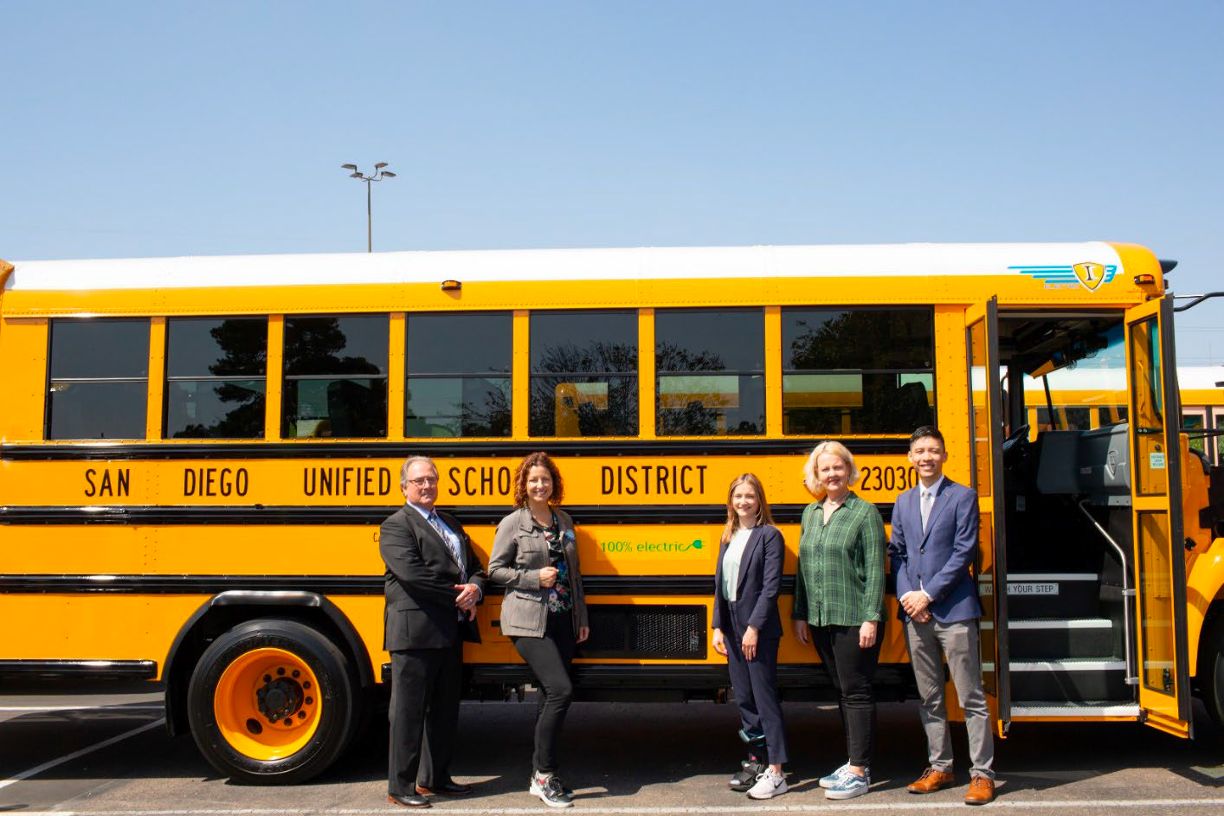
Pictured left to right: Gene Robinson, SDUSD Director of Transportation; April Buldoc, S Curve Strategies; Alise Crippen, CALSTART; Heather Choi, CARB; Kevin Leong, CALSTART. Standing in front of SDUSD’s battery electric school bus.
The project’s final report highlights the environmental benefits of the district’s changes, stating that the amount of emissions reductions is equivalent to removing 106 cars from the road for one year. SDUSD implemented 100% of its funding in disadvantaged communities, installed 196 zero-emission technologies, and gave 6,800 students and staff the opportunity to learn more about clean technologies and their benefits.
Despite challenges related to the COVID-19 pandemic, SDUSD completed the project in March of 2024. The district is also continuing to pursue zero-emission school bus funding and has more battery electric school buses on order. Thanks to California Climate Investments funding, project partners, and the input of community members, students, families, and staff in the district can now enjoy cleaner air and a safer ride to school.