

Victoria Pacheco
Community Development Officer, GRID Alternatives Inland Empire
The Eastside of Riverside has a long history of being left out of public investments. Racial segregation in the 1940s and 50s confined Black and Brown residents living in Riverside to the Eastside neighborhood. While people of color were kept within the neighborhood boundaries, funding, resources, and social services were intentionally kept out. The ripples from this era can still be felt today, where the now predominantly Latino community is exposed to harmful levels of air pollution, have limited access to clean transportation and energy-saving technologies, and don’t have a sufficient tree canopy to lessen the health impacts of extreme heat.
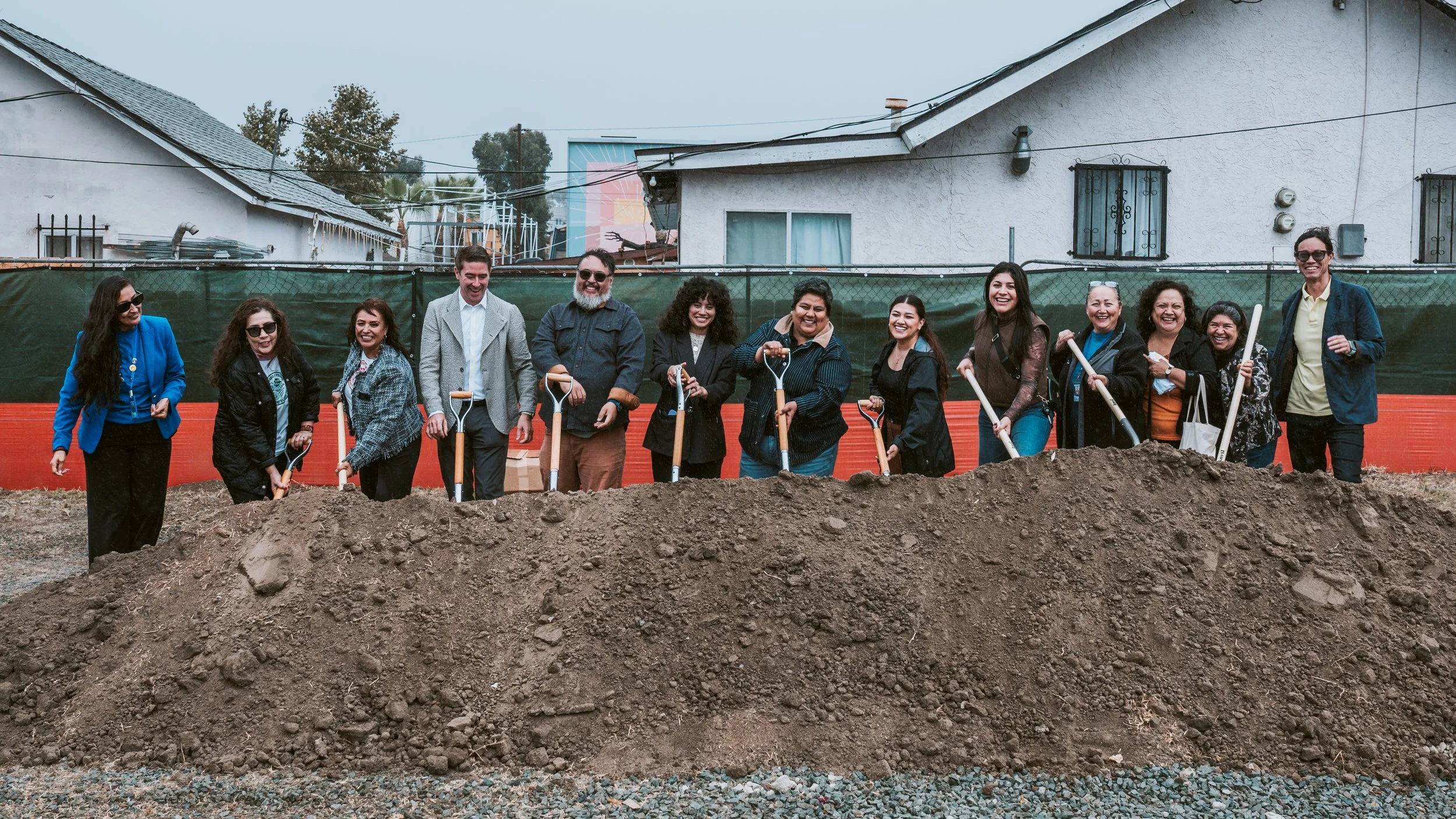
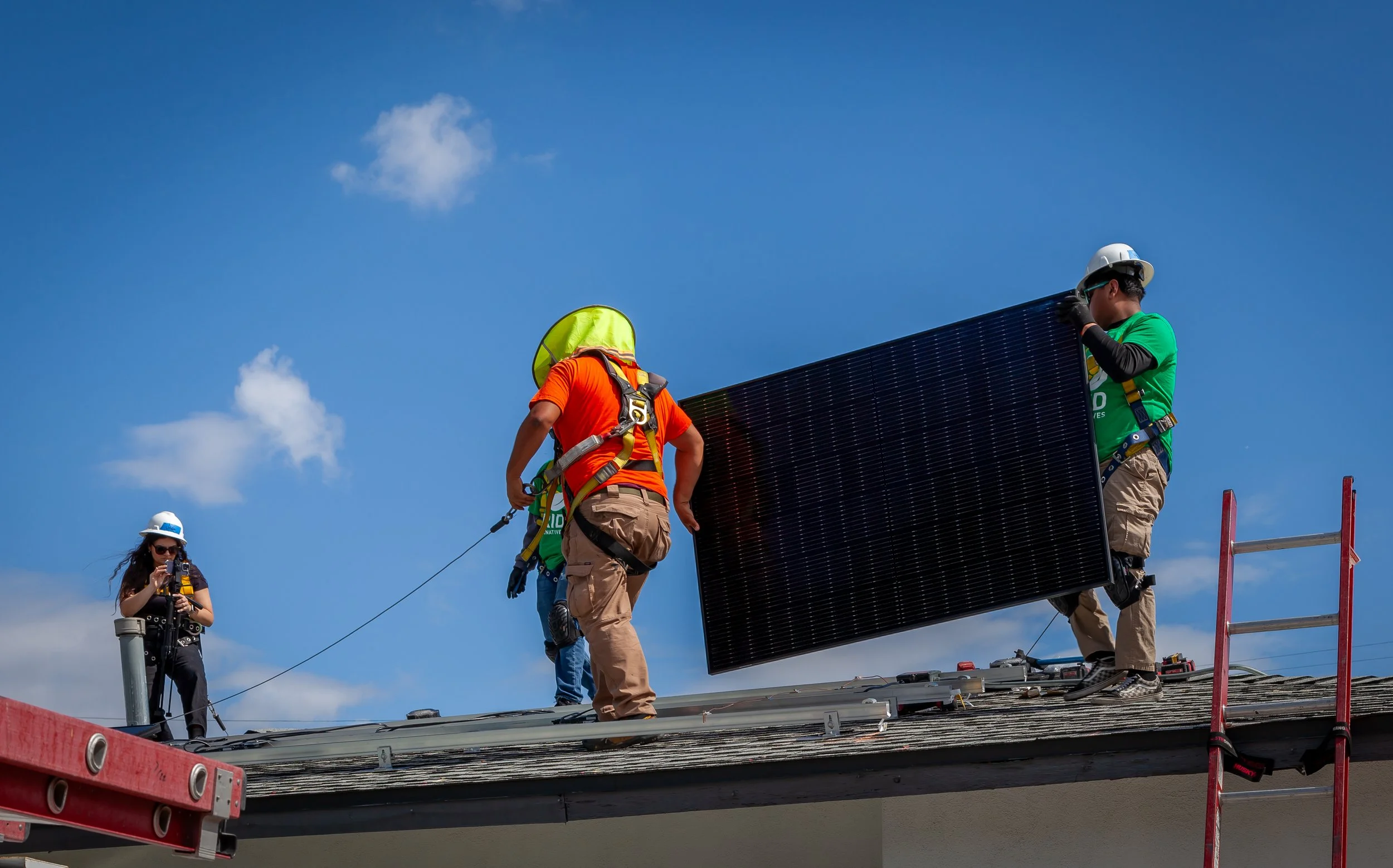
In 2021, the City of Riverside selected Eastside as its focus area for its Transformative Climate Communities Program, initiating community-driven work to address inequities and protect residents from worsening climate hazards. As part of the program, the city partnered with GRID Alternatives Inland Empire to expand access to clean energy for low-income residents by installing no-cost solar on Eastside homes. GRID’s Community Development Coordinator, Victoria Pacheco, was charged with laying the groundwork for the projects by building relationships with residents and teaching them about the program.
“These communities are invested in community health and resilience. They deserve not to be overseen and to be part of the collaboration. For their voices to be included and considered as important as any other neighborhood.”
Victoria quickly learned that Eastside was unlike other communities she had worked with. Many Eastside families had lived there for generations and built strong community networks along the way. She noticed that residents relied on one another for information and support, and so building a secure foundation of trust would be critical for reaching homeowners. By listening to questions, concerns, and curiosities about renewable energy, and responding with empathy, Victoria and key players of the Outreach team formed relationships with residents at places like the library and community center.
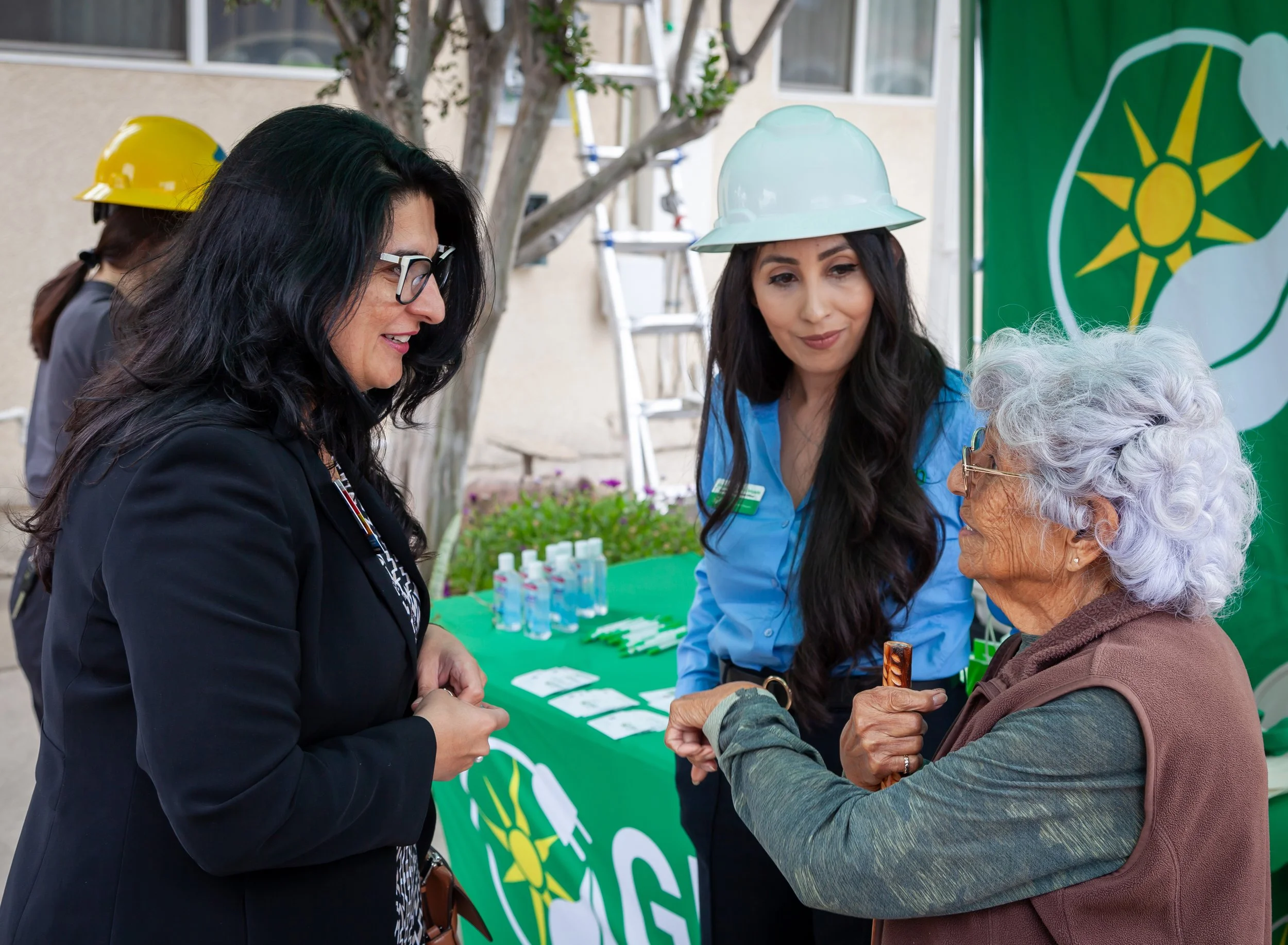
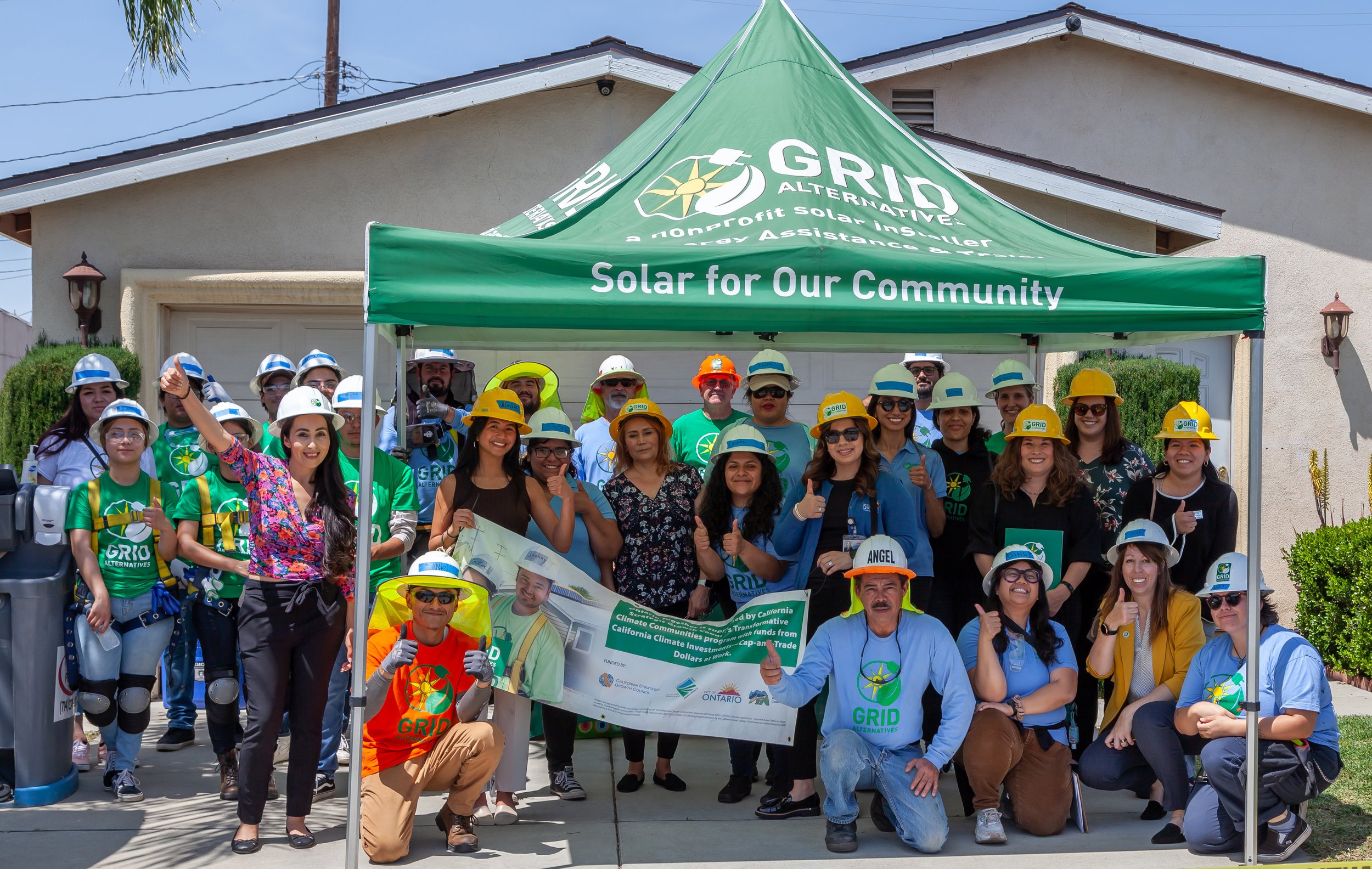
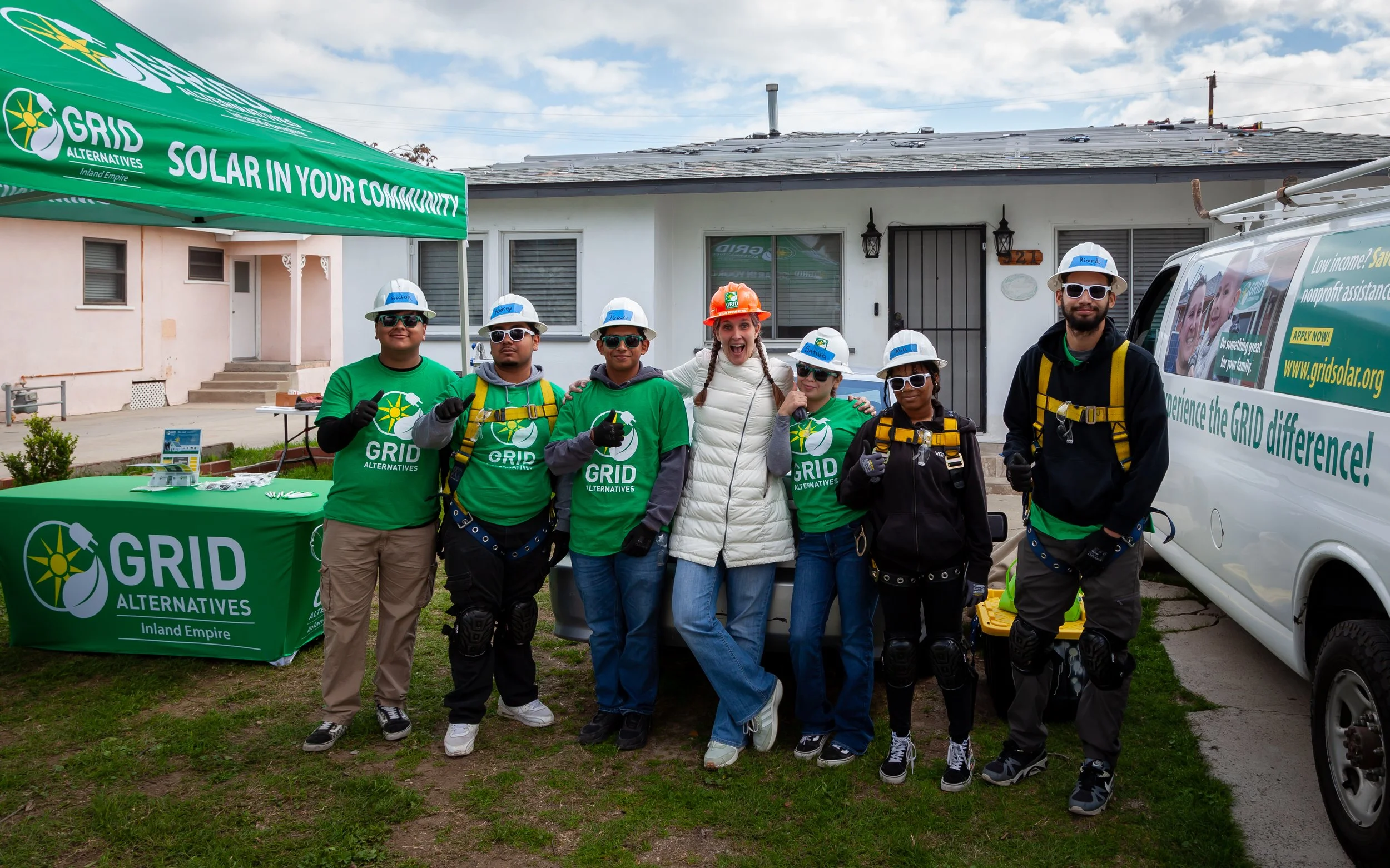

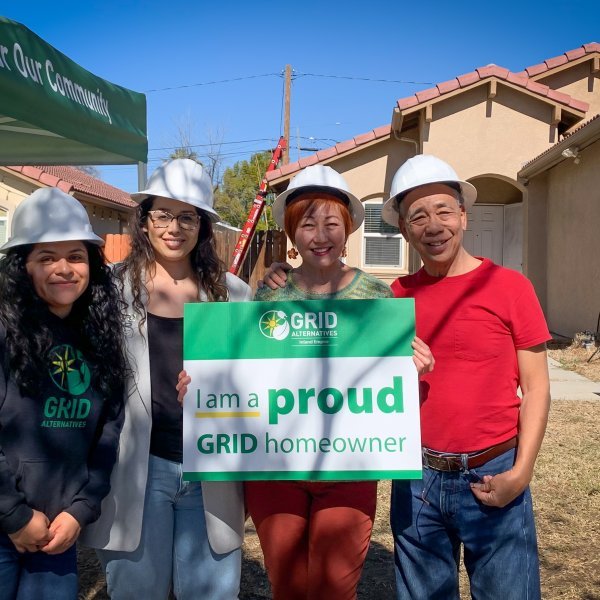
This thoughtful community engagement eventually led to residents spreading the word about GRID themselves, encouraging friends and family to also participate in the program. Victoria and the Outreach team’s work even inspired Lupe Fuentes, a 99-year-old Eastside homeowner, to hold an open house to show neighbors her new solar technology.
As she looked from the steps of GRID’s final installation in Eastside, Victoria could see other homes in the neighborhood that she and all of GRID’s staff had worked on over the past three years. She notes that these accomplishments were possible because GRID understood the local history, spoke the native language, and met residents where they were at. Now, 55 cost-burdened Eastside families can enjoy the comfort of utility savings and strengthened community resilience.
-
GRID Inland Empire’s work in Eastside was funded by the Transformative Climate Communities program
-