
Programs for Universities and Research Institutions
Universities and research institutions can apply for funding for research and projects that reduce greenhouse gas emissions. Learn about open funding opportunities, resources to help you learn more about California Climate Investments and how to apply for funds, and read stories of funded projects benefiting individuals.
Funding Opportunities for Universities and Research Institutions
The programs listed below have funding available now or will offer funding in the near future. You can save or print the list of programs with funding available now using the buttons below.
We encourage you to also view all programs available to universities and research institutions, including both open and closed programs. Learning about programs early can help with planning for future funding rounds.

Vouchers for clean truck and bus fleet purchases for public transit and innovative small e-fleets.
Resources for Universities and Research Institutions

California Air Resources Board
Collection of resources for California Climate Investments administering agencies, prospective applicants, grantees, and public audiences.

California Air Resources Board
Calendar containing upcoming California Climate Investments funding timelines, public participation opportunities such as workshops, public comment periods, listening sessions, and more.

California Air Resources Board
Universities and research institutions can apply for funds for research and projects that reduce greenhouse gas emissions.

California Air Resources Board
Universidades y las instituciones de investigación pueden solicitar fondos para investigaciones y proyectos que reducen las emisiones de gases de efecto invernaderosiga el enlace del programa que aparece en la lista.

California Air Resources Board
Community Connections is a tool to help organizations and agencies find partners interested in California Climate Investments. Partnerships ensure that project proposals reflect the perspectives needed to build resilient communities and implement meaningful investment.

California Strategic Growth Council
The Hub is designed to enable practitioners, policymakers, and communities at any point in their racial equity journey to increase access and understanding to relevant resources and best practices.
Investments in Action: Projects Funding Universities and Research Institutions

California Department of Resources Recyling and Recovery
The Organics Grant Program began allocating California Climate Investments funding to in-vessel composting projects for the first time ever in its most recent solicitation. We were able to interview two grantees, from California State University – Sacramento (CSUS) and the University of Southern California (USC), about their projects and how in-vessel composting will change waste processing at their site and positively impact their communities.

California Department of Forestry and Fire Protection
In 2021, the Forest Health Research Program awarded California Climate Investments funding towards research aimed at determining how to leverage existing carbon incentives to increase utilization of woody biomass residues. The project, which seeks to increase biomass utilization throughout the state, examines the return on investment for a variety of low-value forest products for which the market is unpredictable or simply doesn’t exist.

California Department of Forestry and Fire Protection
With a $100,000 grant from CAL FIRE’s Forest Health Research Program, Joelene Tamm a master's student at UC Riverside and Squaxin Island Tribal member, is partnering with the La Jolla band Luiseño Indians to investigate how indigenous cultural burning practices and traditional ecological knowledge can be used to support management of the invasive goldspotted oak borer, an invasive beetle.

Supported by $3.57 million from the Greenhouse Gas Reduction Fund, the California Department of Food and Agriculture’s Climate Smart Agriculture initiative provides technical assistance to help farmers find funding and implement projects that support their work while helping to achieve the State’s climate goals. These funds, which were leveraged by California Department of Food and Agriculture and the Strategic Growth Council, support 10 Community Education Specialists, a group of technical experts with the University of California Division of Agriculture and Natural Resources. Since 2019, these Community Education Specialists have assisted over 850 farmers and ranchers across the State with applications to programs under the Climate Smart Agriculture initiative.

With a $990,350 award from the Climate Change Research Program, the Resilient Restoration project – led by the Climate Science Alliance Tribal Working Group, University of California Riverside, and San Diego State University – is promoting Tribal resilience by developing knowledge and supporting actions that enhance persistence of cultural practices with a focus on preserving the ecosystems and species that are integral to Tribal communities.

Supported by $400,000 from the Climate Adaptation and Resiliency Program, a coalition of federal, academic, non-profit and private organizations has developed a modeling tool to enhance climate adaptation and resilience planning in five Sacramento River watersheds. These watersheds provide the vast majority of California’s utilized water and over 80 percent of the freshwater to San Francisco Bay. By estimating the ecological returns of conservation and restoration efforts, the modeling tool will help determine what future actions and investments would best restore and protect the health of this important region.

The North Campus Open Space (NCOS) project is restoring 54 acres of diverse coastal wetlands and upland habitat of native plants and grassland in Santa Barbara County. This restoration will increase Santa Barbara County’s coastal wetlands by 11 percent, which in turn will help adapt the coastal community to sea level rise by protecting inland infrastructure.

Meadows in the Sierra Nevada and Cascade mountain ranges act as nature’s sponge and filter, accumulating high amounts of organic soils that help provide California with a year-round water supply. Acting like a mini-reservoir, the meadows store carbon as they capture and clean water.
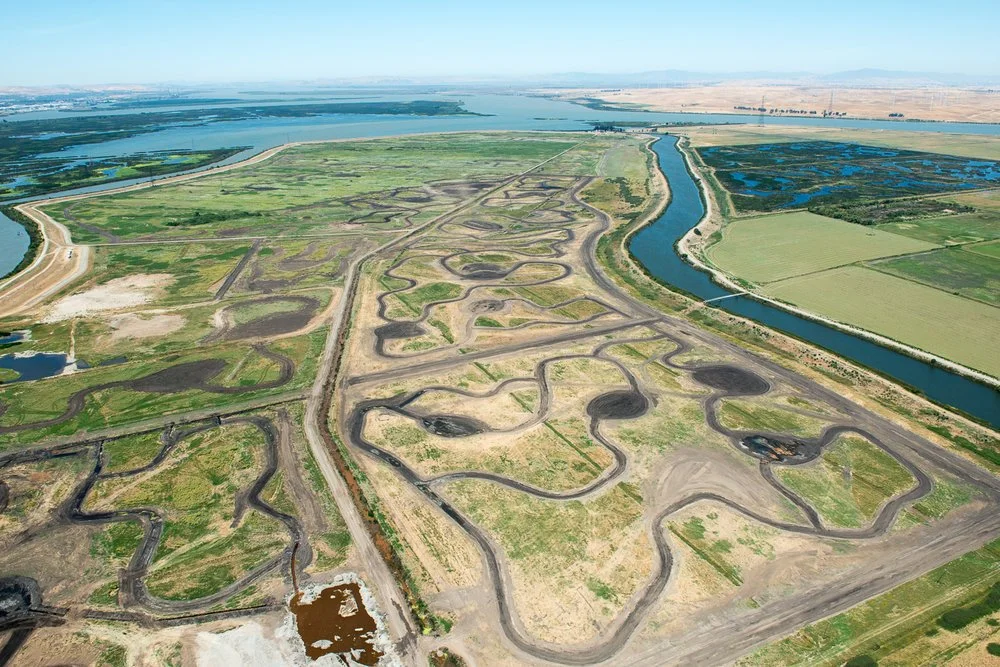
The San Joaquin-Sacramento River Delta is the cradle which nurtures the drinking water supply of more than 23 million Californians and much of the state’s farm land. But measurements show land on Sherman Island has sunk as much as 28 feet below sea level as the State’s population and demand for water have grown. That’s why California Climate Investments is providing more than $10 million to improve the situation.

In Los Angeles County, transitioning to clean, renewable energy will improve air quality and reduce the overall carbon footprint in California’s most populous region. With a $638,878 award from California Climate Investments through the Climate Change Research Program, a partnership led by the University of California, Los Angeles and Liberty Hill Foundation is helping to make this transition equitable, affordable, and beneficial for people living in the area’s priority populations. That means engaging these communities at all stages of the research.

The Toxic Tides research project, led by the University of California (UC), Berkeley Sustainability and Healthy Equity Laboratory is working to better understand how vulnerable communities living near hazardous sites may be affected under different sea levels rise scenarios.

In a partnership with the Strategic Growth Council and the California Department of Food and Agriculture (CDFA), the University of California Agriculture and Natural Resources (UC ANR) is providing outreach, education, and technical assistance to farmers and ranchers across California

Supported by nearly $2.6 million from California Climate Investments, the California Environmental Protection Agency is working with University of California researchers to carry out two studies that will help California reach its goal of achieving carbon neutrality by 2045. In particular, these studies will examine ways to reduce emissions from the transportation sector, the largest source of greenhouse gas emissions in California. The studies will also quantify air pollution and economic impacts for multiple greenhouse gas emissions reduction scenarios.

Launched in January 2019, the South Central Los Angeles Project to Understand the Sources and Health Impacts of Local Air Pollution (SCLA‑PUSH) aims to help South Central LA organizations and community residents better understand the state of air quality and health in their community and engage in air monitoring and data analysis to advance community‑driven solutions in air quality policy. The project was awarded $300,000 by the AB 617 Community Air Grant Program and is led by Physicians for Social Responsibility–Los Angeles (PSR‑LA).

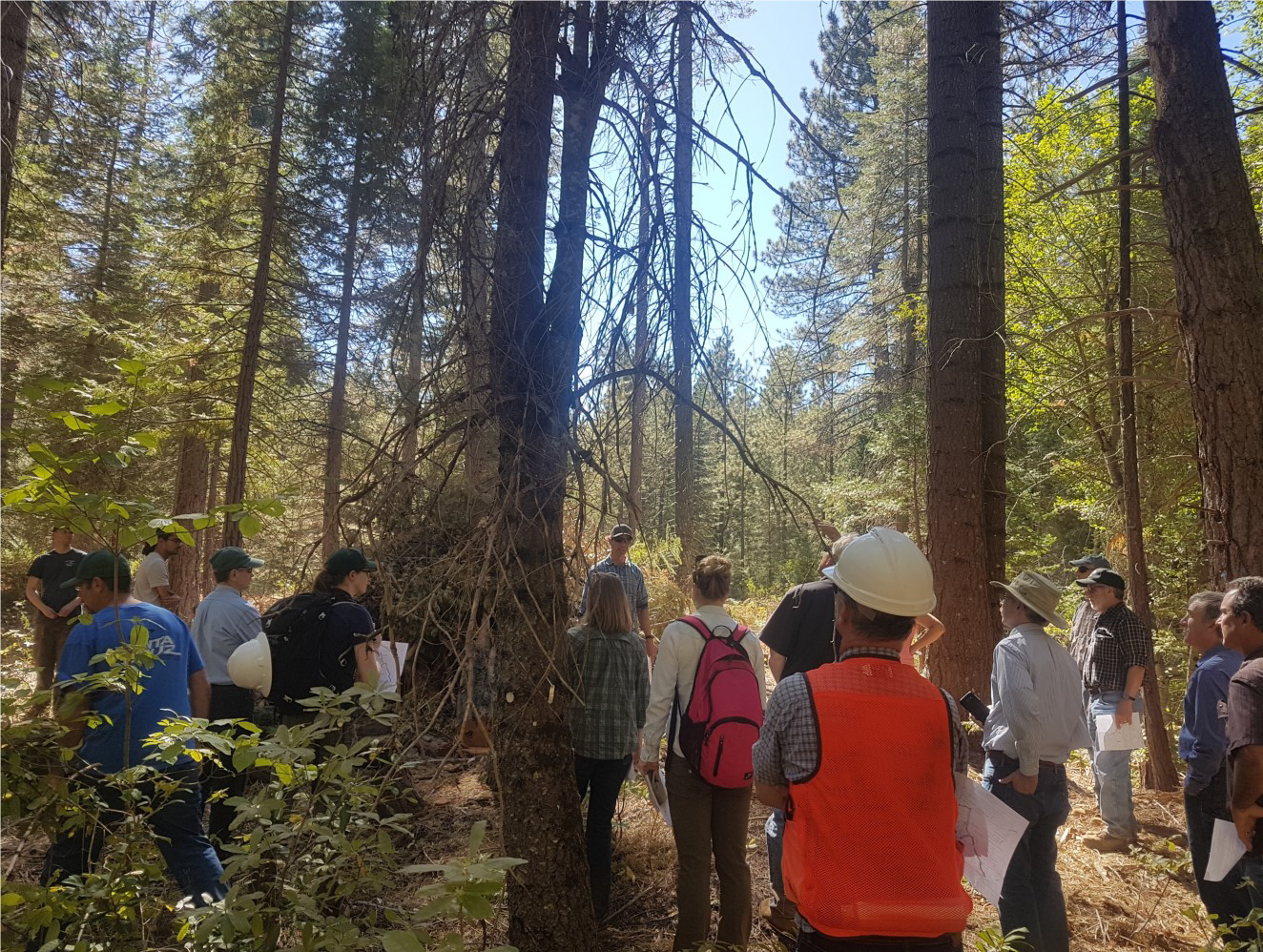
At the University of California’s Blodgett Forest Research Station in the central Sierra Nevada Mountains, the long running Fire and Fire Surrogate study has provided critical information to forest managers and landowners on the use of prescribed fire and restoration thinning. With a $454,772 grant from California Climate Investments through the California Department of Forestry and Fire Protection’s Forest Health Research Program, Dr. John Battles, Dr. Scott Stephens, and other researchers are continuing this important work with an eye towards understanding the value of repeated application of fuel reduction treatments on Sierra Nevada mixed‑conifer forests. Forest managers and landowners throughout the state and beyond will be able to use the results of this study to inform their management actions and policy decisions in the face of warming climate and increasing wildfires.

The “Teakettle Experiment” continues important work that began over 20 years ago to quantify the effects of prescribed fire and thinning on the ecosystem in the Teakettle Experimental Forest in the southern Sierra Nevada Mountains. This long-term research project is examining six different treatment options, including different intensities of thinning and prescribed fire.
STAY UP TO DATE. Sign up for the California Climate Investments newsletter to receive program updates, news, events and more.