
Programs for Local Governments
Local governments can receive funds to reduce climate pollution through clean transportation, waste prevention, clean air initiatives, and more. Learn about open funding opportunities, resources to help you learn more about California Climate Investments and how to apply for funds, and read stories of funded projects led by local governments.
Funding Opportunities for Local Governments
The programs listed below have funding available now or will offer funding in the near future. You can save or print the list of programs with funding available now using the buttons below.
We encourage you to also view all programs available to local governments, including both open and closed programs. Learning about programs early can help with planning for future funding rounds.

Funds conservation and management of natural and working lands and technical assistance for land managers.

Funds placement of full-time service members with public agency, nonprofit, tribal, and educational institution partners to support community engagement efforts.

Technical assistance for small, disadvantaged communities to address drinking water, wastewater, stormwater, or groundwater needs.

Grants that support the development of sea level rise adaptation plans and projects to build resilience with a dedicated funding pathway for Tribes to assess and plan for impacts on cultural resources.

Financial incentives for planning, purchase, and installation of publicly available charging equipment.

Financial incentives for EV charging stations with priority for shovel-ready projects in disadvantaged and low-income communities.

Financial incentives for installation of all-electric appliances, energy efficiency and weatherization measures, and related building upgrades in low-income communities.


Grants for land use planning, capacity building, and land acquisition projects that protect agricultural land from conversion to non-agricultural uses.

Vouchers toward the purchase of zero-emission equipment used in off-road freight transport. This can include forklifts, transport refrigeration units, gantry cranes, and terminal trucks.

Vouchers for clean truck and bus fleet purchases for public transit and innovative small e-fleets.

Funds water system consolidation, operation and maintenance costs, and planning activities for small water systems.
Resources for Local Governments

California Air Resources Board
Collection of resources for California Climate Investments administering agencies, prospective applicants, grantees, and public audiences.

California Air Resources Board
Calendar containing upcoming California Climate Investments funding timelines, public participation opportunities such as workshops, public comment periods, listening sessions, and more.

California Air Resources Board
Local governments can receive funds to reduce climate pollution through clean transportation, waste prevention, clean air initiatives, and more.

California Air Resources Board
Los gobiernos locales pueden recibir fondos para reducir la contaminación climática a través de transporte limpio, prevención de residuos, iniciativas de aire limpio y más.

California Air Resources Board
Community Connections is a tool to help organizations and agencies find partners interested in California Climate Investments. Partnerships ensure that project proposals reflect the perspectives needed to build resilient communities and implement meaningful investment.

California Strategic Growth Council
The Hub is designed to enable practitioners, policymakers, and communities at any point in their racial equity journey to increase access and understanding to relevant resources and best practices.

California Air Resources Board
California Climate Investments light duty, heavy duty, and clean mobility project snapshots and lessons learned.

California Air Resources Board
Example guidance from the Sustainable Transportation Equity Project (STEP) where applicants are encouraged to consider how projects can increase adaptability and build resilience to the specific impacts of climate change on the STEP Community over each project’s lifetime.

Industrial Economics, Inc.
An analysis and evaluation of ecosystem service benefits California Climate Investments projects provide by funding nature-based climate solutions. The resulting report explores how carbon mitigation projects can generate ecological and environmental improvements that enhance the health, wealth, and well-being of California residents.
Investments in Action: Projects Funding Local Governments

Strategic Growth Council
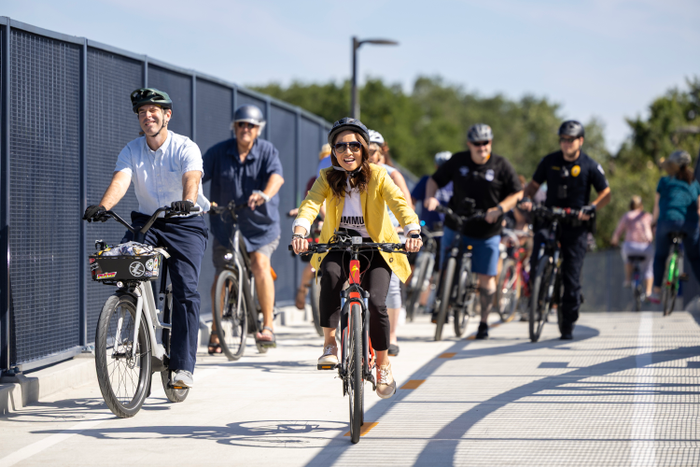
The Sacramento Integrated Multimodal Place-Based Living Project is a Transformative Climate Communities initiative aimed at strengthening community engagement, increasing affordable housing, and expanding public transit in the River District neighborhood of Sacramento. One of the key features of the project, the Dos Rios Light Rail Station, will significantly increase residents’ accessibility to Downtown Sacramento and the greater Sacramento Area. The Mirasol Village Community Garden represents another success of the initiative, giving residents the opportunity to cultivate fresh produce and forge community bonds.

California Air Resources Board
The Port of Los Angeles (POLA) has taken a significant step toward a greener future with the deployment of five brand-new Taylor ZLC 996 Electric Top Handlers. Supported by $2.5 million in California Climate Investments funding through the Clean Off-Road Equipment Voucher Incentive Project (CORE), this initiative marks a milestone in reducing greenhouse gas emissions and improving air quality in and around California ports.

California Department of Resources Recyling and Recovery
The Organics Grant Program began allocating California Climate Investments funding to in-vessel composting projects for the first time ever in its most recent solicitation. We were able to interview two grantees, from California State University – Sacramento (CSUS) and the University of Southern California (USC), about their projects and how in-vessel composting will change waste processing at their site and positively impact their communities.
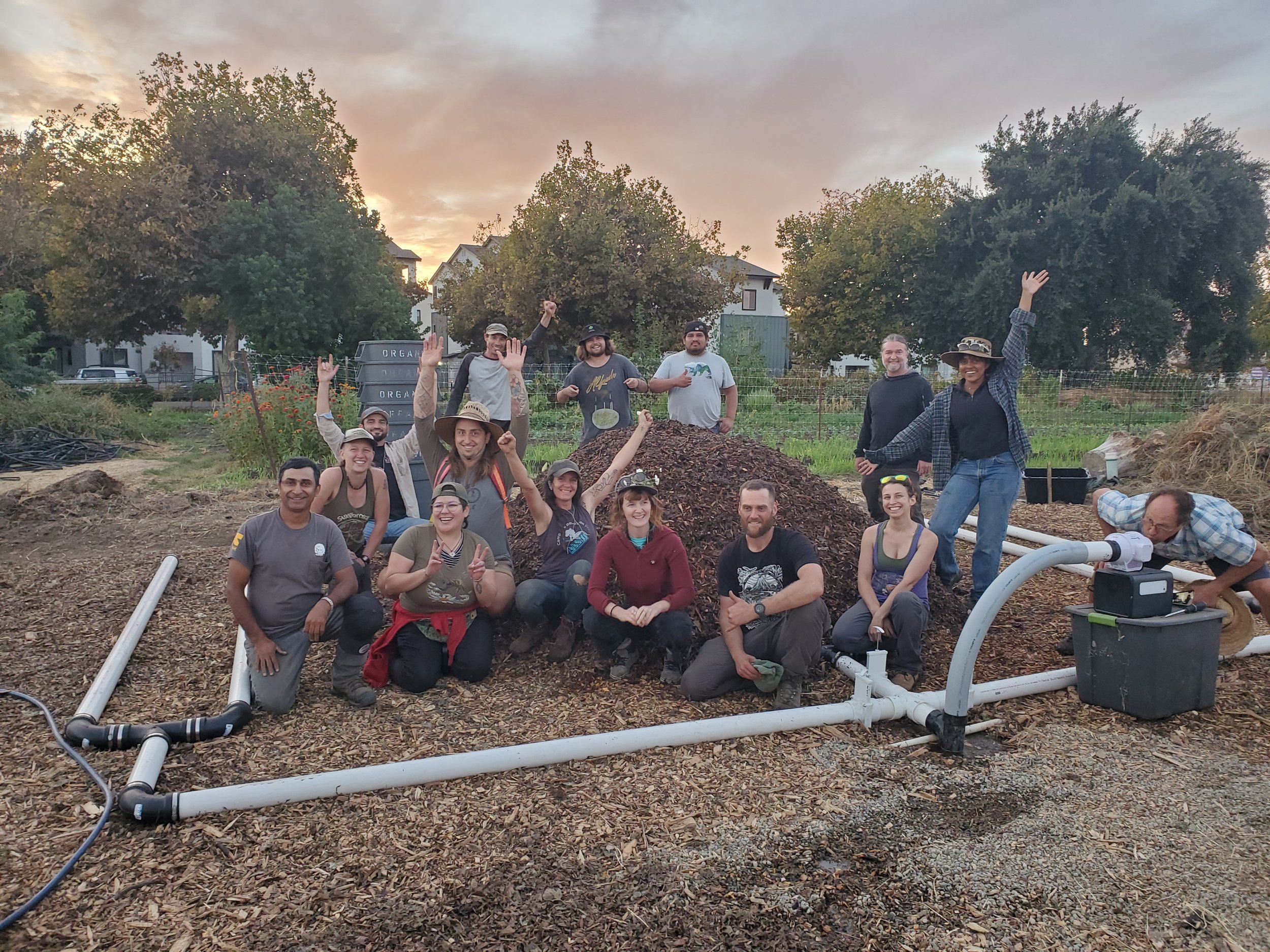
California Department of Resources Recycling and Recovery’s (CalRecycle) Community Composting for Green Spaces Grant Program is funding community composting at hundreds of sites across California. In the first cycle of funding, the grant program awarded $1.5 million to the People, Food, and Land Foundation, which supported community composting at 117 sites throughout California, planted 488 trees, created 4,418 cubic yards of compost, and reduced emissions by 2,508 MTCO2e of GHG emissions. An additional $4.2 million was awarded to the California Alliance for Community Composting and LA Compost in the second cycle of the program. Through the establishment or expansion of community composting sites, communities receive benefits such as part time jobs and training on composting practices, fresh produce from adjacent gardens, training on farming practices, an increase in shade from tree planting, and the development of green spaces.

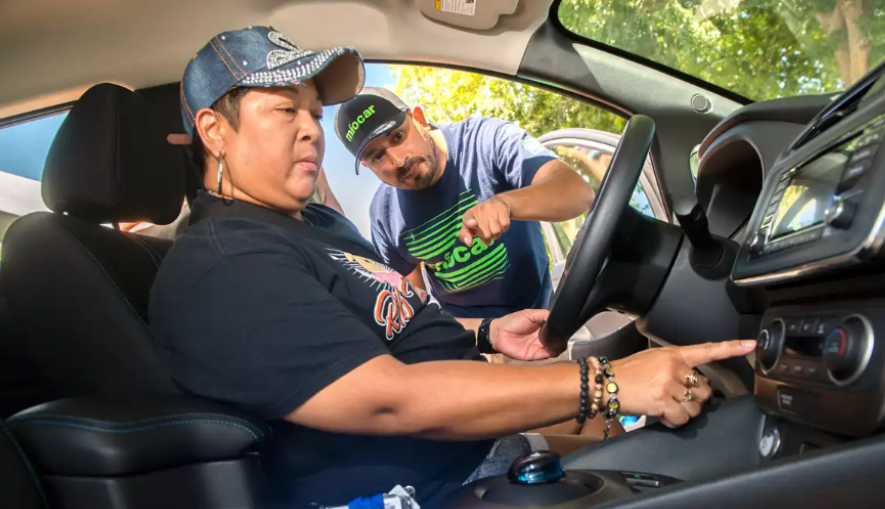
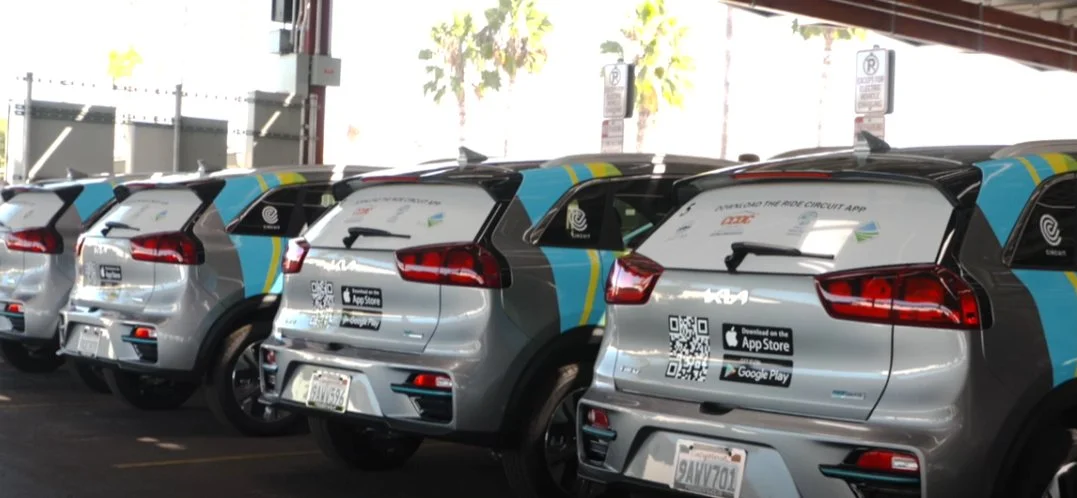
Since 2015, the City of Los Angeles (LA), in partnership with the LA Department of Transportation and the Mayor’s Office, has received a total of $4.7 million from CARB’s Clean Mobility Options program for a zero‑emission car share pilot project. This project, known as BlueLA, is operating in 13 underserved communities that face significant air quality burdens and have historically been excluded from environmental benefits. BlueLA provides a clean and affordable mobility option in these communities, which include Downtown, Pico Union, West Lake, and Koreatown.

In the heart of the San Joaquin Valley, a transformative project is underway to reshape public transportation in communities around Merced. Thanks to $3.1 million in funding from the California State Transportation Agency's Transit and Intercity Rail Capital Program (TIRCP)—half from California Climate Investments and half from SB 1 funds—the Transit Joint Powers for Merced County initiative addresses critical transit needs in disadvantaged communities. The initiative improves air quality and spurs economic growth by adding battery‑electric buses into The Bus, Merced County’s public transit system.

In 2020, Sarah Light, agronomy advisor at the University of California Cooperative Extension, partnered with the Colusa County Resource Conservation District, Davis Ranch, Richter Ag, and the United States Department of Agriculture Natural Resource Conservation Service to apply for a CDFA Healthy Soils Program Demonstration Grant. The team received $99,832 of grant funding to conduct a demonstration project on cover crops on two fields in the Sacramento Valley from fall 2020 to spring 2024.

California Department of Forestry and Fire Protection
A $4.3 million grant from CAL FIRE’s Forest Health Program to the Humboldt County Resource Conservation District is funding work to protect natural, cultural, and spiritual values in a key watershed in the Yurok Tribe’s ancestral homeland.

California Air Resources Board
Thanks to over $3 million from the Sustainable Transportation Equity Project, the City of Commerce has partnered with Climate Resolve and TreePeople to provide more clean transportation options to the city’s residents. Situated in southeast Los Angeles County in an area known for its commercial and industrial operations, Commerce has a history of providing free and reliable public transit service to its residents.

California Department of Forestry and Fire Protection
A collaborative of landowners led by the San Diego Fire Safe Council and the Resource Conservation District of Greater San Diego County is implementing a landscape-scale restoration project aimed at improving forest health on Palomar Mountain. Forests in San Diego county have experienced heavy losses from catastrophic fires and invasive pest infestations. Now at the home of one of San Diego county’s last mixed conifer forests, project partners are working to ensure Palomar Mountain’s forests are resilient to future wildfires.

California Strategic Growth Council
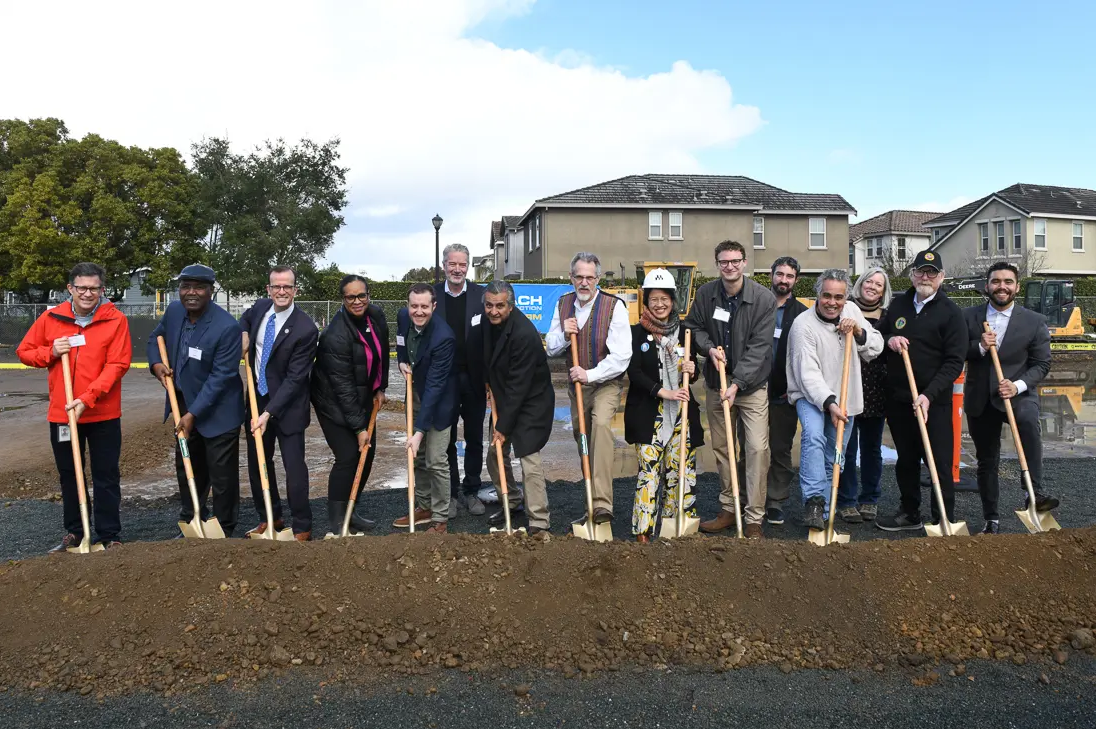
72 affordable homes for families and veterans are now available in downtown Riverside. The Mission Heritage Plaza project is a partnership between Wakeland Housing and Development Corporation, the City of Riverside, and Riverside Transit Agency, working to reduce greenhouse gas emissions through transportation mode-shift and construction of affordable housing within the urban core of Riverside.
California Air Resources Board
Through California Climate Investments the City of Chula Vista received close to $1 million through the Clean Mobility Voucher Pilot Program to launch an on-demand community shuttle service in the northwest region of the city.

California Department of Forestry and Fire Protection
A $2.5 million grant from CAL FIRE’s Forest Health Program is supporting the San Mateo Resource Conservation District (RCD) and a network of regional partners in their efforts to improve forest resilience, increase carbon sequestration, and reduce wildfire risk to vulnerable communities in the Santa Cruz Mountains.

Using a $65,000 grant awarded under the Coastal Resilience Planning program, the City of Morro Bay engaged with its community to update the City’s Land Use Plan, the first step to updating its Local Coastal Program to include updated adaptation strategies and land use policies that will protect coastal infrastructure and provide resilience to future coastal hazards.

California State Water Resources Control Board
Thanks in part to a $21,253 technical assistance grant from the State Water Resources Control Board’s Safe and Affordable Drinking Water Fund, the City of Manteca will be able to provide safe water for Nile Garden Elementary School by consolidating the school into the City of Manteca’s public water system.

The Resource Conservation District of Greater San Diego County (RCD) is using their $1.4 million grant awarded in 2019 from the Regional Forest and Fire Capacity program to develop the region’s capacity to restore the health of its forests and protect them from severe wildfires in the future. To carry out this work, the RCD has partnered with several California Native American Tribes, the Cleveland National Forest, a private cattle company, and the Palomar Observatory to manage the region, which includes the last mixed conifer forest in San Diego County. The RCD is also developing training programs for several Fire Safe Councils in San Diego County serving 46 communities, so they can support this work.

In 2021, the Santa Barbara County Association of Governments completed the Cool Blocks Try Transit project, a neighborhood outreach and capacity building campaign supported by a $25,000 grant from the Low Carbon Transit Operations Program and in partnership with the Empowerment Institute’s Cool Blocks program. This project brought the participating 25-block neighborhood of Isla Vista together over a series of workshops to learn about and consider climate change mitigation and resilience measures they could adopt as individuals and as a community, which included using public transit. The project inspired the community to act, which in part led to their successful application to the Sustainable Transportation Equity Project, another California Climate Investments program.

In 2019, the Capitol Corridor Joint Powers Authority, in partnership with California Department of Transportation’s Division of Mass Transit, was selected by the Bay Area Air Quality Management District to receive $7.4 million from the Community Air Protection program to help replace two diesel-powered locomotives with two new Siemens Charger Tier 4 locomotives. These locomotives are now operating on the Capitol Corridor line from Auburn-Sacramento to Silicon Valley and run through disadvantaged and low-income communities in San Francisco, Oakland, Berkeley, and more. The new locomotives achieve a 90 percent reduction in particulate matter emissions and an 80 percent reduction in oxides of nitrogen emissions compared to the old, higher-polluting locomotives.

Alpine County was awarded $120,810 from the Fire Prevention Grants program to support the operation of The Turtle Rock Park Biomass Collection site. The facility provides communities in eastern Alpine County with a place to send green waste and biomass removed while creating defensible space around their properties to reduce the risk of future wildfire damage. By reducing the intensity of future wildfires, defensible space practices also reduce the emission of air pollutants and greenhouse gases.

Thanks to a $780,000 grant provided by the Sustainable Agricultural Lands Conservation (SALC) program, the Santa Clara Valley Open Space Authority (the Authority), in partnership with the Santa Clara Valley Transportation Authority and the Santa Clara County Planning Department, were able to purchase a 60-acre farm located in the Coyote Valley of Santa Clara County. This purchase adds to Coyote Valley’s growing network of protected lands and helps combat climate change by protecting prime farmland from being converted to more carbon-intensive land uses. This purchase also furthers the implementation of the comprehensive Santa Clara Valley Agricultural Plan finalized in January 2018, which Andrea Mackenzie, General Manager of the Authority defined as “a roadmap to protecting the multiple benefits that our region’s remaining farmlands and working lands provide.” This plan was also made possible by an award from the SALC program.

The project is a continuation of the Turtle Rock Park Biomass Collection site which serves communities in eastern Alpine County. The facility provides a location to collect green waste and biomass that is cleared from private property to create defensible space and thereby reduce wildland fire risk.

In May 2017, the Sacramento Metropolitan Air Quality Management District (AQMD) and its partners unveiled the first six of 29 electric school buses — what will be the largest electric school bus deployment in the U.S. — at a press event in north Sacramento.

The adjacent ports of Long Beach and Los Angeles combined are the largest fixed sources of air pollution in the South Coast Air Basin, one of the most polluted air basins in the United States, in large part because the trucks and equipment used at the ports burn diesel fuel. Recognizing this, the Sustainable Terminals Accelerating Regional Transformation demonstration project was awarded $50 million to replace trucks and equipment with zero‑emission technology. The funding, which comes from California Climate Investments, supports the deployment of 102 pieces of zero‑emission terminal equipment and trucks at seaports across California, including at the ports of Los Angeles and Long Beach. These funds are also supporting the development of new, cleaner tugboats; the deployment of two container vessels with cleaner‑burning engines; and advanced workforce development programs to support sustainable goods movement across California.

This program will deploy 38 electric yard trucks, 9 electric gantry cranes, 18 electric heavy lift forklifts, and 15 zero-emission Class 8 trucks. The program is also including a workforce development component with curriculum being developed to support the deployment of this technology with local school districts near the three port locations, community colleges and Long Beach State University.

More than 1,900 households in the San Gabriel Valley are saving money, water and energy through a new rebate program supported by Cap-and-Trade dollars.
STAY UP TO DATE. Sign up for the California Climate Investments newsletter to receive program updates, news, events and more.