
Programs for Transit Agencies
Transit agencies can apply for funding to reduce greenhouse gas emissions, improve mobility, and provide meaningful benefits to the most disadvantaged communities. Learn about open funding opportunities, resources to help you learn more about California Climate Investments and how to apply for funds, and read stories of funded projects led by transit agencies.
Funding Opportunities for Transit Agencies
The programs listed below have funding available now or will offer funding in the near future. You can save or print the list of programs with funding available now using the buttons below.
We encourage you to also view all programs available to transit agencies, including both open and closed programs. Learning about programs early can help with planning for future funding rounds.

Vouchers for clean truck and bus fleet purchases for public transit and innovative small e-fleets.

Grants that support mobile source air pollution reduction measures for communities identified through the AB 617 Community Emissions Reduction Programs.
Resources for Transit Agencies

California Air Resources Board
Collection of resources for California Climate Investments administering agencies, prospective applicants, grantees, and public audiences.

California Air Resources Board
Calendar containing upcoming California Climate Investments funding timelines, public participation opportunities such as workshops, public comment periods, listening sessions, and more.
California Air Resources Board
Transit agencies can receive funds to reduce climate pollution through clean transportation, clean air initiatives, and more.

California Air Resources Board
Las agencias de tránsito pueden recibir fondos para reducir la contaminación climática a través del transporte limpio, iniciativas de aire limpio y más.

California Air Resources Board
Community Connections is a tool to help organizations and agencies find partners interested in California Climate Investments. Partnerships ensure that project proposals reflect the perspectives needed to build resilient communities and implement meaningful investment.

California Strategic Growth Council
The Hub is designed to enable practitioners, policymakers, and communities at any point in their racial equity journey to increase access and understanding to relevant resources and best practices.

California Air Resources Board
California Climate Investments light duty, heavy duty, and clean mobility project snapshots and lessons learned.
Investments in Action: Projects Funding Transit Agencies

California Air Resources Board
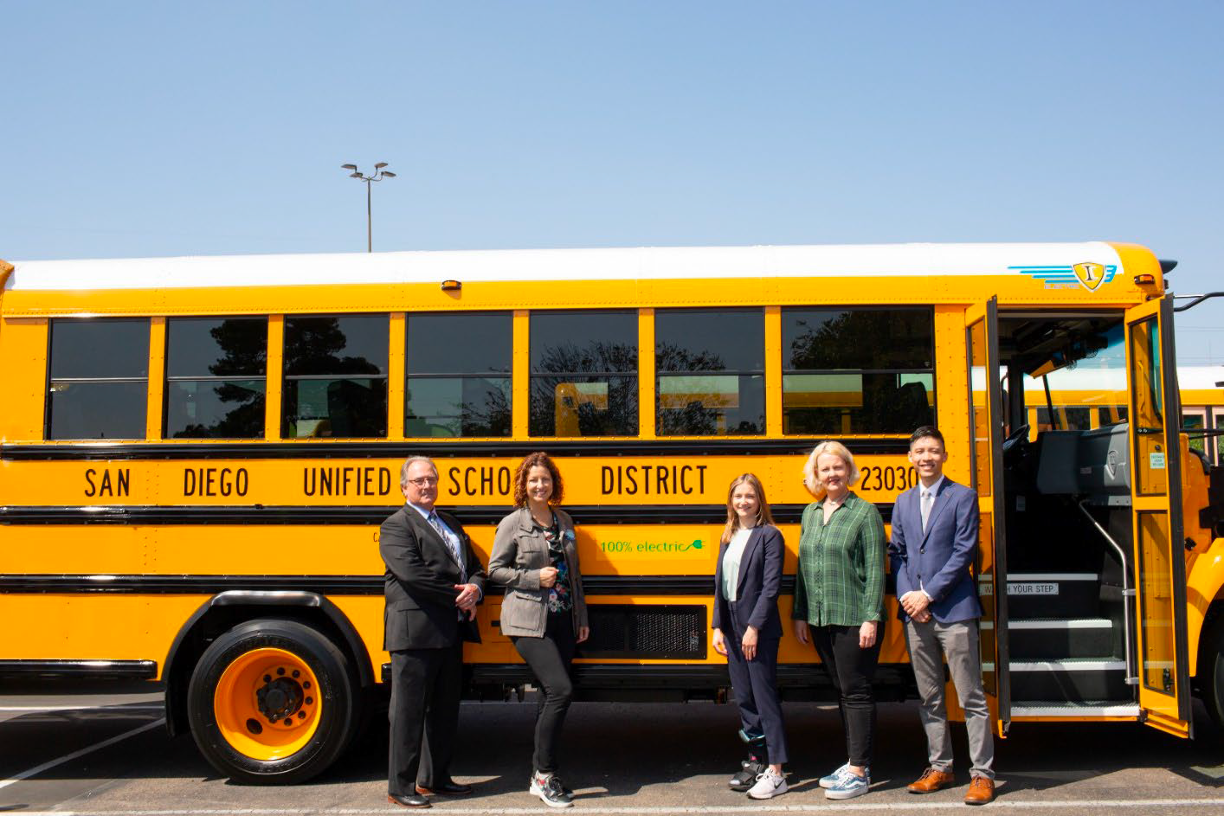
California Climate Investments funding has supported the deployment of over 1,100 zero-emission school buses at over 300 public school districts and local education agencies across the state. In both rural and urban communities across California, school districts are operating more zero-emission fleets, supporting the health and safety of students and reducing fleet operating costs.

California Department of Resources Recyling and Recovery
The Organics Grant Program began allocating California Climate Investments funding to in-vessel composting projects for the first time ever in its most recent solicitation. We were able to interview two grantees, from California State University – Sacramento (CSUS) and the University of Southern California (USC), about their projects and how in-vessel composting will change waste processing at their site and positively impact their communities.
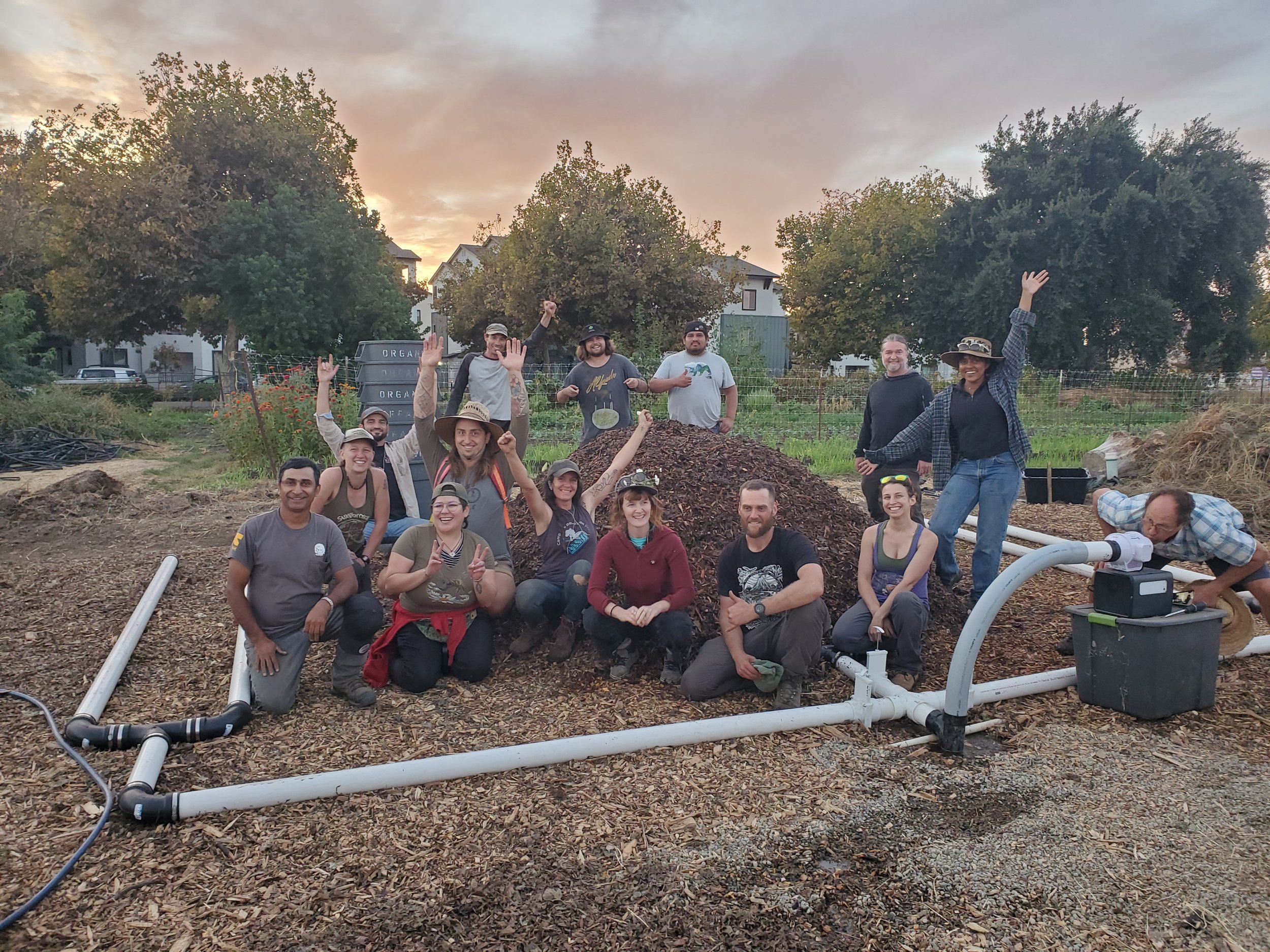
California Department of Resources Recycling and Recovery’s (CalRecycle) Community Composting for Green Spaces Grant Program is funding community composting at hundreds of sites across California. In the first cycle of funding, the grant program awarded $1.5 million to the People, Food, and Land Foundation, which supported community composting at 117 sites throughout California, planted 488 trees, created 4,418 cubic yards of compost, and reduced emissions by 2,508 MTCO2e of GHG emissions. An additional $4.2 million was awarded to the California Alliance for Community Composting and LA Compost in the second cycle of the program. Through the establishment or expansion of community composting sites, communities receive benefits such as part time jobs and training on composting practices, fresh produce from adjacent gardens, training on farming practices, an increase in shade from tree planting, and the development of green spaces.

Through the Inclusive, Diverse, Equitable, Accessible, and Local (IDEAL) ZEV Workforce Pilot Project administered by the California Energy Commission and co‑funded by CARB, Fresno City College has offered three high schools in Fresno County the opportunity to introduce their automotive students to ZEV technology. Training was provided in December 2023 for high school teachers at each of the three schools, and they were provided with tools and equipment to offer the new ZEV curriculum starting in spring 2024.

In May 2017, the Sacramento Metropolitan Air Quality Management District (AQMD) and its partners unveiled the first six of 29 electric school buses — what will be the largest electric school bus deployment in the U.S. — at a press event in north Sacramento.
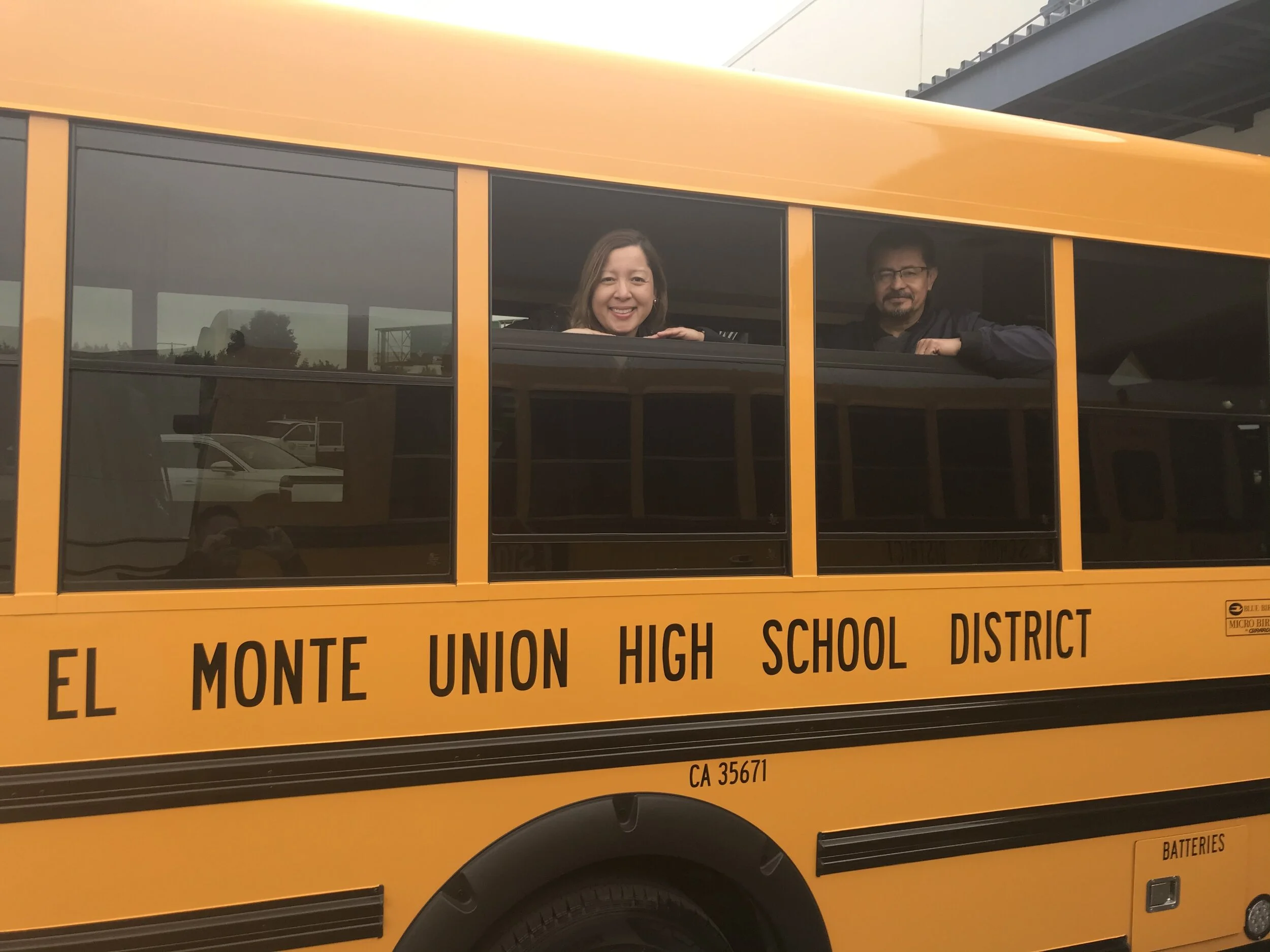
Thanks to $9.8 million from California Climate Investments, El Monte Union High School District will be able to implement their Clean Mobility in Schools project, one of three projects awarded to school districts across California in 2020. These funds will help El Monte Union High School District purchase battery electric school buses and charging infrastructure, energy storage infrastructure, develop an active transportation plan, and much more, across six high schools and one bus garage.

Westside Elementary School in the Coachella Valley relied solely on well water for its drinking water. The well had an unfortunate history of both contamination and the inability to provide adequate water supplies to prevent fires. Thanks in part to a nearly $370,000 from California Climate Investments through the Safe and Affordable Drinking Water Fund, these problems have been solved.

In 2018, the Ukiah Unified School District in Mendocino County received funding to replace three older diesel school buses with three new zero-emission electric models.
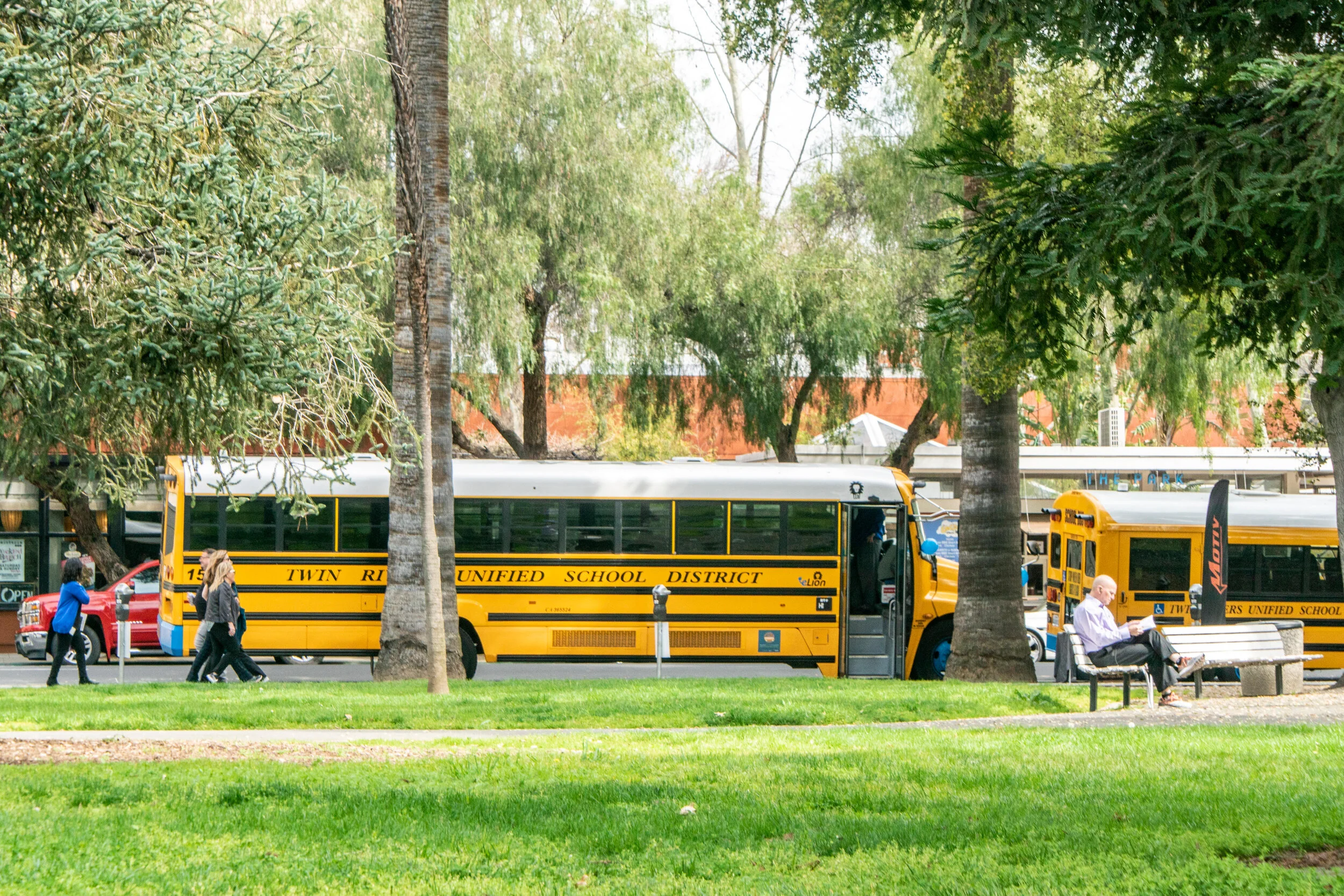
With delivery of 10 new Lion Electric all‑electric school buses in December 2020, Twin Rivers Unified School District’s (TRUSD) fleet of 40 zero‑emission buses represents the largest deployment of zero‑emission school buses in North America. Several California Climate Investments programs, including Community Air Protection Incentives, played a crucial role in reaching this major milestone.
STAY UP TO DATE. Sign up for the California Climate Investments newsletter to receive program updates, news, events and more.