
Programs for Farmers
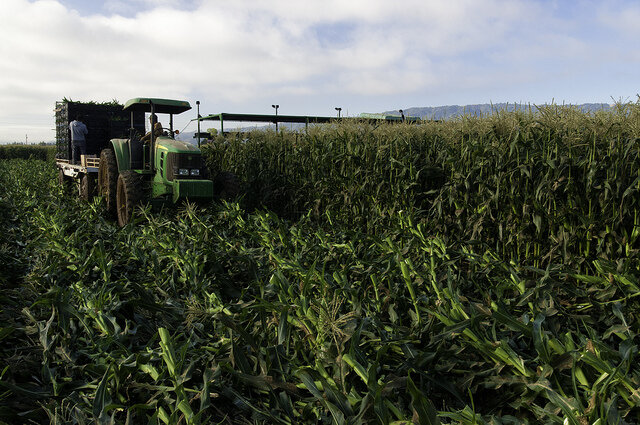
Farm and ranch owners, managers, operators and agricultural workers can receive funds for equipment and management practices that reduce greenhouse gas emissions. Learn about open funding opportunities, resources to help you learn more about California Climate Investments and how to apply for funds, and read stories of funded projects led by farmers.
Funding Opportunities for Farmers
The programs listed below have funding available now or will offer funding in the near future. You can save or print the list of programs with funding available now using the buttons below.
We encourage you to also view all programs available to farmers, including both open and closed programs. Learning about programs early can help with planning for future funding rounds.

Grants for land use planning, capacity building, and land acquisition projects that protect agricultural land from conversion to non-agricultural uses.

Grant application assistance and implementation support for Tribal, disadvantaged, and low-income communities applying for or carrying out climate mitigation, adaptation, or resilience projects.

Vouchers for clean truck and bus fleet purchases for public transit and innovative small e-fleets.

Grants that support mobile source air pollution reduction measures for communities identified through the AB 617 Community Emissions Reduction Programs.

Funds no-cost energy conservation measures in income-qualified farmworker households in select counties.

Funds water system consolidation, operation and maintenance costs, and planning activities for small water systems.
Resources for Farmers

California Air Resources Board
Collection of resources for California Climate Investments administering agencies, prospective applicants, grantees, and public audiences.

California Air Resources Board
Calendar containing upcoming California Climate Investments funding timelines, public participation opportunities such as workshops, public comment periods, listening sessions, and more.

California Air Resources Board
Farm and Ranch owners, managers and operators can receive funds for equipment and management practices that reduce greenhouse gas emissions.

California Air Resources Board
Propietarios, gerentes y operadores de granjas y ranchos pueden recibir fondos para equipos y prácticas de manejo que reducen las emisiones de gases de efecto invernadero.

California Strategic Growth Council
The Hub is designed to enable practitioners, policymakers, and communities at any point in their racial equity journey to increase access and understanding to relevant resources and best practices.

California Air Resources Board
California Climate Investments light duty, heavy duty, and clean mobility project snapshots and lessons learned.

Industrial Economics, Inc.
An analysis and evaluation of ecosystem service benefits California Climate Investments projects provide by funding nature-based climate solutions. The resulting report explores how carbon mitigation projects can generate ecological and environmental improvements that enhance the health, wealth, and well-being of California residents.
Investments in Action: Projects Funding Farmers
California Workforce Development Board
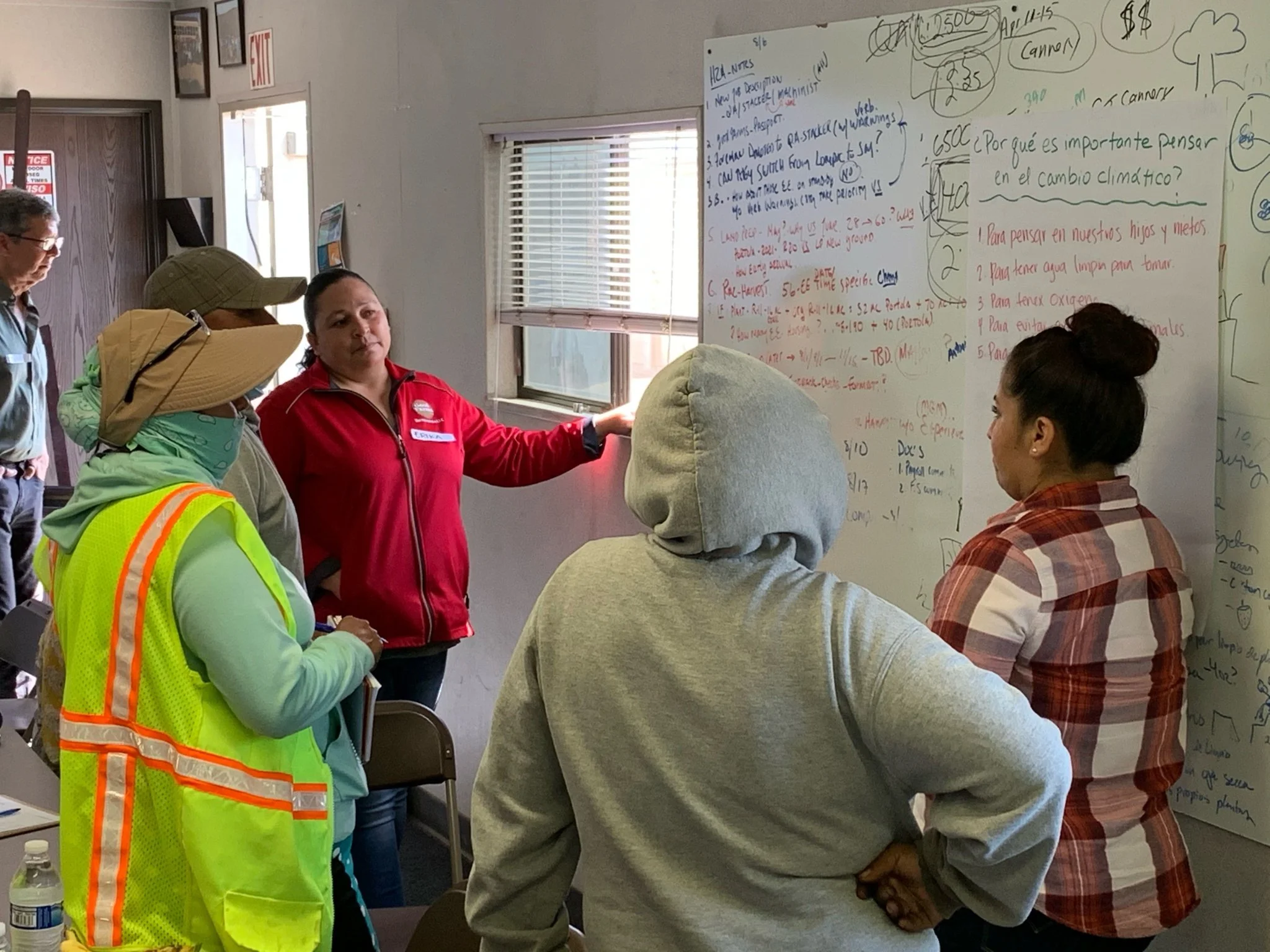
The High Road Training Partnerships Program granted nearly half a million dollars through the Equitable Food Initiative (EFI) to engage farmworkers and produce industry employers in the documentation and categorization of foundational, crop-specific, and technical skills. This work will support improved job quality for workers, a more professionalized workforce for employers, and the recognition of skills needed in environmentally sound agricultural production.

California Department of Food and Agriculture
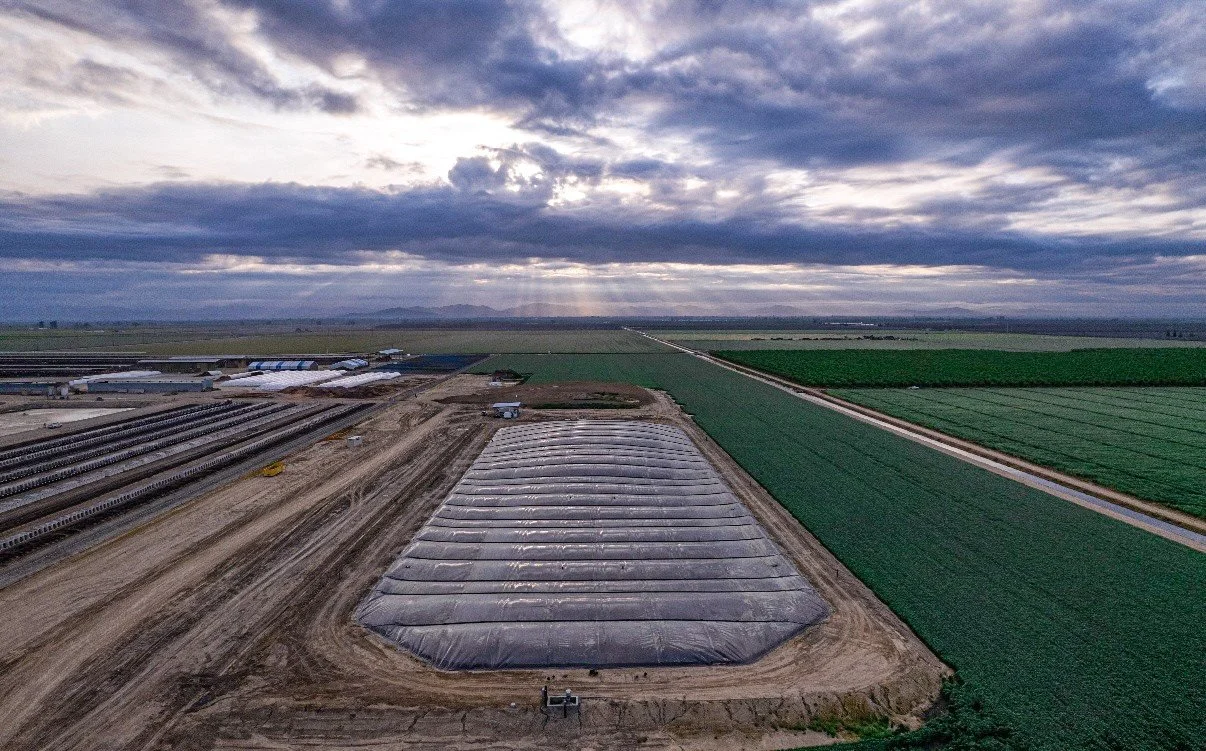
Vander Woude Dairy, a family-owned and operated business in Merced, California, has leveraged California Climate Investments (CCI) funding through the Dairy Digester and Development Program (DDRP) to implement an innovative covered lagoon digester for methane capture. The digester will process manure solids daily, capturing methane to be converted into Renewable Compressed Natural Gas for vehicle use at the dairy.

California Department of Food and Agriculture
The Triple C Dairy Compost Barn and Solid Separation Project received California Climate Investments funding in 2019 through the Alternative Manure Management Program (AMMP). Triple C Ranch, an organic dairy located in Sonoma County, used the funding to install a new compost bedded pack barn to house a portion of the herd during winter months, automate scrape collection of manure from barn alleyways, and add a solid-liquid separator that would reduce the amount of collected manure entering anaerobic storage.

In the heart of California, the San Joaquin Valley is a region where agriculture is not just an industry but a way of life for many. CARB’s Funding Agricultural Replacement Measures Emissions Reductions (FARMER) Program funds transformative initiatives that foster the adoption of innovative farming techniques, integrating advanced agricultural technologies, and promote community engagement and has been making monumental steps towards more sustainable agriculture across the valley.

In 2020, Sarah Light, agronomy advisor at the University of California Cooperative Extension, partnered with the Colusa County Resource Conservation District, Davis Ranch, Richter Ag, and the United States Department of Agriculture Natural Resource Conservation Service to apply for a CDFA Healthy Soils Program Demonstration Grant. The team received $99,832 of grant funding to conduct a demonstration project on cover crops on two fields in the Sacramento Valley from fall 2020 to spring 2024.

California Air Resources Board
Thanks to funding from California Air Resources Board’s FARMER program, the Bay Area Air Quality Management District (BAAQMD) is funding some of the first zero‑emission agricultural tractor demonstration projects in the state. BAAQMD and CARB recently awarded $1 million to manufacturers to produce seven zero‑emission tractors which are now in operation at The Mushroom Farm LLC, Old School Vineyards LP, Arroyo Lindo Vineyards, Crocker Estate, and Wente Vineyards.

California Department of Food and Agriculture
James (Jim) Miller received a State Water Efficiency and Enhancement Program (SWEEP) grant award of $97,614 for improvements at an orange and avocado orchard in Cayucos, California. The farm was dealing with a high energy cost and wanted to utilize irrigation tools to support more precise and efficient irrigation scheduling. Using the SWEEP funds, Jim and his son Daryn oversaw the installation of two solar energy arrays (14.72 kW and 16 kW); one for each of the on-farm wells. In addition, the recipients installed new high efficiency electric pumps with screen filters, a flow meter at each well, soil moisture sensors, and a weather station. With the addition of these tools, the farm made improvements to both the energy efficiency of their irrigation system and can make more informed irrigation decisions by relying on the sensors.

California Department of Food and Agriculture
Thanks to $3 million in funding from the Dairy Digester Research and Development Program (DDRDP), a California Bioenergy dairy digester and Bloom Energy fuel cell technology have been installed at the Bar 20 Dairy in Fresno County and are now capturing methane and generating renewable electricity without combustion. This innovative project was made possible through state incentive programs and private investors including the DDRDP administered by the California Department of Food and Agriculture, and the Self Generation Incentive Program, administered by the California Public Utilities Commission, and access to revenue generated by California’s Low Carbon Fuel Standard (LCFS) credit.

California Department of Food and Agriculture
Supported by a $565,470 grant from the California Department of Food and Agriculture’s Alternative Manure Management Program, Paul Danbom of Brindeiro & Danbom Dairy Farms in Turlock took a significant step towards improving the efficiency of his dairy operation and installed a new solid separation system. Instead of flushed manure being discharged directly into a settling pond and storage lagoon system, it is now pumped through a separator capable of capturing a large portion of manure solids, keeping that organic material from entering and decomposing in a liquid environment where it would produce methane.

David Viguie of Viguie Farming is revitalizing soil health on 44 acres of a 28-year-old French prune orchard located in the city of Winters. Prior to receiving a Healthy Soils Program grant, David conventionally farmed his orchard. In his pursuit to restore the property's soil health, David applied to the Healthy Soils Program and received a $38,378 grant from California Climate Investments to achieve his goals of reducing greenhouse gas emissions and increasing soil carbon by removing a prune orchard through whole-orchard recycling.

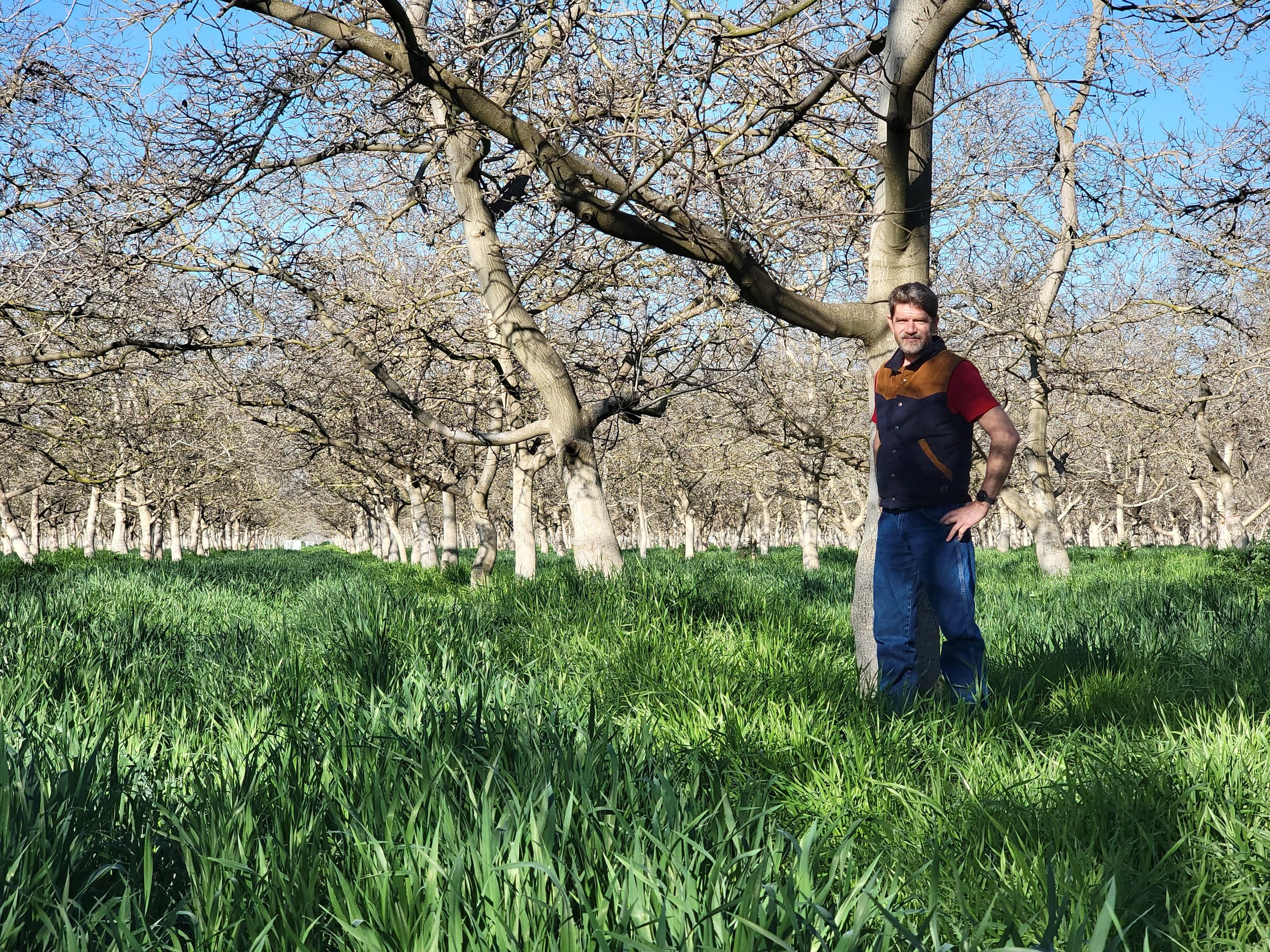
Pamela Posey of Harpos Organics is revitalizing soil health on two acres of walnut trees that have been farmed for more than 40 years. Since her December 2017 purchase of the property, located on the urban edge of Chico, California, Posey has managed the land using healthy soil management practices. In her quest to restore the property from the ground up, Posey turned to the Healthy Soils Program and received a $8,860 grant from California Climate Investments with a $1,500 cost share to achieve her goals of improving the health of the soil and providing increased biodiversity.

Charlie Starr grows wine grapes in San Joaquin County. In the past few years, he has been thinking about how to reduce nutrient leaching to groundwater and agricultural dust in the air. The state Healthy Soils Program provided him with the financial incentives to implement conservation management practices on his farmland. His project includes “Cover Crop” and “Reduced-Till.”

The Funding Agricultural Replacement Measures for Emission Reductions (FARMER) program provides up to 80 percent of funding for agricultural vehicle and equipment replacement and repower projects. Thanks to this program, Jannifer Mytych and Agri‑World Cooperative were approved by the San Joaquin Valley Air Pollution Control District to receive California Climate Investment funds for new tractors to help reduce emissions while maintaining their almond farms.

FARMER is a statewide program that provides incentive funding through local air districts for agricultural harvesting equipment, heavy-duty trucks, agricultural pump engines, tractors, and other equipment used in agricultural operations.

The CalBioGas Kern County biogas cluster – or Kern Cluster – was developed by a joint venture between California Bioenergy, Chevron U.S.A. Incorporated, and several California dairy farmers. The Dairy Digester Research and Development Program has awarded grants totaling over $17.6 million from California Climate Investments to the dairy operations in the Kern Cluster, which is comprised of eight family‑owned dairy farms. Thanks to these funds, these dairies now capture and prevent the release of methane – a greenhouse gas 25 times more potent than carbon dioxide – and are creating a renewable source of fuel.

Located outside Bakersfield, the Carlos Echeverria and Sons (CE&S) Dairy Biogas project will use anaerobic digester technology to produce energy, reduce GHG emissions, comply with environmental regulations and increase nutrient availability to crops. The project is funded through CDFA’s Dairy Digester Research and Development Program (DDRDP), supported by Cap-and-Trade dollars and the California Energy Commission.

Phil Verwey knows that happy cows produce better and more milk, and recent California Climate Investments in his dairy have made both Mr. Verwey—and his cows—very happy. Thanks to a $3 million grant from the CDFA’s Dairy Digester Research and Development Program in 2015, along with $4 million in matching funds, the animal manure from his operation is now being turned into high quality bedding for his herd and electricity.

Calgren Dairy Fuels (CDF) is the first California dairy digester pipeline cluster that upgrades dairy biogas to biomethane for utility pipeline injection. It is currently the only one of its kind in California, and with 20 digesters serving 22 dairies, it is the largest collective dairy biogas operation in the country.

The digester projects provide substantial environmental benefits by improving local air quality. Replacing the open-air lagoons of waste with a covered lagoon digester reduces manure-related emissions. Also, utilizing the methane in near-zero emissions natural gas vehicles replaces diesel vehicles and reduces NOX emissions by an estimated 90%.

With support from CDFA’s State Water Efficiency and Enhancement Program (SWEEP), the Desert Fresh project lowered irrigation water use by nearly 15 percent while producing the same yield using precision agriculture technology. The system also uses soil moisture sensing technology to identify when the crop needs water and know exactly how much to apply—taking the guesswork out of irrigation.
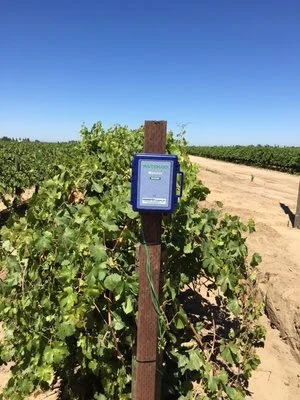
The investment of $150,000 in Cap-and-Trade proceeds into climate-smart technology on Navdip Badhesha’s 40-acres of grapes made a big difference in water use and carbon emissions for this farmer – and for California.

The Brazelton family, in partnership with the Solano Land Trust, will ensure the Brazelton ranch in Vacaville remains intact in perpetuity by placing their property under a conservation easement. Conservation of farmlands that surround urban areas helps promote infill development, avoid GHG emissions, and maintain a viable agricultural economy in the region.

The Cecchinis worked with a local land trust that was willing to purchase an easement on their property, and the land trust secured Cap-and-Trade dollars through the Sustainable Agricultural Lands Conservation (SALC) Program to purchase the conservation easement and permanently protect the land. The easement holder, Central Valley Farmland Trust, extinguished development rights on the property while the landowners retained ownership of the land.

Oya Organic Farms, an organic vegetable farm in Hollister, received a $76,446 grant from California Climate Investments through the Renewable Energy for Agriculture Program that, together with a 76 percent match from the farm, will finance the installation of solar panels to power an irrigation pump and storage/office building. Their new 27‑kilowatt solar system allows the farm to use zero‑emission electricity for their domestic well and re‑invest energy savings towards the farm. Furthermore, a standalone 6.4‑kilowatt solar system coupled with battery storage will power the off‑grid produce storage room and office on the farm.
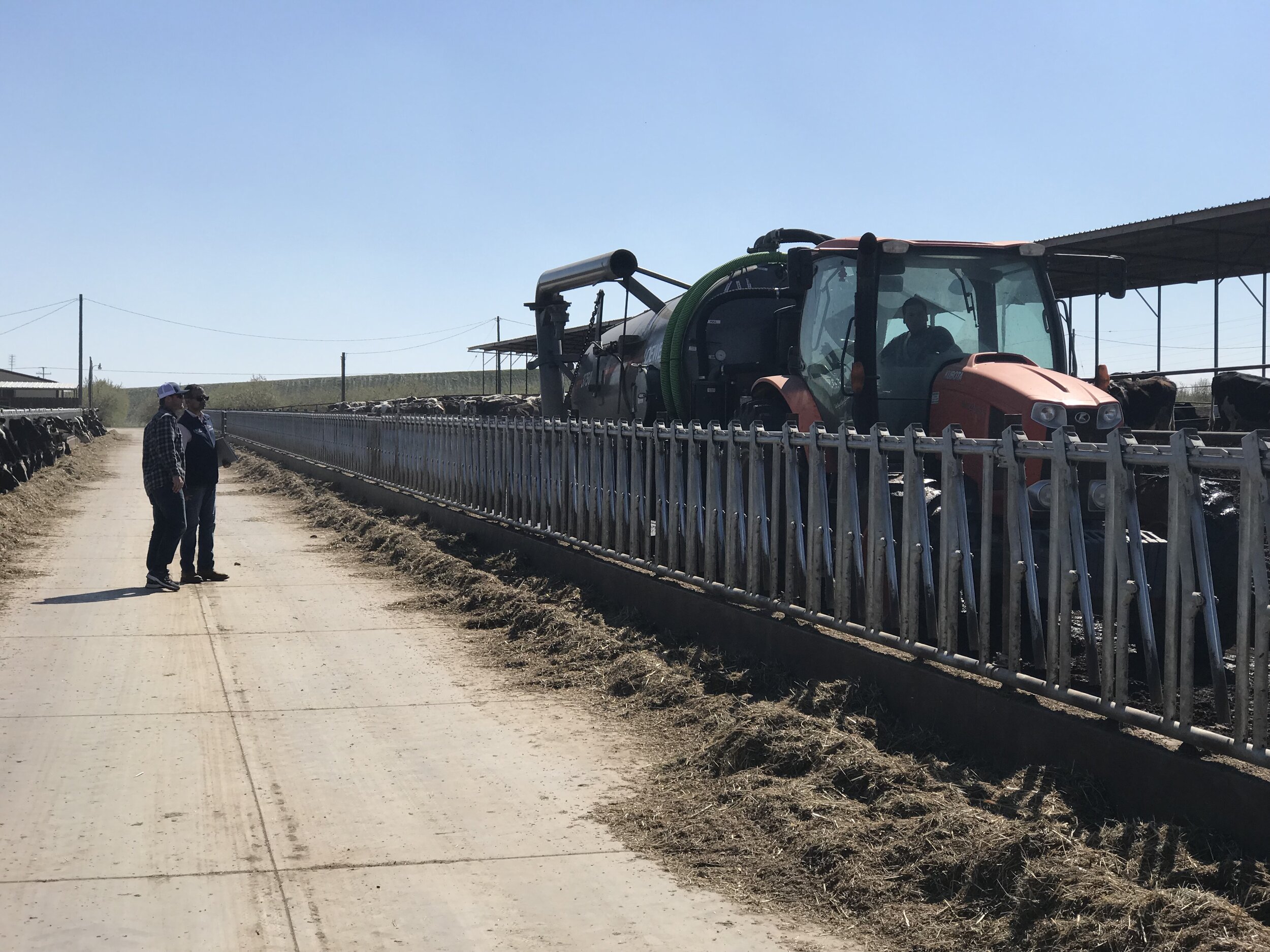
Dairy farmer Lucas Wilgenburg improved the manure management on his Hanford, California facility, Wilgenburg West LLC, using a $342,207 grant from California Climate Investments awarded by the Alternative Manure Management Program.

Where the redwoods meet the sea in Northern California’s Humboldt and Del Norte counties, Blake and Stephanie Alexandre, fourth-generation dairy farmers, received a $750,000 grant from CDFA to implement an Alternative Manure Management project.

Dennis DaSilva is a second-generation California dairy farmer whose parents began the family’s first dairy farm in 1983 with 150 cows. The $375,000 grant has allowed Mr. DaSilva to replace an existing solid separation system with a new, more efficient manure separator and concrete pad. Separated manure is dried and composted on the concrete pad and is then used for bedding and fertilizer for forage crops.
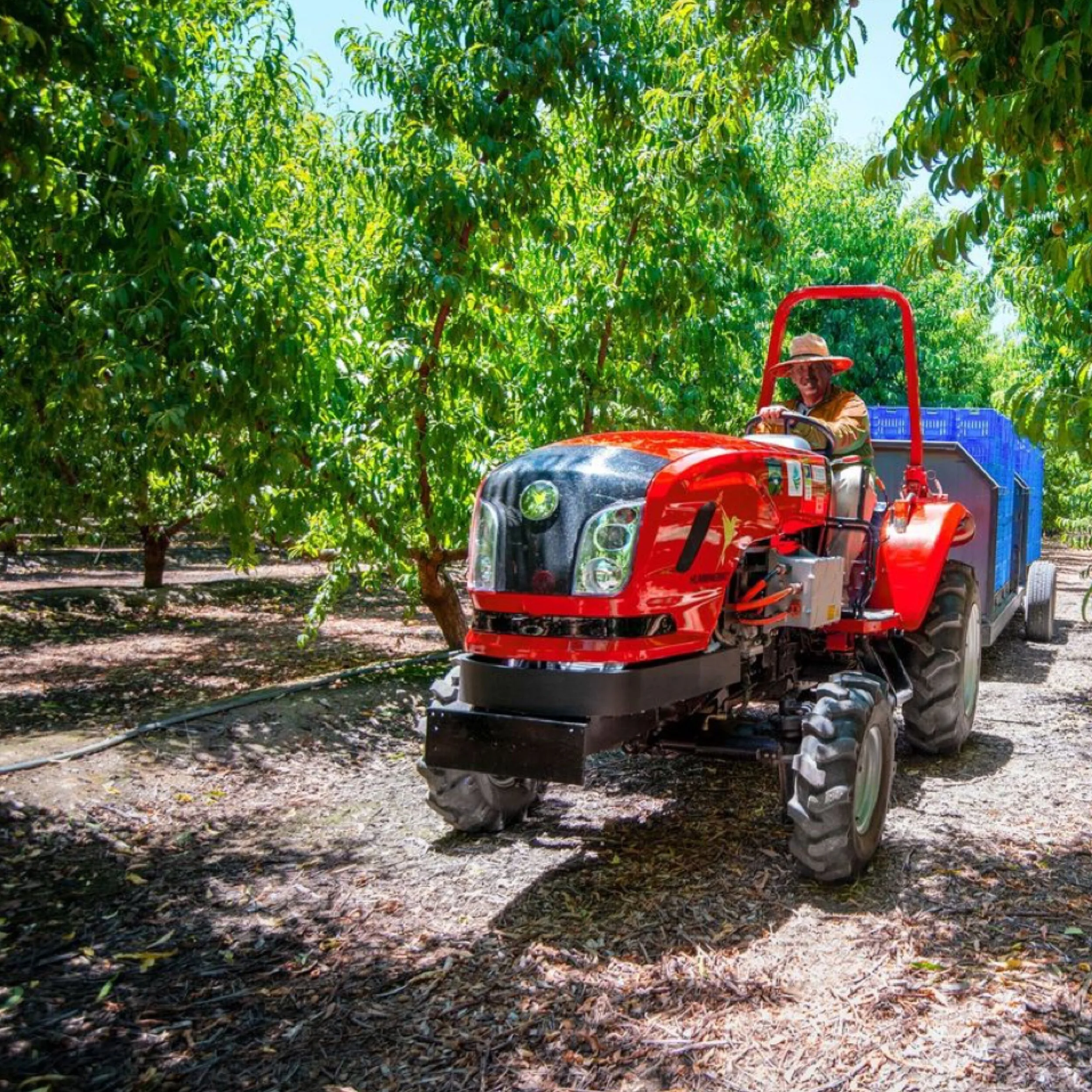
Project Clean Air, Inc., in collaboration with several partners, is implementing the San Joaquin Valley Electric Tractor Development and Demonstration project. Supported by $1.5 million in California Climate Investments funding, the project’s goals are to design, customize, develop, and test the first all‑electric agriculture tractors with in-field mobile charging supporting electric Class 6 trucks in California. By demonstrating the functionality of this fleet of electric vehicles, this project will help create a market for electric agricultural and freight equipment.
STAY UP TO DATE. Sign up for the California Climate Investments newsletter to receive program updates, news, events and more.