

Forest Health
California Department of Forestry and Fire Protection (CAL FIRE)
What does it fund?
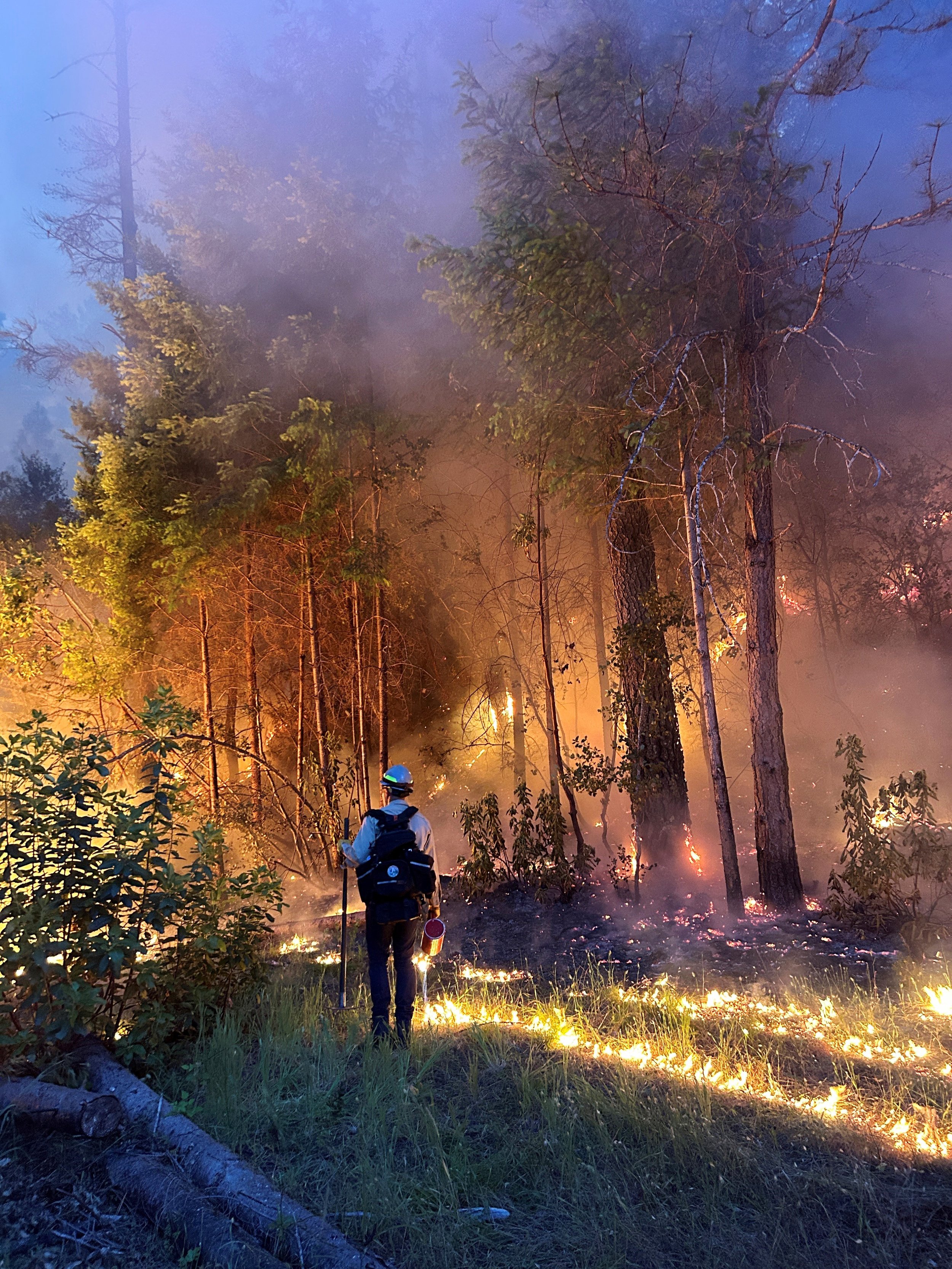
Grants to regionally based partners and collaboratives for landscape-scale reforestation, fuels reduction, pest management, prescribed fire, and forest biomass utilization.
Please note that the related Tribal Wildfire Resilience grant program funds distinct project types. Please visit the program page for more information about this program.
Who is eligible for funds?
Local, state, and federal agencies, universities, special districts, Native American tribes, private forest landowners, and non-profit organizations.
How does this program provide benefits to priority populations?
Projects benefiting priority populations receive enhanced application scoring.
How do I access funds?
Apply through a statewide competitive process. Regional partners are also administering funding in three pilot geographical areas.
Funding Timeline
Check program website for updated timeline information.
Project Profiles
Read stories of projects funded by this program.

California Department of Forestry and Fire Protection
Giant sequoias, the world’s largest trees and an iconic California species, face increasing risk due to severe wildfires brought on by unnaturally high fuel loads and climate change. To avoid further losses and promote new growth, a group of partners, with funding from California Climate Investments, is restoring and protecting southern Sierra sequoia forests.

Wildfires have burned over 40% of Butte County in the past decade, destroying homes, communities, and vital forestland. Since 2021, the Butte County Fire Safe Council has been restoring nearly 10,000 acres of forest with over $22 million in California Climate Investments funding, granted by CAL FIRE’s Forest Health Program. When the Park Fire raged across northern Butte County, efforts to reduce fuels aided firefighters in diverting the blaze from residences and saving mature trees. Using techniques like thinning, mastication, reforestation, and prescribed burns, these efforts are reducing hazardous fuels and strengthening wildfire resilience. Through continued investment in wildfire mitigation, the Butte County Fire Safe Council is helping to protect communities and ensure forest health for the future.

In the Hoopa Valley Tribe’s homelands, California Climate Investments funding is helping the Hoopa Valley Tribe re‑introduce fire to an important oak woodland ecosystem. The work is supported by a $1.36 million grant from CAL FIRE’s Forest Health Program. The eastern side of the Hoopa Valley, on the current Hoopa Valley Reservation in what is known today as Humboldt County, has historically been home to extensive oak woodlands. Fire has always played an important role on this landscape—the people burned the hillsides for generations to maintain the oak trees and promote growth of other culturally important plants.

Old‑growth redwood forests store more above‑ground carbon than any other forest type on Earth. Unfortunately, only 5% of old‑growth redwood forests survived extensive colonial logging in the 19th and 20th Centuries. Now, thanks in part to California Climate Investments funding awarded through CAL FIRE’s Forest Health Program, a partnership is working to establish the old‑growth forests of the future on California’s northern coast.

California Department of Forestry and Fire Protection
A $4.3 million grant from CAL FIRE’s Forest Health Program to the Humboldt County Resource Conservation District is funding work to protect natural, cultural, and spiritual values in a key watershed in the Yurok Tribe’s ancestral homeland.

California Department of Forestry and Fire Protection
A collaborative of landowners led by the San Diego Fire Safe Council and the Resource Conservation District of Greater San Diego County is implementing a landscape-scale restoration project aimed at improving forest health on Palomar Mountain. Forests in San Diego county have experienced heavy losses from catastrophic fires and invasive pest infestations. Now at the home of one of San Diego county’s last mixed conifer forests, project partners are working to ensure Palomar Mountain’s forests are resilient to future wildfires.

California Department of Forestry and Fire Protection
A $5 million CAL FIRE Forest Health Program grant is supporting the Western Klamath Restoration Partnership in their efforts to restore fire resilience at the landscape scale along the Klamath River. This project is part of a larger effort by the Western Klamath Restoration Partnership to improve forest health and resilience across a 1.2 million acre planning area that includes much of the Karuk Tribe’s ancestral homelands.

California Department of Forestry and Fire Protection
Forest resilience treatments funded through a $2 million grant from CAL FIRE’s Forest Health Program helped to save some of the world’s most iconic trees in one of the world’s most famous national parks. Protecting the ancient, majestic giant sequoias in the largest and most popular of Yosemite’s sequoia groves was an immediate concern for land managers when the Washburn Fire broke out near Mariposa Grove on July 7, 2022. Fortunately, a partnership that includes the Mariposa County Resource Conservation District, the National Park Service and local tribal forest crews had completed the important fuels reduction work that reduced the fire’s severity and helped firefighters protect the invaluable trees.

California Department of Forestry and Fire Protection
A $2.5 million grant from CAL FIRE’s Forest Health Program is supporting the San Mateo Resource Conservation District (RCD) and a network of regional partners in their efforts to improve forest resilience, increase carbon sequestration, and reduce wildfire risk to vulnerable communities in the Santa Cruz Mountains.
Program factsheet (English) Hoja informativa (Español)
Cumulative Statistics
As of October 31,
implemented
benefiting priority populations
MTCO2e estimated GHG emissions reductions
projects implemented
Other Expected Benefits
Achievements
implemented
MTCO2e GHG emissions reductions
benefiting disadvantaged communities
benefiting disadvantaged communities
benefiting low-income communities
benefiting other areas of California
full-time equivalent jobs reported